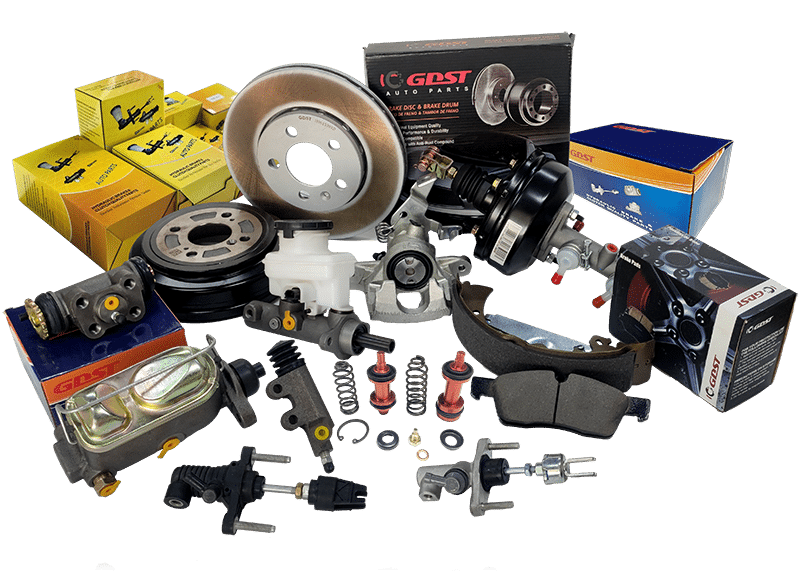


Wuhu GDST Auto Parts is a custom brake pads manufacturer and supplier serving automotive brands, importers, wholesalers, and distributors worldwide. The company provides OEM/ODM brake pad manufacturing, private-label branding and packaging, existing model sourcing, and custom brake pad development based on samples. Its portfolio includes over 3,000 brake pad models and 26 friction formulations, covering semi-metallic, low-metallic, and ceramic brake pads. Customization options depend on vehicle applications, technical requirements, and order specifications.
Looking for a reliable supplier to develop custom brake pads for your automotive brand, distribution business, or aftermarket product line?
Wuhu GDST Auto Parts Co., Ltd. provides brake pad manufacturing, OEM/ODM cooperation, and product customization services for global customers. Our existing product portfolio includes more than 3,000 developed brake pad models and 26 formulations covering semi-metallic, low-metallic, and ceramic brake pads.
Whether you need an existing model matched to your product list, a new model developed from a sample, or customized branding and packaging, our team can review your requirements and discuss a suitable sourcing or development plan.
Custom brake pad services include:
• Existing brake pad model identification and sourcing
• New model development based on customer samples
• Friction material and product configuration evaluation
• Backing plate, shim, and accessory requirements
• Private-label branding and packaging
• Sample evaluation and production planning
Different customers have different reasons for sourcing custom brake pads. Some need additional models for an established aftermarket catalog. Others require a new product based on a physical sample, technical drawing, or specific vehicle application.
GDST supports project discussions based on available product references, technical requirements, order quantities, and branding needs.
OEM Brake Pad Sourcing
If you already have an established product number or vehicle application list, we can review the available information to help identify a suitable existing model.
Useful information includes OE or FMSI numbers, vehicle make and model, axle position, product drawings, and sample photographs.
ODM and New Model Development
When an existing model does not meet your requirements, a new product development project may be considered.
Depending on the application, development inputs may include backing plate geometry, product dimensions, friction material requirements, shim configuration, accessories, and target performance criteria.
Tooling requirements, feasibility, samples, and validation needs must be evaluated for each project.
Private-Label Brake Pads
For distributors, importers, and automotive brands, private-label services can support a consistent product identity across a brake pad range.
Depending on the confirmed order requirements, customization may include:
• Brand logo and product identification
• Customer part numbers
• Customized color boxes and packaging artwork
• Product labels and related information
• Selected product accessories and configuration
Customers should provide the appropriate trademark registration and authorization documents when required for branded production.
A brake pad assembly may include a steel backing plate, friction body, anti-squeal shim, and application-specific accessories.
The actual configuration depends on the vehicle application and customer requirements.
|
Component |
Customization considerations |
Information to provide |
|
Steel backing plate |
Geometry, thickness, mounting features, and specified tolerances |
Drawing, sample, or reference number |
|
Friction body |
Existing formulation or a formulation requiring technical evaluation |
Material preference and intended application |
|
Anti-squeal shim |
Shim material and configuration, subject to availability and compatibility |
Sample, drawing, or required configuration |
|
Wear indicator |
Sensor type and installation configuration |
Vehicle application and accessory requirements |
|
Clips and hardware |
Applicable clips, rivets, springs, and other specified accessories |
Sample, product reference, or component list |
|
Surface finishing and identification |
Coating, markings, and product identification |
Color, marking, and labeling requirements |
|
Packaging |
Brand logo, product number, artwork, and packaging format |
Artwork files and packaging specifications |
Confirm the final specification for the selected model. Not every customization option applies to every brake pad.
GDST’s existing brake pad portfolio includes three principal friction material categories: semi-metallic, low-metallic, and ceramic.
Material selection should consider the vehicle, rotor compatibility, operating conditions, noise requirements, wear characteristics, and applicable product standards.
|
Material category |
General engineering considerations |
Project evaluation priorities |
|
Semi-metallic |
Formulations may contain steel fibers and metallic components; often used in aftermarket applications |
Friction behavior, wear, heat management, noise, and rotor compatibility |
|
Low-metallic |
Formulation balances metallic content with other friction materials |
Friction stability, comfort, noise, wear, and thermal behavior |
|
Ceramic |
Formulation uses non-steel-fiber friction materials and may contain selected metallic components |
Application compatibility, friction behavior, wear, noise, and temperature requirements |
These are general material categories rather than guaranteed performance rankings. Actual characteristics depend on the specific formulation and application.
If you have a defined target for friction behavior, wear, noise, or temperature performance, share the requirement with our team. We can evaluate whether an existing formulation is suitable or whether further development and testing are needed.
Accurate technical information helps reduce mismatches, unnecessary tooling, and delays during product development.
The following are examples of information documented in GDST’s internal brake pad manufacturing knowledge. They are reference values for the documented configurations, not universal specifications for every model.
|
Technical item |
Documented reference information |
Important qualification |
|
Backing plate material |
Q235 low-carbon steel is specified in the factory reference |
Final material depends on the approved product specification |
|
Backing plate thickness |
Typically 5–5.5 mm in the documented reference |
Confirm against the drawing and part number |
|
Q235B coil hardness |
Approximately 120–180 HB in the documented reference |
Material condition and actual specification should be verified |
|
Friction material categories |
Semi-metallic, low-metallic, and ceramic |
Select according to the application and validated formulation |
|
Anti-squeal shim materials |
Stainless steel, linen-finish, and specified imported materials are listed in the factory reference |
Confirm current availability and model compatibility |
|
Friction coefficient target |
The factory knowledge document lists 0.37 as a specified target |
This is not a guaranteed result for every formulation or test condition |
|
Accessories |
Rivets, wear sensors, sensor clips, circlips, guides, screws, and other application-specific components |
Configuration depends on the vehicle and product design |
What If You Only Have a Sample or Part Number?
You can begin with the information available. Send your OE or FMSI number, sample photographs, product drawing, or vehicle application list.
Our team can review the information and advise whether an existing model may be suitable or whether additional technical information is required.
Submit Your Technical Requirements
Brake pad manufacturing involves several stages that influence product geometry, friction material consistency, component attachment, and finished-product quality.
GDST’s documented factory process includes the following steps.
1. Raw Material Mixing
Friction material ingredients are blended according to the specified formulation. Material proportions influence characteristics such as friction behavior, wear, and noise.
The backing plate undergoes surface cleaning and preparation. Shot blasting and adhesive application are used as specified to prepare the surface for bonding.
3. Hot Forming and Heat Treatment
The prepared friction material is formed under pressure with the backing plate and then undergoes a curing or heat-treatment stage.
The factory process notes describe a heat-treatment cycle exceeding six hours for the documented process. Actual process parameters depend on the product specification.
4. Grinding, Slotting and Chamfering
Grinding and finishing help achieve the required geometry. Grooves and chamfers are produced according to the product design.
5. Surface Coating and Marking
The steel backing plate receives the specified surface finish. Product markings and identification are applied according to the approved configuration.
6. Accessory Assembly and Final Inspection
Applicable shims, wear indicators, clips, springs, and other accessories are installed and checked against the product requirements.
7. Testing and Packaging
The factory’s documented testing capabilities include shear strength, hardness, speed-related testing, friction coefficient evaluation, wear resistance, compressibility, and NVH dynamometer testing.
The applicable tests and acceptance criteria depend on the product and project. Required inspection records and reports should be agreed before production.
Discuss Your Quality Requirements
GDST has a documented friction test report for friction material M9102-6. The report records testing dated April 26, 2021, under SAE J2522, using an AK-MASTER test setup for an Audi Q5 right-front disc brake application.
The report includes characteristic friction values, speed/pressure tests, cold application, motorway application, fade and recovery evaluations, and wear measurements.
Selected Results from the M9102-6 Test Report
|
Report item |
Recorded result |
|
Friction material |
M9102-6 |
|
Test method recorded |
SAE J2522 |
|
Test date |
April 26, 2021 |
|
Vehicle listed |
Audi Q5 |
|
Brake position listed |
Right-front disc |
|
Nominal friction coefficient, µnom |
0.392 |
|
Minimum friction coefficient, µmin |
0.287 |
|
Fade 1 friction coefficient |
0.309 |
|
Fade 2 friction coefficient |
0.369 |
|
Friction coefficient at 500°C temperature evaluation |
0.287 |
|
Inner pad wear |
0.106 mm; 8.0 g |
|
Outer pad wear |
0.153 mm; 8.0 g |
|
Disc wear recorded |
0.000 mm; 0.0 g |
These figures belong to the specific material and test report described above. They should not be interpreted as specifications for every GDST brake pad, universal vehicle performance guarantees, or evidence that every model has undergone the same test.
For a project with specific testing or compliance requirements, please identify the target vehicle, market, and required test methods. Applicable test availability, product scope, and supporting documentation can then be discussed.
More Than 3,000 Developed Brake Pad Models
GDST’s existing product portfolio covers more than 3,000 developed brake pad models and a range of passenger car and truck applications.
An established product base may help customers identify suitable existing references before considering new model development.
26 Existing Formulations
Our current portfolio includes 26 formulations across semi-metallic, low-metallic, and ceramic categories. The appropriate formulation depends on the intended application and required performance characteristics.
OEM/ODM and New Model Development
When a required model is not available, customers can submit samples or drawings for a feasibility review. Any new tooling, sampling, validation, and production requirements must be confirmed for the project.
Flexible Order Quantities
GDST’s current standard MOQ is normally 100 sets per model. For new customers, an MOQ of 50 sets per model may be supported, subject to confirmation.
Defined Warranty and Production Lead Time
GDST’s published standard commercial terms list a warranty of one year or 30,000 km and a typical lead time of approximately 40–45 days. The applicable warranty terms and actual schedule should be confirmed in the quotation and order confirmation.
Manufacturing and Testing Resources
GDST’s documented resources include an NVH dynamometer, shear strength tester, compressibility tester, wear resistance tester, and friction coefficient tester. Additional test requirements should be reviewed against the selected product and applicable test methods.
Request a Project-Specific Quotation
Can GDST Manufacture Brake Pads Based on My Sample?
GDST supports discussions for new model development based on customer samples. Submit the sample information, drawings if available, intended application, and expected quantity so the project can be evaluated.
Can You Customize Friction Materials?
GDST offers semi-metallic, low-metallic, and ceramic brake pad formulations. Any specific friction coefficient, wear, noise, or temperature target must be reviewed for technical feasibility and appropriate validation.
What Is Your MOQ for Custom Brake Pads?
The normal MOQ is 100 sets per model. For new customers, 50 sets per model may be supported. Tooling, new formulations, customized packaging, and special configurations may require separate commercial arrangements.
What Is the Typical Lead Time?
GDST’s published reference is approximately 40–45 days for normal orders. New model development, tooling, sample approval, and special validation requirements may affect the actual schedule.
What Warranty Do You Offer?
GDST’s published brake pad warranty is one year or 30,000 km, subject to the applicable warranty terms. Please confirm the specific coverage with the quotation.
Can I Use My Own Brand and Packaging?
GDST supports customized packaging and product identification. Customers should provide the required logo artwork and trademark authorization documentation. Minimum quantities and packaging arrangements should be confirmed before production.
Can You Provide Friction Test Reports?
GDST has a documented friction test report for material M9102-6. The availability of test reports for other formulations, models, and test methods must be confirmed for each project.
What Information Should I Send for a Quote?
Start with any information you already have:
• OE, FMSI, or other product reference numbers
• Vehicle make, model, year, and brake application
• Technical drawings or sample photographs
• Required friction material or performance targets
• Quantity per model
• Branding and packaging requirements
• Destination market and applicable compliance requirements
If you do not have all these details, send the available information first.
Whether you need an existing model, a new product developed from a sample, or a private-label brake pad range, GDST can review your requirements and discuss the next steps.
Send your product list, OE or FMSI numbers, drawings, or sample photographs. Please also include your estimated order quantity and target market where possible.
Our team will review the available information and confirm the requirements needed for a quotation.