
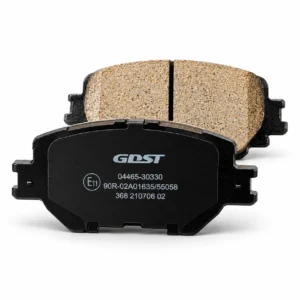
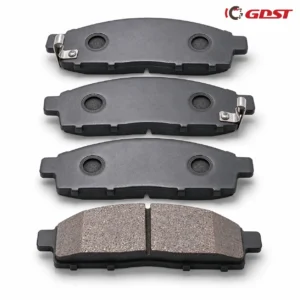
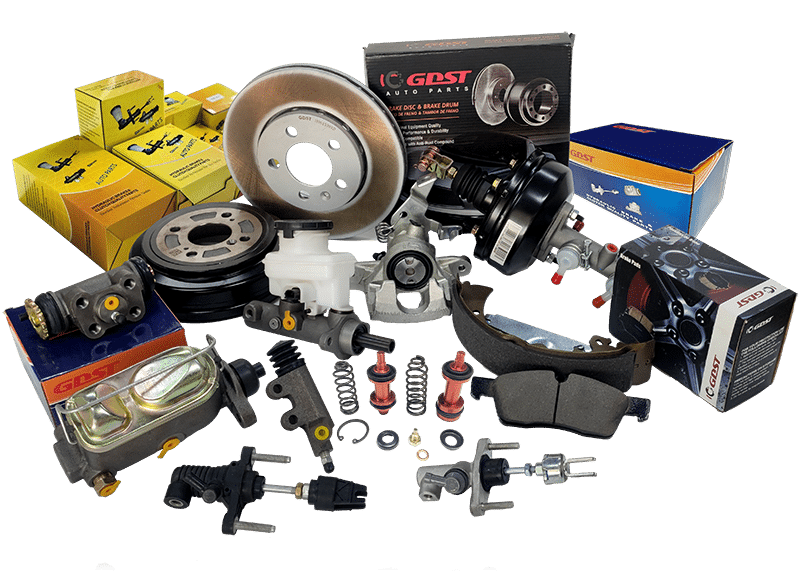

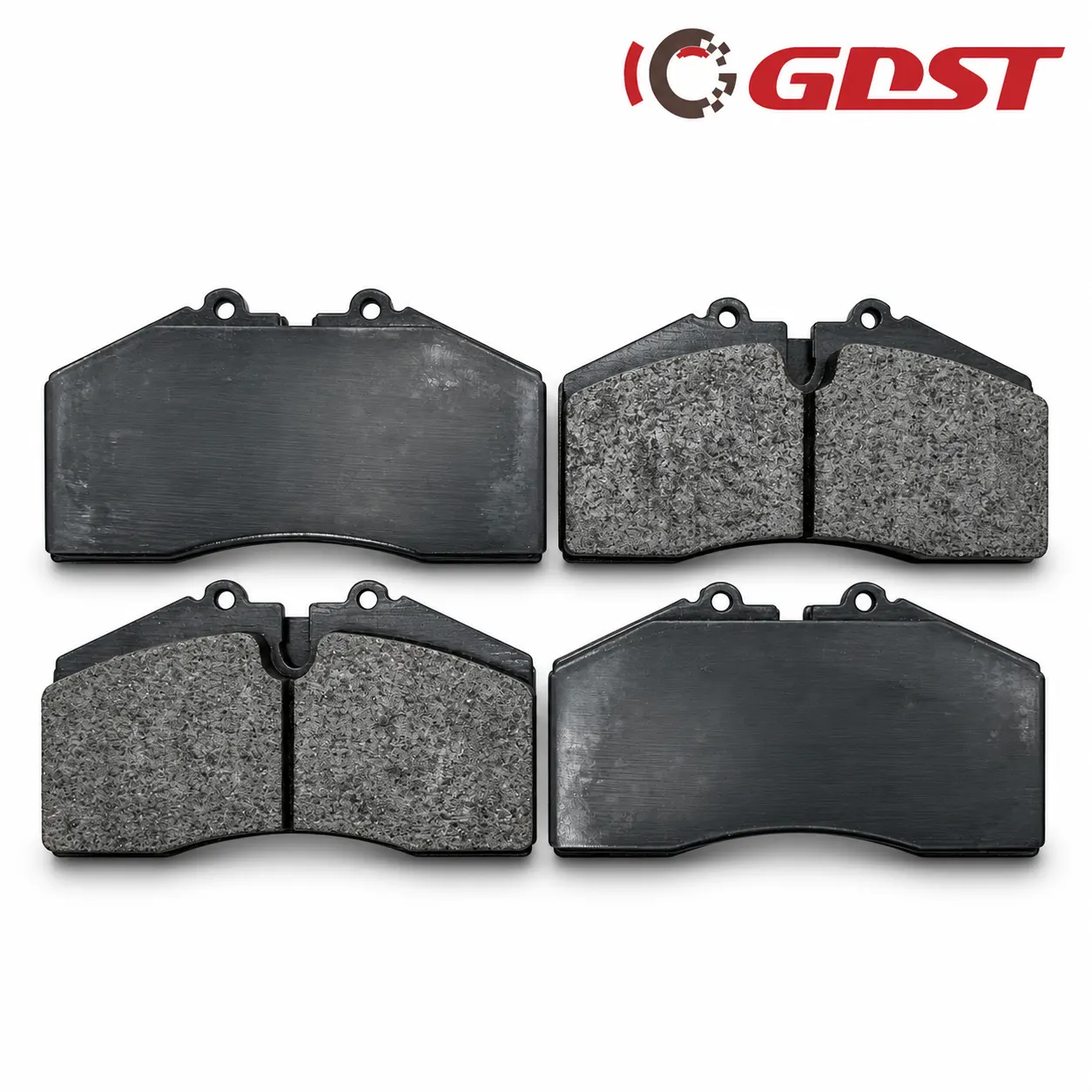
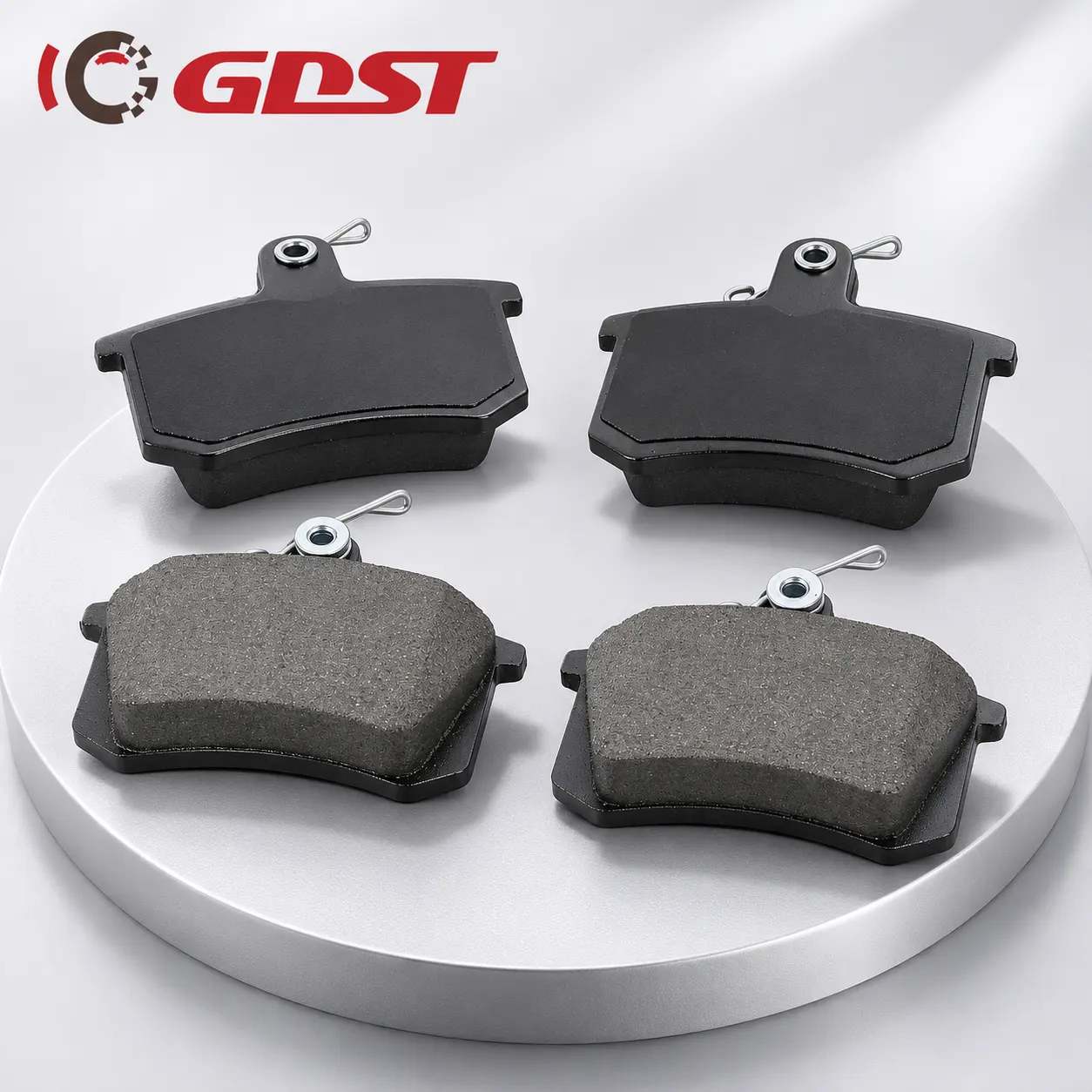
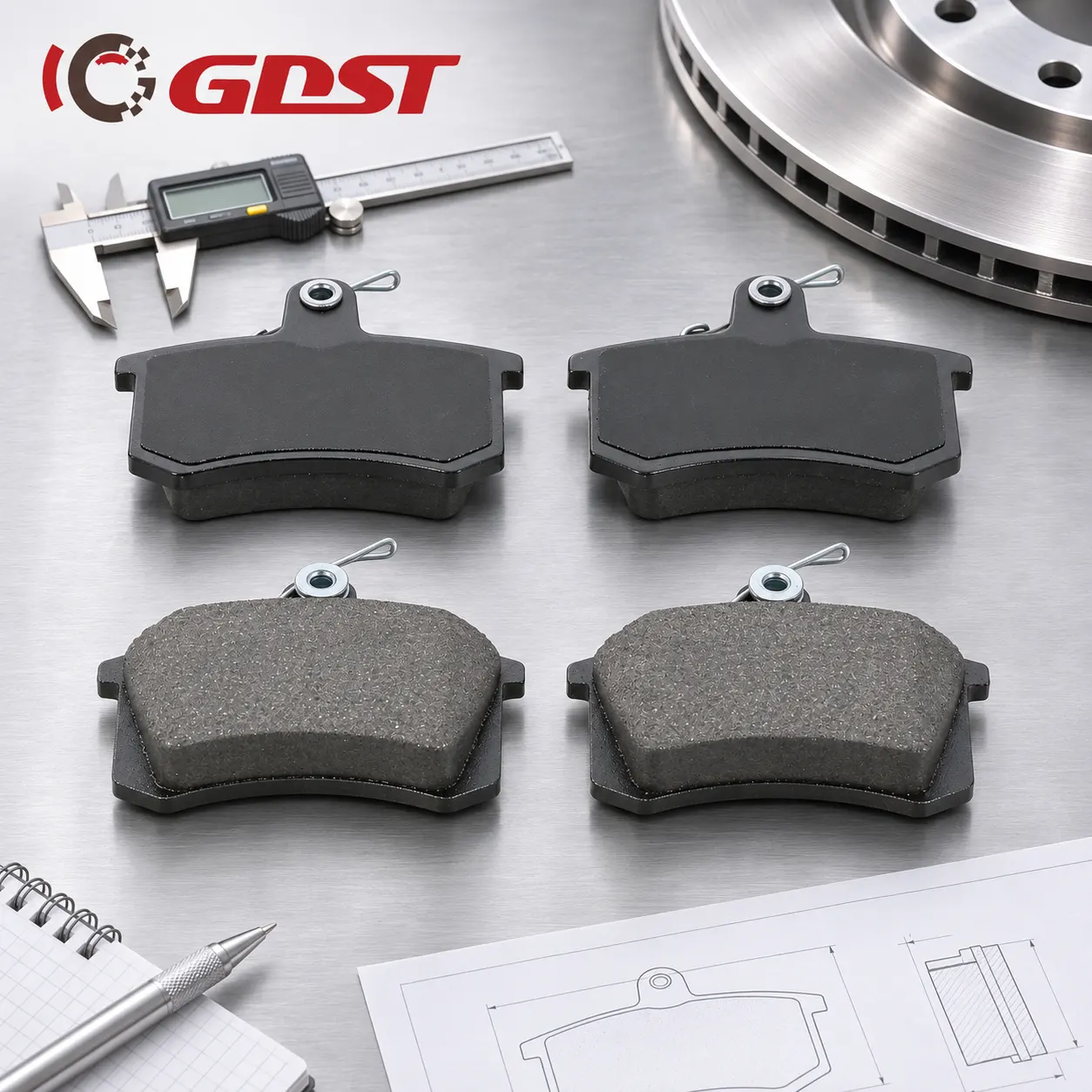
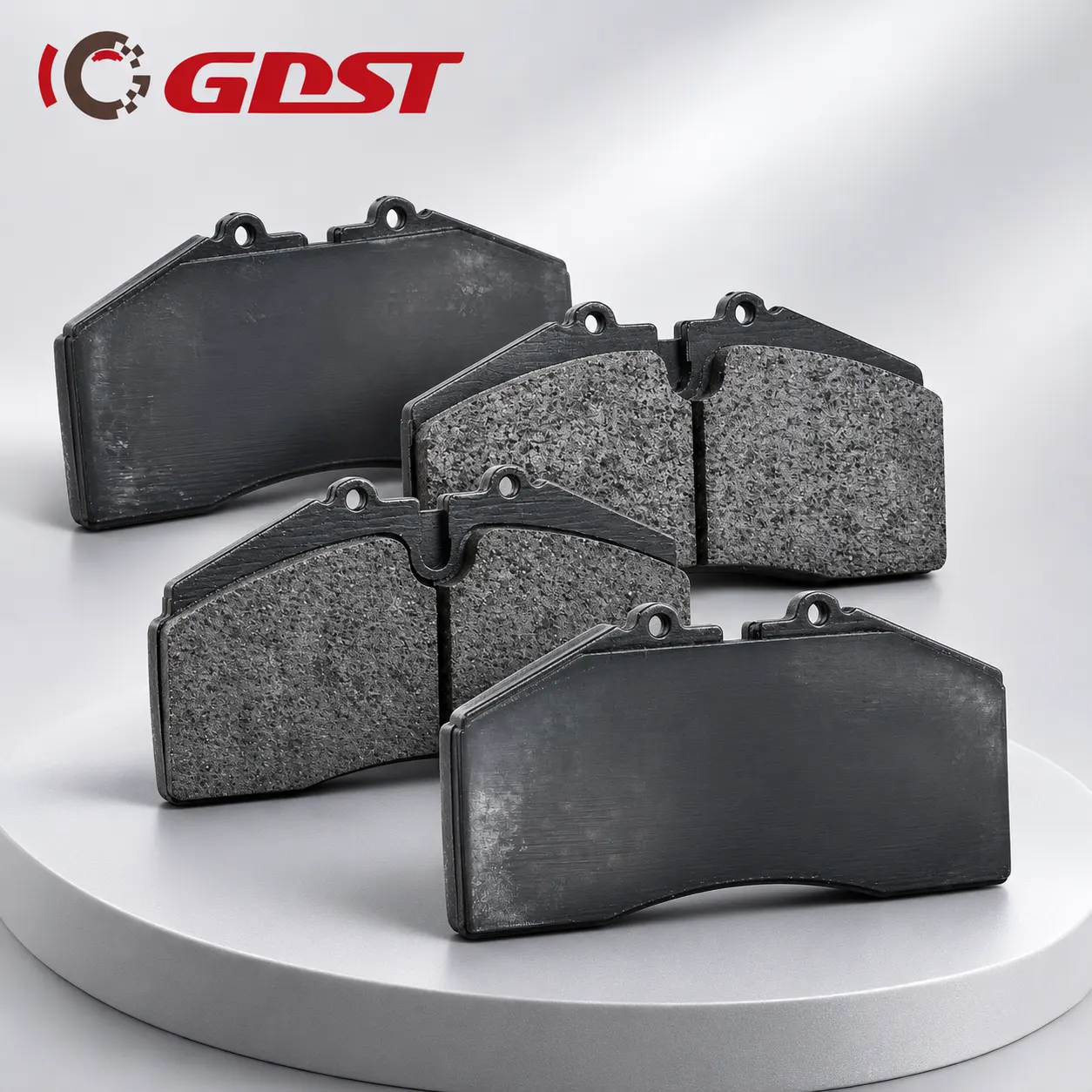
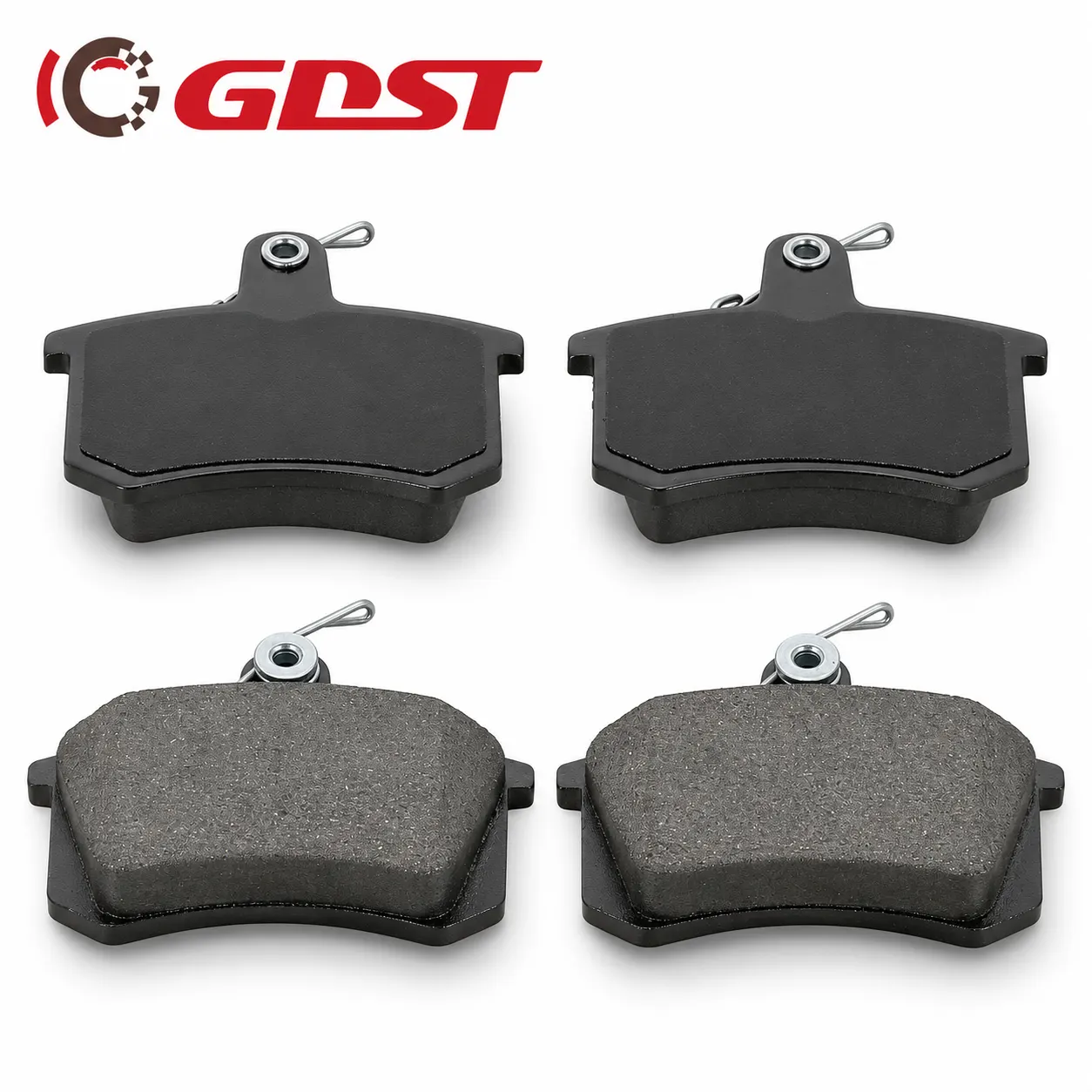
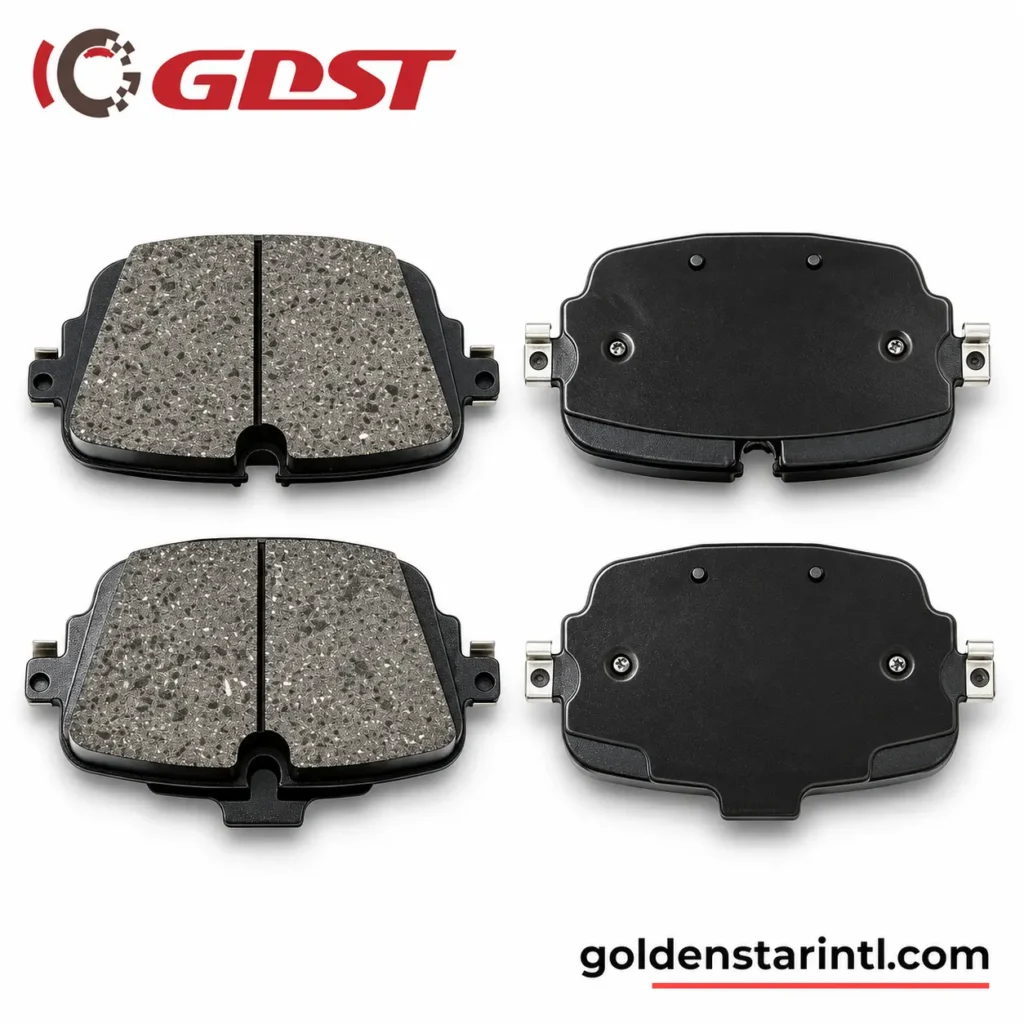
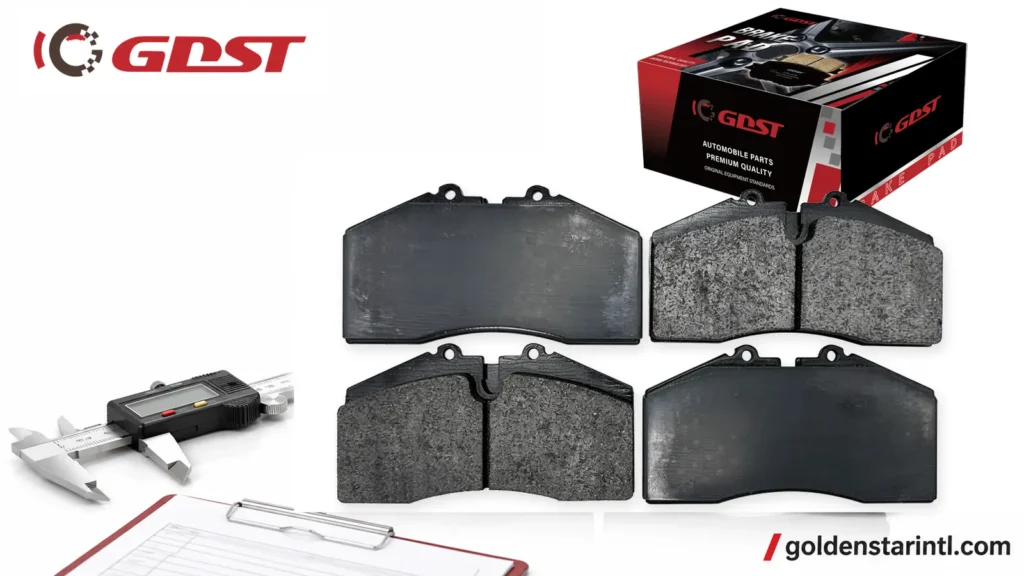
Wuhu GDST Auto Parts Co.,Ltd supplies aftermarket brake pads for selected Audi applications, serving automotive parts importers, wholesalers, distributors, and private-label brands worldwide.
Our product range covers ceramic, low-metallic, and semi-metallic brake pads, with 26 friction formulations developed for different vehicle applications and market requirements.
With over 3,000 brake pad models developed, GDST supports product matching, existing model selection, and customized development based on OE references or customer samples.
Whether you are sourcing Audi A3 brake pads, Audi A4 brake pads, Audi Q5 brake pads, or performance-oriented Audi RS6 brake pads, we can review your application requirements and help identify suitable products.
Send us your OE part numbers, vehicle application list, or original product samples to check availability and receive a wholesale quotation.
| FMSI No. | OE No. | Car Model | Position | Length | Height | Thickness |
| D1029
D1266 |
3D0698 151A
400 698 151 |
AUDI R8 2008-2012 AUDI R8 2014 AUDI RS4 2007-2008 AUDI RS5 2013-2014 AUDI RS6 2003-2004 |
Front | 95.5 mm | 74.4 mm | 16.5 mm |
| D228 D851 |
5 892 650 9939 503 60743565 7 736 218 7 8 244 43 81 16 416 260 030 130 |
AUDI 100 1989-1991 AUDI 4000 S Quattro 1984 AUDI 5000 CS 1986-1988 AUDI 80 1988-1992 AUDI 90 1988-1991 AUDI Coupe 1987 AUDI Quattro 1983-1985 |
Rear | 87 mm | 66.8 mm | 16.6 mm |
| D340 | 10087961 10331510 10405527 191 615 415 A 1H0 615 415 4250.56 |
AUDI A4 1997 AUDI A6 1999-2000 AUDI A8 Quattro 2001-2002 AUDI Allroad Quattro 2001-2003 AUDI S4 2000-2002 AUDI S8 2001-2003 AUDI TT 2000-2005 |
Rear | 87 mm | 53 mm | 15 mm |
| D447 D372 D609 |
8A0 615 115 F 928.351.393.04 959.351.949.03 965.351.930.00 |
AUDI 80 Avant (8C5, B4) RS2 quattro | Front | 131.8 mm | 70.6 mm | 17.5 mm |
| D684 | 357615 115 A 357 698 151 8A0 698 151 C A11-3501080 |
AUDI 80 1988-1989 AUDI 80 Quattro 1988-1991 AUDI 90 1988-1989 AUDI 90 Quattro 1988-1991 |
Front | 119.3 mm | 69.6 mm | 19.4 mm |
| D687 | 1J0698 151L 3A0 698 151 8N0 698 151 |
AUDI TT 2000-2002 AUDI TT Quattro 2000-2002 |
Front | 156.3 mm | 74 mm | 19.8 mm |
| D836 | 8D0 615 116B 8D0 698 151A 8D0 698 151 A |
AUDI A4 Avant 1998 AUDI A4 Quattro 1999 AUDI A4 Quattro Avant 1998 |
Front | 156.3 mm | 74 mm | 19.8 mm |
| D839 | 4A0 615 115 A 8D0 615 116 D |
AUDI A6 Quattro 321mm Rotors 2000 AUDI Allroad Quattro 2001-2002 AUDI S4 2000-2001 |
Front | 63.2 mm/77.1 mm | 75.2 mm/74.2 mm | 17.5 mm |
| D840 | 8E0 698 151K 8E0 698 151F 4B0 698 151 |
AUDI A4 2000-2006 AUDI A4 Quattro 1999-2006 |
Front | 156.3 mm | 74 mm | 20.3 mm |
| D915 | 4B0 698 151AC 4B0 698 151Q |
AUDI A6 2002-2004 AUDI A6 Quattro 2005-2006 AUDI A6 Quattro 320mm Rotors 2002-2004 AUDI Allroad Quattro 2003-2005 AUDI S4 2004-2009 AUDI S6 2004 |
Front | 155.1 mm/156.3 mm | 72.9 mm | 19.3 mm |
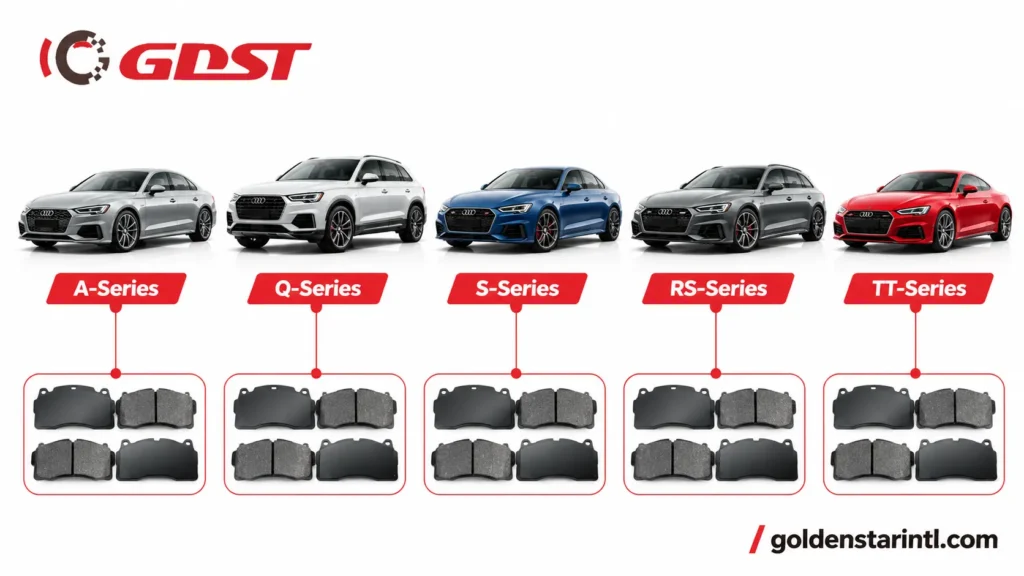
Audi uses different brake pad designs across its passenger cars, SUVs, and performance models.
The correct brake pad depends on the vehicle generation, production year, engine configuration, brake system, and axle position.
GDST supports Audi brake pad sourcing and application matching across different vehicle families.
| Audi Model Series | Representative Models | Application Requirements |
| Audi A Series | A3, A4, A5, A6, A7, A8 | Confirm model year, engine, brake configuration and axle |
| Audi Q Series | Q3, Q5, Q7, Q8 | Confirm vehicle generation, brake disc dimensions and brake package |
| Audi S Series | S3, S4, S5, S6, S7, S8 | Check performance brake configuration and OE reference |
| Audi RS Series | RS3, RS4, RS5, RS6, RS7, RS Q8 | Verify caliper design, rotor dimensions and friction requirements |
| Audi TT Series | TT, TTS, TT RS | Confirm engine, production year and brake configuration |
The models above represent application categories for fitment review, not a guarantee that every year and trim is covered by the current catalog. Exact availability must be confirmed against the OE reference or vehicle specification.
GDST can help distributors build a broader Audi brake pad product range by identifying existing applications and evaluating additional development requirements.
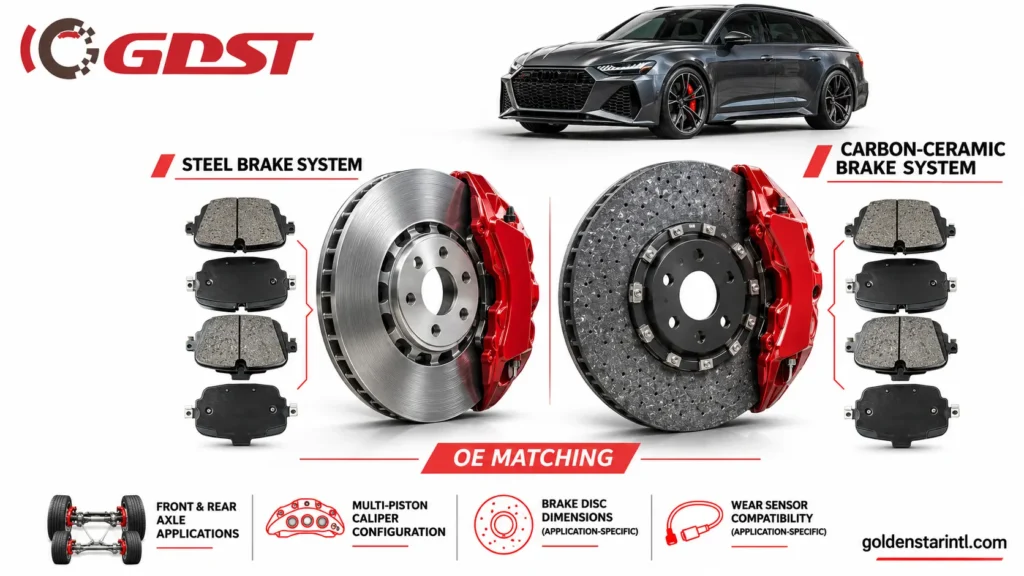
Audi RS6 brake pads require more precise application matching than standard passenger car brake pads.
Different RS6 generations and brake packages may use different calipers, brake disc dimensions, pad shapes, and friction material requirements.
This is particularly important when distinguishing conventional steel brake systems from ceramic brake systems.
Key considerations when sourcing Audi RS6 brake pads:
Audi RS6 Brake Pad Matching Specifications
| Specification | Information Required |
| Vehicle Model | Audi RS6 / RS6 Avant |
| Generation | C5 / C6 / C7 / C8 |
| Production Year | Exact model year |
| Axle Position | Front / Rear |
| Brake System | Steel / Ceramic |
| Brake Disc Diameter | Actual installed specification |
| Brake Disc Thickness | Actual installed specification |
| Brake Caliper | Caliper type and configuration |
| OE Reference | Original part number |
| PR Code | Applicable brake equipment code |
| Wear Sensor | With / Without, according to application |
The RS6 is not a universal brake pad application. Even within the same generation, different brake packages may require different products.
GDST can review your RS6 OE numbers, technical drawings, or original brake pad samples to assess the appropriate replacement application.
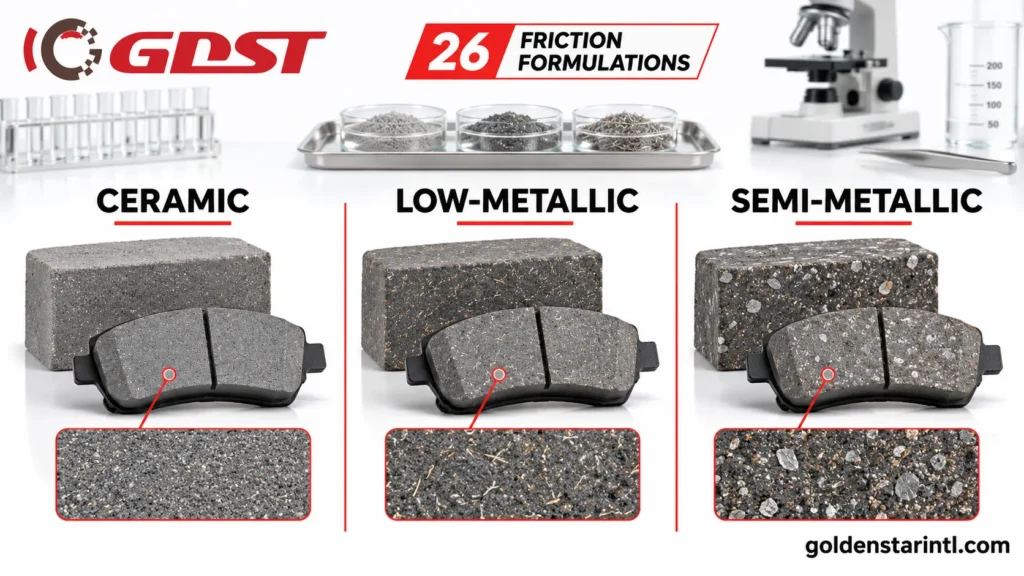
Brake pad friction material directly influences braking behavior, noise, dust generation, wear characteristics, and thermal performance.
GDST offers 26 different friction formulations across three main material categories, allowing customers to select products according to their target market and application requirements.
| Brake Pad Material | General Characteristics | Typical Application Considerations |
| Ceramic Brake Pads | Designed for comfortable braking, controlled noise and reduced brake dust | Daily driving and customers prioritizing braking comfort |
| Low-Metallic Brake Pads | Balanced friction characteristics with a metallic fiber component | Applications requiring a balance of braking response, comfort and wear |
| Semi-Metallic Brake Pads | Good heat dissipation, wear resistance and high-temperature performance | Applications with more demanding thermal and braking requirements |
Ceramic Brake Pads
Ceramic formulations are commonly selected for their braking comfort and potential to reduce brake dust and noise.
They can be suitable for customers who prioritize a cleaner wheel appearance and comfortable everyday braking.
Low-Metallic Brake Pads
Low-metallic formulations contain metallic fibers combined with other friction materials.
They provide a balance of braking response, comfort, and friction performance, depending on the formulation.
Semi-Metallic Brake Pads
Semi-metallic formulations contain a higher proportion of metallic components.
They are commonly considered for applications requiring good heat dissipation, wear resistance, and braking performance under demanding conditions.
Choosing the Right Material for Audi RS6
For Audi RS6 applications, material selection should not be based on the vehicle name alone.
The friction formulation needs to be evaluated against the specific brake system, rotor material, caliper configuration, temperature range, intended driving conditions, and required friction characteristics.
Ceramic friction material should also not be confused with carbon-ceramic brake discs. They are different product technologies and require separate compatibility checks.
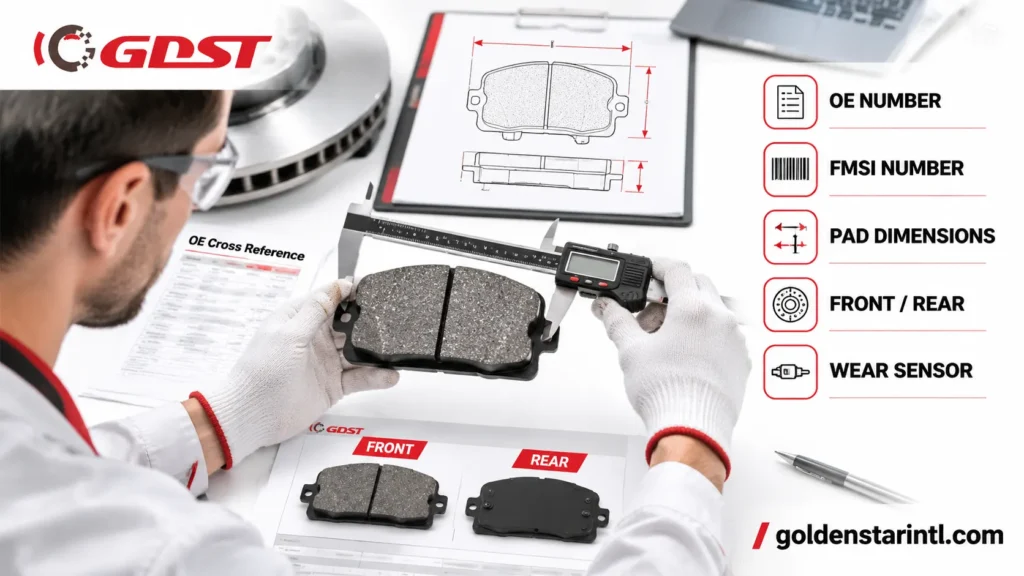
Accurate specifications are essential when sourcing Audi replacement brake pads.
A similar-looking brake pad does not necessarily mean it has the correct dimensions, friction characteristics, or accessory configuration.
GDST recommends confirming the following technical details before bulk purchasing.
| Technical Parameter | Description | Matching Requirement |
| OE Part Number | Original equipment reference | Required for cross-reference |
| FMSI Number | Aftermarket pad shape reference | Used when available |
| Vehicle Application | Model, generation and year | Exact vehicle identification |
| Axle Position | Front or rear | Separate application confirmation |
| Pad Length | Overall pad length | Match original design |
| Pad Width / Height | Pad body dimensions | Match original design |
| Pad Thickness | Total pad thickness | Match caliper specification |
| Brake Disc Diameter | Disc outside diameter | Confirm brake system |
| Brake Disc Thickness | Disc nominal thickness | Confirm brake system |
| Friction Material | Ceramic, low-metallic or semi-metallic | Select according to application |
| Wear Sensor | Sensor type and connection | With or without sensor |
| Accessories | Shims, clips, springs and hardware | According to original design |
Information Needed for an Accurate Quotation
To help us identify the correct Audi brake pad, please provide as much of the following information as possible:
If you only have an original brake pad sample or product photographs, GDST can review the information and evaluate whether an existing model or new development is suitable.
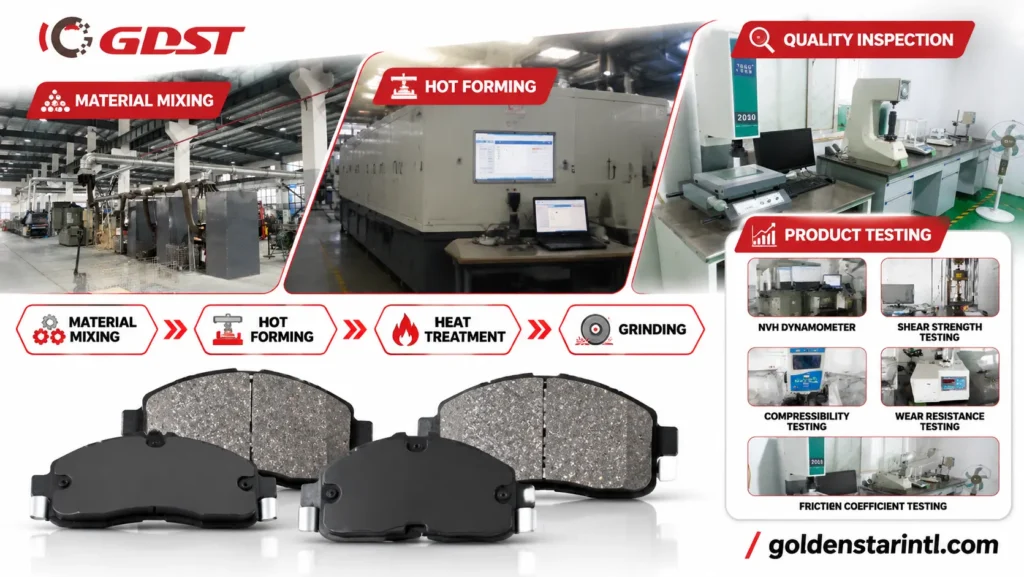
Consistent brake pad quality depends on raw material control, manufacturing processes, dimensional accuracy, and product testing.
GDST has a dedicated brake pad manufacturing operation in Wuhu, Anhui, China.
Our brake pad manufacturing facility covers over 20,000 square meters and employs more than 100 skilled workers. With over 3,000 developed brake pad models and 26 friction formulations, we support a broad range of aftermarket vehicle applications.
Brake Pad Manufacturing Process
Our brake pad production process includes several important stages:
| Production Stage | Main Process | Quality Control Focus |
| Raw Material Mixing | Mixing friction material ingredients according to the formulation | Material consistency |
| Backing Plate Preparation | Cleaning, shot blasting, and adhesive application | Surface preparation and bonding |
| Hot Forming | Pressing friction material onto the backing plate | Forming consistency |
| Heat Treatment | Curing and heat treatment | Material stability and bonding |
| Grinding and Machining | Grinding, slotting and chamfering | Dimensional accuracy |
| Surface Coating | Protective coating of backing plates | Coating coverage and finish |
| Assembly and Inspection | Installing applicable accessories and final inspection | Configuration and finished-product quality |
Advanced Brake Pad Testing Equipment
GDST’s brake pad factory is equipped with several testing machines to evaluate different product characteristics:
These testing capabilities support production quality control and product development. Specific test methods and acceptance criteria depend on the product model and customer requirements.
For distributors and importers, this means you can discuss product quality requirements with a supplier that has dedicated manufacturing and testing capabilities.
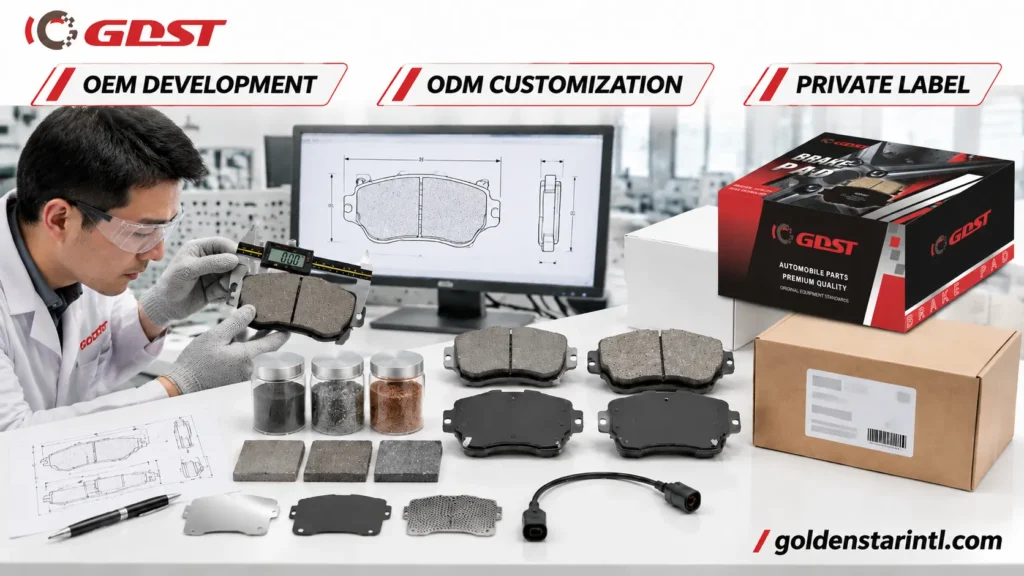
For automotive parts wholesalers and brands, sourcing suitable products is only part of building a competitive product line.
GDST also supports OEM and ODM cooperation to help customers develop their own aftermarket brake pad ranges.
Customized Product Development
For brake pad models not currently available in our catalog, we can evaluate new development based on customer samples and technical requirements.
Development discussions can cover:
Private Label and Packaging Customization
GDST supports customized packaging solutions for automotive aftermarket brands.
Available customization options include:
Whether you are expanding an existing Audi brake pad range or developing a new aftermarket brand, GDST can discuss the relevant product and packaging requirements.
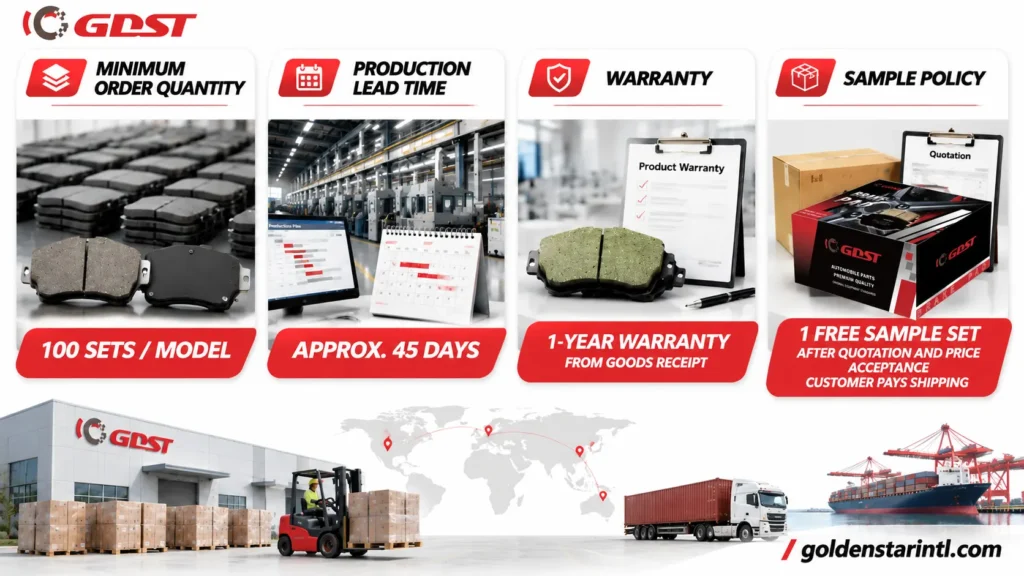
GDST provides B2B purchasing arrangements for importers, wholesalers, and distributors.
Our current brake pad purchasing policies are designed to support both regular wholesale orders and new product evaluation.
| Commercial Item | GDST Policy |
| Minimum Order Quantity | 100 sets per model |
| Production Lead Time | Approximately 45 days |
| Warranty | One year from the date the customer receives the goods |
| Sample Policy | One set of samples can be provided free after quotation and price acceptance |
| Sample Shipping | Freight is paid by the customer |
| Private Label | Customized brand packaging supported |
| New Product Development | Development based on customer samples and technical requirements |
For sample requests, we can first provide a quotation. If the customer accepts the price and wants to evaluate product quality, GDST supports sending one free sample set, with shipping costs covered by the customer.
For bulk orders, the final delivery schedule and technical requirements should be confirmed before production.
Can GDST supply brake pads for different Audi models?
Yes. GDST supplies brake pad applications for German vehicles, including Audi. Specific model and year coverage must be confirmed against OE references and brake configurations.
Can you supply Audi RS6 brake pads?
We can review Audi RS6 applications based on the vehicle generation, OE number, brake system, axle position, and technical specifications. Different RS6 brake packages may require different brake pads.
Are Audi RS6 front and rear brake pads interchangeable?
No. Front and rear brake pads have different shapes and dimensions. They must be matched to their respective axle applications.
Are steel and ceramic brake system pads the same?
No. Brake pads for steel and ceramic brake systems may have different shapes, dimensions, and friction requirements. The exact brake package must be confirmed before ordering.
What information do you need to identify the correct Audi brake pads?
The most useful information includes the OE part number, FMSI number, vehicle model, production year, front or rear axle, brake disc dimensions, and brake system configuration.
Do you offer ceramic, low-metallic, and semi-metallic Audi brake pads?
GDST offers all three material categories, with 26 friction formulations. The appropriate formulation depends on the specific vehicle application and performance requirements.
Do your Audi brake pads include wear sensors?
Wear sensor configurations depend on the specific product design. We can review the original OE reference to confirm whether the application requires a sensor and compatible accessories.
What is your MOQ and production lead time?
Our standard MOQ is 100 sets per model, with an estimated production lead time of approximately 45 days.
Can I request a free sample before placing a bulk order?
Yes. After receiving the quotation and accepting the price, you can request one free sample set for quality evaluation. The customer is responsible for shipping costs.
Do you support private-label Audi brake pads?
Yes. We support customized product markings, customer logos, and private-label packaging for automotive parts brands and distributors.

Looking for a reliable Audi brake pad manufacturer and wholesale supplier?
GDST supports aftermarket brake pad sourcing, OE reference matching, material selection, customized product development, and private-label packaging.
Whether you need Audi A-series brake pads, Q-series brake pads, or specialized RS6 applications, our team can review your requirements and provide a suitable product proposal.
Send us your OE part numbers, vehicle application list, or original product samples to get started.
Audi is a registered trademark of its respective owner. GDST is an independent aftermarket automotive parts supplier and is not affiliated with or endorsed by Audi AG.