Quick Answer: How Do You Know When Brake Discs Need Replacing?
Brake discs are to be replaced if they fall at or below the minimum specified thickness of the manufacturer, or if they have serious defects (e.g., radial cracks, large grooves, excessive corrosion, excessive thermal degradation). Common symptoms of worn brake discs include: vibration while braking, grinding noise during braking, and/or uneven braking. To determine whether your brake discs are worn out, you should perform periodic visual checks and have professional measurements taken on the thickness of your brake discs. Doing so will allow you to replace worn brake discs prior to compromising your safety.
What Are Brake Discs and Why Do They Wear Out?
The main function of brake discs (rotors) is to provide the friction required to stop a car. Brake discs are part of the car’s disc braking system. Brake discs are attached to the car’s wheel hubs. As such, they rotate along with the car’s wheels. When a driver applies pressure to the car’s brake pedal, the car’s hydraulic system creates pressure, which causes the car’s brake calipers to squeeze the car’s brake pads together against both of the rotating disc surfaces.
The friction created by the brake pads on the disc transforms the vehicle’s kinetic energy into thermal energy, which causes the vehicle to slow down or stop. This is a common occurrence in everyday driving, and therefore, the brake pad and disc will eventually degrade due to friction, thermal energy, and mechanical wear.
The way that brake pads are worn is different than the way brake discs are worn. While the majority of the wear on a brake pad comes from losing some of the friction material, the majority of the wear on a brake disc comes from thinning down and also developing surface flaws such as corrosion, hot spots, uneven wear patterns, etc.
Excessive wear, incorrect installation, the wrong type of brake pad, and mechanical issues are factors that cause accelerated deterioration of the brake disc, which also reduces the effectiveness of your car’s brakes.
What Are the Common Signs of Brake Disc Wear?
The ability to recognize brake disc wear before it causes major damage to your entire braking system is critical. There are many symptoms of brake disc wear that may be similar to those of brake pads or calipers; however, there are numerous warning signs that warrant immediate action.
- Vibration or Pulsation When Braking
The most obvious symptom of a brake disc problem is vibrations while you are applying the brakes. When you apply pressure to the brake pedal, you can typically feel vibrations on the brake pedal, and possibly even some shaking on the steering wheel, especially as you begin to slow down from driving at high speeds.
The causes of this condition include: Disc Thickness Variation (DTV), too much lateral runout, unevenly deposited friction materials, and/or disc surfaces that are not flat.
The issue of what people typically refer to as “warped” brake rotors may actually be caused by something other than thermal distortion. It would be best to have a qualified professional determine the exact cause of the issue prior to making a recommendation for replacement.
- Grinding, Scraping or Unusual Braking Noises
A grinding or scraping sound when you apply the brakes is an indication that your brake pads are worn to the point of being dangerously low on friction material. If you have completely used up all of the friction material on one side of each brake pad, then the metal backing plate will be making direct contact with the brake disc.
Metal-to-metal contact can create deep grooving and severe surface damage.
A squeal that is high-pitched does not necessarily mean there has been damage to your brake disc. The squeal could be coming from the wear indicator on the brake pads, moisture, rust on the surface of the brake pads/rotors, or debris getting stuck between the friction surfaces.
A persistent grinding noise should be addressed quickly since if you continue to drive with it, you risk damaging your vehicle’s brakes, including the discs and calipers.
- Deep Grooves or Scoring on the Disc Surface
Brake discs should have relatively smooth and consistent friction surfaces.
Frictional contact and/or contaminant exposure can lead to the formation of circular groove patterns (scoring marks) over time. While some light surface marks are common on brake rotors, deep grooving indicates an excessive amount of wear, contaminated friction surfaces, or severely worn brake pads.
Deep scoring may allow for inconsistent contact between the brake pad and disc, which could lead to reduced braking capability and increased levels of noise.
- Blue Discoloration or Heat Spots
The appearance of dark spots, blue discoloration, and/or localized surface changes may indicate that an area of the body has been exposed to excessive amounts of heat.
After frequent and/or severe braking, extended downhill operation, improper pad selection, or a malfunctioning brake caliper, these situations can occur.
Excessive heating may cause changes to the disc’s surface properties and result in an inconsistent amount of friction, as well as produce noise and vibration during braking.
Severe heat damage, especially if there are also cracks in the material or if the shape of the material has changed significantly, will require professional evaluation and could lead to replacement of the damaged material.
- Visible Cracks or Severe Surface Damage
Cracks are among the most serious signs of brake disc damage.
The development of these symptoms can occur if the disk has been subject to multiple cycles of extreme temperature fluctuations, thermal stresses that are too high for the materials used, or if the disk was operated in an environment where its performance would be affected.
Do not ignore radial cracks, structural damage, and cracks around ventilation passages. Follow the rejection criteria of the vehicle or disc manufacturer to determine if the part is safe for use; do not rely on your own judgment of whether a part looks safe.
- Excessive Rust or Corrosion
Lightly rusted surfaces can occur on brake rotors (or discs) after being left in damp environments, particularly if a car is driven or left stationary in such areas. The brake rotors are exposed to moisture, road salts, and other contaminants that exist in the environment.
This type of superficial oxidation often disappears after normal braking.
In addition to this, if you notice deep corrosion, pitting, continuous rusting over the entire area of the pad’s contact with the rotor, or if the corrosion is causing unequal contact between the pads and rotor, these are all signs that your brakes may need to be inspected again.
- Reduced Braking Performance or Longer Stopping Distances
If the time required to come to a halt with your car is greater than what is typical, there is a possibility that the braking system does not work as it should.
The wear on your vehicle’s brake discs can lead to reduced braking capability, particularly if you have experienced high temperatures, significant damage to the surface of the disc, or the thickness of the disc is too low.
However, long stopping distances can be caused by worn brake pads, damaged brake rotor surfaces (friction), bad calipers, fluid leaks (hydraulics), bad tires, or road surface conditions.
The entire braking system should be inspected before identifying the cause.
[Request an OE-Matched Brake Disc Quote]
Brake Disc Wear vs. Brake Pad Wear: What Is the Difference?
Brakes (brake pads) and rotors (brake discs) function together; however, the two are constructed differently, perform different functions, and exhibit distinct patterns of degradation.
The friction materials of brake pads are applied to the disk to produce braking forces. Disk brakes provide a turning friction surface as well as provide the ability to absorb and remove the heat created by braking.
Understanding the difference between the two can help you avoid making an error when diagnosing and/or replacing parts that are not needed.
| Comparison | Brake Pads | Brake Discs |
| Main function | Generate friction against the disc | Provide the friction surface and absorb heat |
| Main wear type | Loss of friction material | Reduction in thickness and surface deterioration |
| Common warning sign | High-pitched wear indicator noise | Vibration, scoring, heat spots or cracks |
| Visual inspection | Check remaining friction material | Check surface condition, corrosion and damage |
| Measurement | Pad friction material thickness | Disc thickness and, when necessary, runout |
| Typical replacement trigger | Reaches the applicable wear limit | Reaches MIN TH or develops unacceptable damage |
| Relationship | Works against the disc surface | Works together with the brake pads |
If you delay replacing your worn-out brake pads, they will eventually ruin your brake rotors. Likewise, if you fit brand-new brake pads onto severely damaged or unevenly worn rotors, you are likely to experience issues with poor rotor-pad contact, increased rotor-pad noise, and uneven stopping power.
Both components should therefore be inspected together.
What Causes Brake Discs to Wear Prematurely?
While brake rotors will degrade as a result of normal usage, there are other variables that could potentially cause premature failure.
- Aggressive Driving and Frequent Hard Braking
Hard braking repeatedly creates significant thermal energy and physical stress. Acceleration/braking rapidly on a regular basis will cause the driver to have faster deterioration of their vehicle’s brake discs.
In addition, heavy braking at high speeds can cause an increase in thermal stress, especially if there has been no time for the braking system to cool down.
- Driving on Mountain Roads or Carrying Heavy Loads
Long downhill runs require repeated brake applications for speed control. Excessive brake application results in large amounts of heat building up in the brakes, which may lead to hot spots, changes in the coefficient of friction, and possible rotor damage.
Heavy vehicles, towing applications, and commercial vehicles will require additional requirements from their braking components.
Appropriate use of engine braking during prolonged descents may help to minimize the excessive use of friction brakes.
- Sticking or Seized Brake Calipers
Brake calipers should release the brake pads correctly when the driver takes their foot off of the brake pedal.
If the caliper piston or guiding pins are seized up, then the brake pads will continue to rub against the rotor. This will cause constant friction, high temperatures and uneven wear on your brake pads.
A sticking caliper may result in greater brake disc deterioration on one side of your vehicle as compared to the other.
- Worn or Incompatible Brake Pads
Excessive heat, inconsistent friction transfer, and/or rapid wear on discs can be caused by using brake pads that have inappropriate friction properties.
When your brake pads are completely worn down, they will potentially show through to the metal backing plate. This could lead to a situation where the metal backing plate makes contact with the face of the disc.
Brake pads that meet the vehicle manufacturer’s specifications are essential to achieving consistent braking performance.
- Corrosion and Environmental Exposure
Moisture, road salt, and contaminants in the environment may speed up the rate of corrosion on a brake disc.
If you leave your car idle for long stretches of time, it could get some rusty areas on it (especially if you live near the ocean or in a humid area).
The presence of light surface oxidation may be considered normal. However, if there is extreme corrosion and/or pitting that affects the friction surface, then you will likely have to replace the item.
- Incorrect Installation and Wheel Fastener Torque
Installation quality has a direct impact on brake disc performance.
Rust, dirt, or debris on the wheel hub and/or disc mounting surfaces will affect how well the wheel is seated on the hub and may result in an increase in lateral runout.
Wheel fastener torque (evenness and correctness) can have an impact on how well the rotor is mounted and therefore can lead to brake vibrations.
A proper cleaning, positioning and tightening sequence is required when installing a fastener.
- Improper Bedding-In of New Brake Discs and Pads
The bedding-in process for new brake pads and new brake discs is necessary so that there can be a reliable contact made between each of the two components’ respective friction surface.
Braking aggressively right after installation could result in too much heat buildup and uneven transfer of the friction material.
Follow the bedding-in instructions given to you from the manufacturer of the brake components.
How to Inspect Brake Discs Properly
A proper brake disc inspection includes both visual examination and dimensional measurements. Just looking at the disc through the wheel spokes does not provide enough information for you to know if the disc is still within its specified operational limits.
- Check the Disc Surface
Inspect both friction surfaces for:
- Deep circular grooves or scoring.
- Cracks or structural damage.
- Blue discoloration and heat spots.
- Excessive rust or corrosion.
- Uneven contact patterns.
- Abnormal wear near the inner or outer edges.
Rust on the surface of a disc does not necessarily require the disc to be replaced.
- Measure Brake Disc Thickness
The amount of brake disc remaining on a vehicle can be determined by the thickness of the brake disc itself.
A manufacturer will state a lowest allowed measurement for disc thickness (typically indicated as MIN TH on the disc or listed in your car’s service manual).
In order to determine how much material has been removed from the friction ring as well as whether there is any uneven wear, use an appropriate brake disc micrometer to take measurements of the friction ring in several different locations.
Compare the readings to the minimum required thickness for the specific disc application.
If the disk has reached or fallen below the specified limit, it must be replaced.
- Check Disc Thickness Variation (DTV)
Disc Thickness Variation is the difference in thickness measurements taken at various locations on the friction surface.
Too much DTV may cause a change in how much pressure is required to stop the car, as well as produce vibrations that feel like the brake pedal is vibrating.
The technician is using high-precision measuring tools to assess how much variation exists in the measurements of the disc, and then decide if this variation is within the acceptable limits defined by the manufacturer.
- Measure Lateral Runout
The lateral movement of a braking disc when in motion is referred to as “lateral runout.”
Excess runout may cause an uneven contact point for the pads, which in turn could lead to a long-term development of DTV.
The measurement of runout will be taken after the disc has been correctly mounted onto the hub using a dial indicator. After the measurement is made it must be checked against what is specified by the vehicle manufacturer.
If there is too much runout (side-to-side movement of the tire), then you will need to check other components including the hub surface, wheel bearings, disc mounting hardware, and fastener torque.
- Inspect Related Brake Components
Brake disc inspection should never be performed in isolation.
The technician should also check:
- Inner and outer brake pad thickness.
- Caliper piston movement.
- Caliper guide pins and mounting hardware.
- Brake hoses and fluid leakage.
- Wheel hub condition and bearing play.
- Disc mounting surfaces.
In addition to helping determine why your tires are wearing abnormally, this more comprehensive examination can help prevent damage to new replacement parts.
Brake Disc Wear Patterns and What They Mean
Different surface conditions may indicate various types of mechanical problems. Understanding how each condition relates to specific mechanical problems will allow technicians to differentiate between normal wear and tear and damage that needs to be replaced.
| Brake Disc Wear Pattern | Possible Cause | Recommended Action |
| Light surface rust | Moisture or temporary vehicle inactivity | Monitor and confirm whether normal braking clears it |
| Deep circular grooves | Worn pads or foreign particles | Inspect pads and measure disc condition |
| Pronounced outer edge lip | Progressive friction surface wear | Measure actual disc thickness |
| Blue or dark heat spots | Excessive temperature or uneven friction | Inspect calipers, pads and disc condition |
| Radial cracks | Severe thermal or mechanical stress | Replace according to manufacturer criteria |
| Uneven friction surface | DTV, uneven material transfer or installation issues | Measure thickness variation and runout |
| Localized corrosion or pitting | Moisture, road salt or prolonged inactivity | Assess friction surface damage and remaining thickness |
| Excessive disc thickness loss | Normal wear or accelerated friction wear | Compare with MIN TH specification |
The need for replacement of an imperfect part is dependent upon how bad the imperfection is, where it is located on the product, and how large the area affected by the imperfection is, in relation to the manufacturer’s engineering standards.
When Should Brake Discs Be Replaced?
Brake discs are to be replaced if they do not meet the vehicle manufacturer’s safety and/or operation specifications.
The following situations generally require replacement:
- Disc Thickness Reaches the Minimum Limit
The disc is no longer within the allowable wear limits once the actual thickness drops below or equals the MIN TH.
A thinner disc will have less thermal capacity and therefore can potentially overheat quickly and reduce the effectiveness of the brakes.
- Severe Cracks or Structural Damage
Radial cracking and other forms of unacceptable structural damage can negatively impact the strength and stability of the disc.
Such damage should not be ignored or treated as ordinary surface wear.
- Deep Grooves and Serious Surface Damage
A severe amount of scoring, an excessive amount of pitting, and/or an unacceptable level of damage to the friction surfaces could potentially cause inconsistent contact between the brake pads and the brake rotors.
When the damage to a product is more severe than what is allowed by the manufacturer for repair, replacement may be required.
- Severe Heat Damage
The effects of significant heat spots, material changes, and surface deformation can negatively affect the consistency of a vehicle’s braking.
In addition to the brake pads and calipers, the disc should also be examined to see if it needs replacing.
- Excessive Runout or Thickness Variation
When measurements exceed the relevant service limits, then a corrective action will need to take place.
Based upon the condition and recommendation of the manufacturer, the remedy could consist of repairing installation issues, performing machining (where acceptable) or substituting the disc.
The life span of a brake disc is not determined by a specific mileage. Its actual life span varies greatly based upon the design of the car, how the driver drives, what type of brakes they use, how much the car weighs, the selection of brake pads, and how well maintained the vehicle is.
Should Brake Discs and Brake Pads Be Replaced Together?
Most times when replacing parts, it’s best to install new brake pads and new brake rotors.
The use of new brake pad material provides a consistent, clean surface for the new brake rotor to wear into properly.
Reusing old brake pads on new rotors can result in uneven pad-to-rotor contact, increased noise, inconsistent stopping performance, and early pad degradation, especially if the old pads were glazed, unevenly worn, or damaged.
In general, brake rotors are replaced in axle sets to provide similar braking performance on both the left and right sides of the vehicle.
However, it does not imply that you need to replace all four discs simultaneously. The front and back braking systems can have varying degrees of wear.
Before making any decisions about replacing individual components on your car, always refer to the vehicle manufacturer’s instructions for replacing each part. Also, be sure to check the condition of every component prior to determining what components need to be replaced.
How to Maintain Brake Discs and Extend Their Service Life
Properly maintaining your brakes will prevent them from wearing down early, as well as keeping the same consistency of braking power.
- Adopt Smooth and Predictable Braking Habits
Avoid using excessive amounts of braking force (hard braking) and keep your vehicle at a distance from the car in front of you. By planning ahead for potential changes in traffic flow, you will be able to apply gradual pressure to your brakes rather than repeatedly having to apply large amounts of braking force.
- Use Engine Braking on Long Descents
When driving down a slope, choose the correct gear to assist you with controlling your vehicle’s speed. Choosing the correct gear will reduce the amount of times you have to rely on friction brakes to slow down your vehicle, which in turn will assist you in maintaining safe operating temperatures for your brakes.
- Inspect Brake Pads and Calipers Regularly
Uneven wear on discs may be caused by worn pads, stuck calipers, and/or damaged guide pins.
When performing regular maintenance on your vehicle, you should inspect the whole braking system as opposed to just looking at the outside of the front brake pad.
- Keep the Wheel Hub and Mounting Surfaces Clean
Remove rust, dirt, and other contaminants from all mating surface areas before installing new brake discs. Follow the vehicle manufacturer’s service procedures when doing this.
Proper mounting helps ensure the disc sits correctly against the hub.
- Follow Correct Installation and Torque Procedures
Tighten in the required sequence, using the correct torque for each of your wheels. Uneven tightening will lead to mounting issues and/or disc run out.
- Follow the Correct Bedding-In Procedure
Once you have installed your new brake discs and pads, make sure to follow the recommended bedding-in procedure of the component manufacturer.
Generally, this includes a process of braking that is controlled and progressively applied, and has an adequate amount of time for the brakes to cool down before they are used again.
Avoid repeated aggressive braking during the initial bedding-in period.
- Monitor Corrosion and Vehicle Storage Conditions
If a car sits in one spot for an extended period of time, then check its brakes for rust.
Special attention should be given to vehicles that are operated in coastal regions or areas with heavy road salt application.
What Should You Do When You Notice Brake Disc Wear?
When you observe strange braking sounds, vibrations, obvious damage on your brake discs or a change in how well your brakes are performing, schedule a professional brake checkup immediately.
Any of the following: Serious brake warning light; Braking fluid leak; A sinking pedal; Smoke; Significant loss of braking performance; Grinding noise should all be considered urgent safety concerns.
If your brakes are unsafe to use, you should stop driving as soon as possible and call for professional help. Do not continue to drive if you feel unsafe using your brakes.
A good inspection will determine if the issue is with the brake rotors, pads, calipers, wheel bearings or hydraulic system.
Replacing the right parts and finding out why something failed will help to avoid having to replace parts again and spending money on repairs that could have been avoided.
How to Choose the Right Replacement Brake Discs
Choosing replacement brake discs requires consideration beyond merely finding a match for your vehicle manufacturer and type.
To ensure reliable braking performance, it is crucial that the parts used in the vehicle’s brake system be correctly fitted and compatible with the other components.
Before purchasing replacement discs, consider the following factors:
OE Reference and Vehicle Compatibility
I am confirming that the OEM (Original Equipment Manufacturer) reference number, vehicle model, vehicle year, engine configuration, axle position, and brake specification are correct.
The same vehicle model can have various sizes of brake discs or even different styles.
Disc Dimensions and Construction
Verify the exterior diameter, total thickness, smallest thickness, hub hole size, vertical dimension (height), mounting hole arrangement, and how air flows through the wheel.
Solid and vented brake rotors cannot be switched unless the manufacturer allows for it.
Material and Manufacturing Quality
The physical makeup of the material used to create the brake disc, the accuracy with which it was cast, how accurately it has been machined, and the level of uniformity in its dimensions are factors that affect the ability of the brake disc to function well over an extended period.
Surface Treatment and Corrosion Protection
Depending on the specific application, some brake discs that have been coated may provide added protection from corrosion caused by humidity and/or salt.
Quality Inspection and Supplier Reliability
For distributors, importers, and wholesale buyers, the quality of a product’s consistency is just as important as the initial cost.
The supplier is evaluated for its dimensional inspection capabilities, hardness verification capabilities, balancing capabilities, run-out control capabilities, quality documentation capabilities and after-sales support capabilities.
For multi-vehicle replacement program coverage, it is helpful to use one supplier who will supply you with both your OE reference matches and consistently specified products. This can make ordering and stocking products much simpler.
Frequently Asked Questions About Brake Disc Wear and Replacement
How long do brake discs usually last?
The life of a brake disc can be affected by many factors such as how someone drives, the weight of their car, the condition of the road they drive on, what type of brake pads are used, and how often they have work done on the car. No single mileage can be given as to when a brake disc will need to be replaced. Instead, the thickness and overall condition of the disc are the main indicators of whether or not it needs to be replaced.
Can I drive with worn brake discs?
A disc that has minor surface wear isn’t necessarily dangerous. However, if you have a disc that’s too thin, badly cracked, or heavily damaged, it should never be used. If your brakes are performing poorly, pull off the road and get help from a mechanic.
Do brake discs need to be replaced in pairs?
As a general rule, brake rotors should always be replaced as a pair on the same side of the vehicle so that the brakes operate evenly. Be sure to follow the vehicle manufacturer’s maintenance schedule.
Do new brake discs require new brake pads?
Generally speaking, you should replace your old brake pads with new ones after replacing the old rotors (discs). This is done so that the new rotor will have good contact with the new brake pad, allowing for proper “bedding-in” of the brake system. You will also want to consult your vehicle’s manufacturer’s service manual or replacement instructions regarding how often you need to replace your vehicle’s brake pads.
Is surface rust on brake discs normal?
Vehicle parked in damp environments will usually have light surface rust that will clear up after the first few stops. If you notice deep corrosion, pitting or continued rust on your brake pad/shoe friction surfaces, then an inspection is necessary.
Can brake discs be resurfaced instead of replaced?
The process of resurfacing may be possible on some discs, as long as the manufacturer allows it, and there is enough material left on the disc once it has been machined. After being resurfaced, the disc must still exceed the minimum acceptable thickness, and it must also meet all other conditions and dimensions required by the manufacturer.
Why does my steering wheel shake when braking?
The possible reasons for this problem are: Disc thickness variations, excessive lateral runout, non-uniform application of the friction material on the rotor surface, mounting problems of the rotor on the hub assembly, and other issues related to either the brakes or the suspension system. To determine what is causing the issue, you will need to have a professional measure the components.
Does a brake warning light mean my brake discs are worn?
No. Depending upon what type of car you have, a warning light may signify that there is not enough brake fluid in the reservoir, that there is a problem with the electronic pad wear sensor, that there is a fault in the ABS system, or that there is some other issue with the braking system. This warning should be checked out, rather than immediately assumed to be caused by problems with the discs.
Do electric vehicles experience brake disc wear?
Yes. Regenerative braking will decrease the frequency of utilizing friction brakes; however, EV brake discs will still need to be inspected. Additionally, because there is less reliance upon friction brakes in EVs than in traditional gasoline-powered cars, corrosion can form on the brake disc if the vehicle is not operated regularly or if it is operated in wet conditions.
How can I prevent premature brake disc wear?
Follow these simple steps: Practice smooth stopping, prevent overheating of the brakes, check for wear on your brake pads and calipers, keep the area around where you mount your wheels (hubs) free from dirt and debris, install the parts properly, and complete the proper break-in procedure.
Summary: Regular Inspection Is the Key to Reliable Brake Disc Performance
Brake disc wear is expected during the normal operation of a vehicle. However, excessive wear, excessive heat generated by the brake pads (overheating), corrosion on the brake discs and improper installation of the brake discs may decrease the ability of the brakes to function safely.
Early recognition of warning signs, proper measurement of disc thickness, and evaluation of related brake system components will aid you in determining whether a component needs replacement.
Whether you are maintaining your personal automobile (car), sport utility vehicle (SUV), or commercial vehicle, the best way to maintain these types of vehicles is by following all manufacturer specifications and correcting the underlying factors that cause excessive wear on the vehicle.
The selection of compatible replacement brake discs by automotive parts distributors, wholesalers, and importers from a dependable manufacturer is just as essential to maintain both quality control of products and satisfaction among customers.
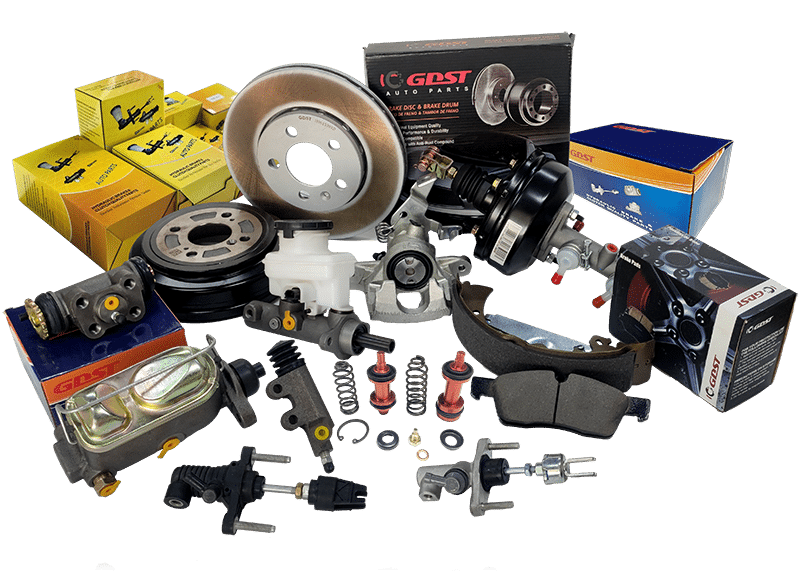
The company GDST produces vehicle brake rotors to supply its international aftermarket customers. The company offers a wide variety of vehicle models to fit its rotor products. They also provide support to find the correct OE rotor part number for each model, as well as a way to purchase the rotor parts on a large scale (wholesale).
Get in touch with GDST regarding your brake disc requirements, product line, and wholesale supply requirements.