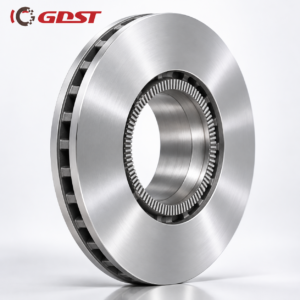

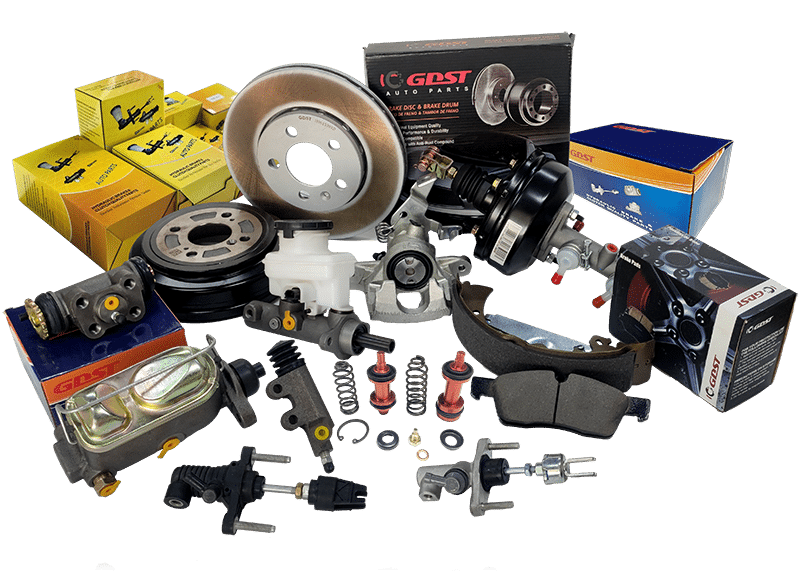


GDST Auto Parts is a China-based supplier of cast iron ventilated brake discs and vented brake rotors for passenger cars, SUVs, pickups, and selected commercial vehicles. We offer different internal vane designs, OE reference and dimensional matching, OEM/ODM services, and customized branded packaging for global importers, wholesalers, distributors, and automotive aftermarket brands.
Wuhu GDST Auto Parts Co.,Ltd supplies automotive ventilated brake discs for aftermarket replacement, wholesale distribution, and private-label sourcing programs. Featuring internal cooling vanes, ventilated brake discs help dissipate braking heat and support more consistent braking performance during repeated braking.
With a broad range of brake disc references covering Japanese, Korean, European, and American vehicle applications, GDST supports international importers, distributors, wholesalers, and automotive parts brands with OE reference matching, product sourcing, and customized branded packaging.
Whether you are expanding your brake disc catalog or sourcing replacement vented disc brake rotors for specific vehicle applications, GDST can help you identify suitable products and establish a reliable supply program.
Key Supply Information
| OE No. | Vehicle | Position | Rotor Type |
| 55311-M69P10 | SUZUKI BALENO (FW, EW) | Front | ventilated |
| 51712-G6300 | KIA PICANTO III (JA) | Front | ventilated |
| 45251-TV8-E02 | HONDA CIVIC | Front | ventilated |
| TK78-33-251B | MAZDA CX-5 (KF) | Front | ventilated |
| 42431-48090 | LEXUS RX (_L2_) | Rear | ventilated |
| 40206MP100H3 | LUXGEN | Front | ventilated |
| 34116871799 | BMW X4 (F26) | Front | ventilated |
| MAK2487 | DAF F1000 | Front | ventilated |
| 81.50803.0009 | MAN F2000 | Front | ventilated |
| 5000450158 | RENAULT MIDLINER | Front | ventilated |
Ventilated brake discs, also known as vented brake discs or vented disc brake rotors, are disc brake components designed with two parallel friction surfaces separated by internal cooling vanes or ventilation channels.
Unlike solid brake discs, which consist of a solid section of material, ventilated discs contain internal air passages that help remove heat generated during braking.
When brake pads press against the rotating disc, friction converts the vehicle’s kinetic energy into thermal energy. The internal ventilation structure helps transfer this heat away from the disc through airflow.
Ventilated brake discs are commonly used on the front axles of passenger cars and SUVs because the front braking system typically handles a larger share of the braking load. Depending on vehicle weight, brake system design, and performance requirements, some vehicles also use ventilated discs on the rear axle.
For aftermarket replacement applications, the correct ventilated brake disc must match the original vehicle specification, including disc dimensions, thickness, mounting geometry, and ventilation design.
The main function of a ventilated brake disc is to improve heat dissipation through internal airflow.
During braking, the brake pads create friction against both sides of the rotating disc. The resulting heat spreads through the friction surfaces and into the internal structure.
As the disc rotates, its internal vanes help move air through the ventilation channels. In typical internally ventilated designs, cooler air enters near the central area of the disc, flows through the internal passages, absorbs heat, and exits near the outer circumference.
This process increases the effective cooling surface area and promotes convective heat transfer.
The cooling process involves four stages:
Actual cooling performance depends on disc dimensions, material properties, vane geometry, rotational speed, airflow, and operating conditions.
Ventilated brake discs are designed to manage braking heat more effectively than comparable solid discs. Their advantages are particularly relevant to vehicles that experience frequent braking, higher braking loads, or repeated deceleration.
Improved Heat Dissipation
Internal cooling passages increase the surface area exposed to airflow. This helps transfer heat away from the disc during operation and supports more effective temperature management.
Reduced Risk of Brake Fade
Brake fade occurs when excessive heat reduces the effectiveness of braking components. By improving heat dissipation, ventilated brake discs help reduce the risk of thermal fade during repeated or demanding braking.
More Consistent Braking Performance
During repeated braking, controlling heat buildup helps maintain more stable operating conditions for the brake disc and pads.
Suitable for Higher Braking Loads
Ventilated discs are widely used in front braking systems and in vehicles requiring greater thermal management capacity, including many SUVs and performance-oriented applications.
Application-Specific Cooling Design
Different internal vane structures can be selected according to the original equipment design and engineering requirements.
The internal cooling vanes are an important part of ventilated brake disc construction. Their geometry affects airflow, heat transfer, structural strength, weight, and manufacturing complexity.
Three common ventilation designs include straight vanes, curved vanes, and pillar vanes.
Straight Vane Design
Straight vanes are commonly used in passenger car brake discs. Their relatively simple geometry supports efficient manufacturing, structural rigidity, and practical cooling performance for standard vehicle applications.
Curved Vane Design
Curved vanes follow a directional airflow path and are designed to promote air movement through the disc. Because their cooling behavior depends on rotational direction, these discs generally require dedicated left-hand and right-hand configurations.
Pillar Vane Design
Pillar vanes use individual internal supports rather than continuous ribs. This arrangement provides different airflow paths and structural characteristics and is used in selected performance-oriented brake disc applications.
The appropriate vane design should be determined by the original equipment specification and engineering requirements rather than by vane quantity alone.
Solid and ventilated brake discs are two common internal construction designs used in automotive braking systems.
Although both use friction between brake pads and disc surfaces to slow a vehicle, their internal structures affect heat dissipation, overall thickness, manufacturing complexity, and vehicle applications.
| Comparison | Solid Brake Disc | Ventilated Brake Disc |
| Internal Structure | Single solid section | Two friction surfaces with internal vanes |
| Cooling Method | Surface heat dissipation | Surface cooling plus internal airflow |
| Heat Dissipation | Lower under comparable repeated braking conditions | Generally more effective |
| Overall Thickness | Generally thinner | Generally thicker |
| Manufacturing Complexity | Relatively simple | More complex internal structure |
| Typical Applications | Many rear brake applications and selected smaller vehicles | Many front brake applications and selected rear applications |
| Cost | Generally lower | Generally higher |
| Replacement Requirements | Must match OE specifications | Must match OE specifications and caliper clearance |
Which Type Is Better?
Neither type is universally better for every vehicle.
Ventilated brake discs are generally more suitable where additional heat dissipation is required, particularly during repeated or demanding braking.
Solid brake discs remain an appropriate and economical solution for applications designed around their cooling capacity and braking requirements.
For aftermarket replacement, the correct choice is the brake disc specified for the vehicle’s original braking system. A ventilated disc should not be substituted for a solid disc without checking caliper compatibility and the complete brake system configuration.
Ventilation, drilling, and slotting describe different aspects of brake disc design.
Ventilation refers to the internal structure between the friction surfaces. Drilling and slotting refer to modifications made to the friction surfaces themselves.
These designs are not mutually exclusive. A ventilated brake disc can also feature drilled holes, slots, or a combination of both.
| Brake Disc Design | Main Structural Feature | Primary Function |
| Plain Ventilated Disc | Internal cooling vanes, smooth friction faces | Internal airflow and heat dissipation |
| Drilled Ventilated Disc | Internal vanes and drilled surface holes | Internal cooling and surface gas/water management |
| Slotted Ventilated Disc | Internal vanes and machined surface grooves | Internal cooling and friction-surface cleaning |
| Drilled & Slotted Ventilated Disc | Internal vanes, holes and grooves | Combined design characteristics |
| Coated Ventilated Disc | Internal vanes and protective surface coating | Cooling structure and corrosion protection |
The choice depends on OE specifications, vehicle applications, operating conditions, and customer product requirements.
For standard aftermarket replacement programs, plain ventilated brake discs provide an important product category, while drilled and slotted designs can serve additional performance-oriented market segments.
For automotive aftermarket buyers, accurate product dimensions and OE references are essential when selecting ventilated brake discs.
A replacement disc must match the original application in both its external dimensions and internal ventilation configuration.
GDST supports brake disc sourcing and specification matching based on OE references, vehicle applications, product drawings, and sample requirements.
Key Technical Parameters
| Specification | Description |
| Product Name | Ventilated Brake Disc / Vented Brake Rotor |
| Product Type | Internally Ventilated Disc |
| Material | Cast Iron, subject to application specification |
| Outer Diameter | Matched to OE reference |
| Overall Thickness | Matched to OE reference |
| Minimum Thickness | According to specified product drawing |
| Overall Height / Offset | Matched to OE mounting geometry |
| Center Bore | According to vehicle application |
| Bolt Pattern / PCD | According to OE specification |
| Mounting Holes | According to original design |
| Ventilation Structure | Straight, curved, or specified internal vane design |
| Direction | Non-directional or LH/RH directional, according to design |
| Surface Design | Plain, drilled, or slotted, where applicable |
| Surface Treatment | Coated or uncoated, according to product requirements |
| OE Reference | Application-specific part number |
All dimensions and configurations are application-dependent. Final product specifications must be confirmed against the relevant OE reference, technical drawing, or approved sample.
Information Required for Accurate Product Matching
To identify the correct ventilated brake disc, buyers are encouraged to provide:
For vehicles with multiple brake configurations, additional information such as VIN, trim level, and brake package may be necessary.
Ventilated brake discs are used across a wide range of automotive braking systems.
Their application depends on vehicle weight, axle loading, brake system design, and thermal management requirements.
Passenger Cars
Many passenger cars use ventilated brake discs on the front axle to manage the higher braking load during deceleration.
SUVs and Crossovers
SUVs and crossovers may require greater thermal management capacity because of their vehicle weight and operating requirements. Ventilated discs are commonly used on their front braking systems, with rear configurations varying by model.
Pickup Trucks
Selected pickup truck applications use ventilated brake discs to accommodate their braking system requirements, including vehicle weight and towing-related loads.
Performance Vehicles
Performance-oriented vehicles may use ventilated discs on both front and rear axles to support repeated high-energy braking.
Front and Rear Brake Disc Applications
Front and rear brake discs must be matched independently. Some vehicles use front ventilated discs and rear solid discs, while others use ventilated discs on both axles.
GDST supports OE reference matching for Japanese, Korean, European, and American vehicle applications, subject to confirmed product coverage.
Material selection affects brake disc weight, thermal behavior, wear characteristics, manufacturing requirements, and overall product cost.
Cast Iron Brake Discs
Cast iron is widely used in conventional automotive brake disc manufacturing because of its thermal characteristics, durability, wear resistance, and cost-effectiveness.
For standard aftermarket ventilated brake disc applications, cast iron is the primary material category to consider.
Surface Coatings
Brake disc coatings can help protect non-friction surfaces against corrosion during storage, transportation, and vehicle operation.
Depending on product requirements, surface treatments may include protective coatings applied to the hat, outer diameter, and other exposed areas.
Other Material Options
GDST’s broader brake disc portfolio also identifies steel, carbon ceramic, and composite material categories. Their suitability and availability for a particular ventilated brake disc application must be confirmed against the intended vehicle and technical requirements.
The performance and reliability of a ventilated brake disc depend on more than its internal cooling structure. Material consistency, machining accuracy, dimensional control, and balancing are also important.
GDST’s brake disc quality program includes several inspection procedures to support OE reference and aftermarket replacement requirements.
Hardness Testing
Hardness inspection helps evaluate the consistency of the disc material and its suitability for the specified application.
Dynamic Balance Testing
Dynamic balance inspection helps identify mass imbalance that may contribute to unwanted vibration during disc rotation.
Runout Inspection
Runout measurement checks the rotational accuracy of the finished disc and helps control dimensional deviations that may affect braking smoothness.
Dimensional and Visual Inspection
Finished discs are checked for important dimensions, mounting features, and visible manufacturing defects.
OE Dimensional Matching
Disc diameter, thickness, mounting height, center bore, and other application-specific dimensions are checked against the relevant product requirements.
Inspection procedures and acceptance criteria should be established according to the product specification and customer quality requirements.
For automotive aftermarket brands, distributors, and importers, a reliable product supplier should provide more than standard replacement parts.
GDST supports customized brake disc sourcing and private-label cooperation according to customer requirements.
OE Reference Matching
Provide OE numbers, cross-reference information, vehicle applications, or product samples to identify suitable replacement discs.
Product Specification Requirements
Discuss product dimensions, ventilation configurations, surface designs, and other requirements according to technical drawings and approved applications.
Customized Branded Packaging
GDST supports customized branded packaging for wholesalers, distributors, and automotive aftermarket brands.
Customers can provide their brand logo, packaging artwork, labeling requirements, and packaging specifications for evaluation and production arrangement.
Sample-Based Development
Customers can provide reference samples or technical drawings for product evaluation and specification confirmation before bulk production.
For customized projects, packaging artwork, product specifications, order quantities, and production requirements should be confirmed before order placement.
GDST is a China-based automotive parts supplier serving international automotive aftermarket buyers with brake components, engine parts, and transmission products.
For brake disc sourcing projects, GDST combines product coverage, manufacturing cooperation, quality inspection, and customized supply services.
Broad Brake Disc Product Coverage
Our existing brake disc portfolio includes a wide range of references for Japanese, Korean, European, and American vehicle applications.
Established Manufacturing and Supply Network
GDST works with invested manufacturing facilities and long-term manufacturing partners to support different automotive brake disc requirements.
Quality Inspection Support
Hardness testing, dynamic balance checks, runout inspection, and dimensional checks help support consistent product requirements.
Customized Branded Packaging
We support branded packaging solutions for automotive aftermarket distributors, wholesalers, importers, and private-label customers.
International Aftermarket Experience
GDST serves international automotive parts buyers and supports customers in different markets with product sourcing and supply coordination.
Wholesale-Oriented Cooperation
We work with automotive parts importers, wholesalers, distributors, and aftermarket brands seeking dependable long-term supply relationships.
GDST provides flexible wholesale cooperation for international automotive aftermarket buyers. Our commercial terms are designed to support importers, distributors, wholesalers, and private-label brands.
| Commercial Item | GDST Supply Terms |
| Minimum Order Quantity (MOQ) | 50 pcs per model |
| Delivery Time | 50 days |
| Warranty Period | 1 year |
| Warranty Start Date | From the date the customer receives the goods |
| Packaging | Customized branded packaging supported |
| Order Type | Wholesale and private-label orders |
Minimum Order Quantity: 50 pcs per Model
The minimum order quantity for ventilated brake discs is 50 pieces per model, making it suitable for automotive parts wholesalers, importers, and distributors sourcing multiple replacement references.
Delivery Time: 50 Days
The standard delivery time is 50 days. The final production and delivery schedule can be confirmed according to the order details and product requirements.
One-Year Warranty
GDST provides a one-year warranty starting from the date the customer receives the goods.
Customized Branded Packaging
Customers can customize packaging with their own brand identity, supporting private-label distribution and aftermarket product presentation.
For mixed-model orders and customized packaging projects, please contact our sales team to discuss your requirements and confirm the order arrangement.
There is no essential structural difference. Ventilated brake disc and vented brake disc are two commonly used terms for the same type of brake disc featuring internal cooling passages between its friction surfaces.
Ventilated brake discs generally provide better heat dissipation during repeated or demanding braking. However, solid discs remain suitable for vehicles designed around their cooling capacity. The correct replacement must follow the original vehicle specification.
During braking, weight transfers toward the front of the vehicle, increasing the load handled by the front brakes. Ventilated discs help manage the additional heat generated during braking.
Not necessarily. Ventilated discs are generally thicker than comparable solid discs and may require different calipers, brackets, pads, and mounting hardware. Any conversion requires a complete compatibility assessment.
Common internal ventilation structures include straight vanes, curved vanes, and pillar vanes. Each design has different airflow, structural, and manufacturing characteristics.
They can be. Ventilation refers to the internal cooling structure, while drilled holes and slots refer to modifications on the friction surfaces. A disc can combine these features depending on its design.
Yes. Some vehicles use ventilated discs on both front and rear axles. Rear disc configuration depends on vehicle weight, brake system design, and original equipment specifications.
Important information includes the OE part number, vehicle model and year, axle position, outer diameter, overall thickness, minimum thickness, mounting height, center bore, bolt pattern, and ventilation design.
Provide the vehicle make, model, year, engine, and OE reference. For applications with different brake configurations, VIN or additional vehicle specifications may be required to confirm the correct part.
The standard MOQ is 50 pieces per model. Please contact our sales team for details about mixed-model orders and specific sourcing requirements.
The standard delivery time is 50 days. The final schedule will be confirmed according to the order details and product requirements.
GDST provides a one-year warranty starting from the date the customer receives the goods.
Yes. GDST supports customized branded packaging for wholesale and private-label customers. Buyers can provide their brand logo, packaging artwork, and labeling requirements for production arrangement.
Yes. GDST supports OE reference matching, product sourcing, and customized branded packaging for qualified aftermarket projects. Please provide your product requirements and estimated order quantity for evaluation.
Looking for a reliable supplier of ventilated brake discs for your automotive aftermarket business?
GDST supports international importers, wholesalers, distributors, and aftermarket brands with brake disc product sourcing, OE reference matching, and customized branded packaging.
With an MOQ of 50 pcs per model, a standard delivery time of 50 days, and a one-year warranty starting from the date you receive the goods, GDST provides practical supply solutions for your aftermarket brake disc sourcing needs.
Send us your OE numbers, vehicle applications, target quantities, or product drawings. Our team will review your requirements and help identify suitable ventilated brake disc solutions.
Contact GDST today to request product information and a wholesale quotation.