In the automotive aftermarket, customers often consider a “noisy” brake pad to be a “low-quality” product, even when it delivers excellent stopping power. For wholesalers, noise complaints lead to returns and damaged reputations.
At GDST, our 20-year mission has been to master the “silent stop.” We achieve this through three critical engineering features: Shims, Slots, and Chamfers.
High-Performance Shims: The Silent Barrier
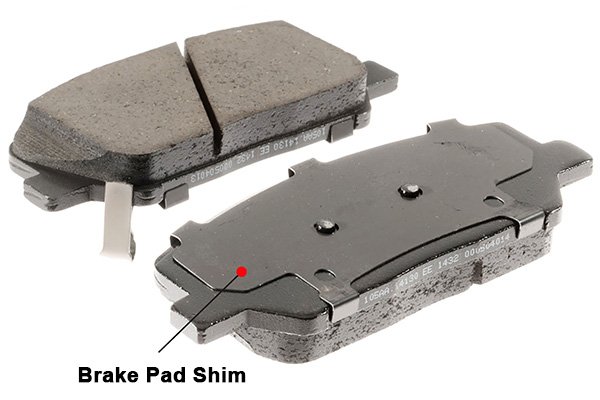
Brake squeal is essentially a high-frequency vibration. The Shim is a thin layer of metal and rubber bonded to the back of the brake pad that acts as a noise insulator.
- The GDST Difference: While budget manufacturers use thin, single-layer adhesive shims that peel off, we use multi-layer rubberized shims (often sourced from world-class suppliers like Wolverine or Trelleborg). These shims decouple the brake caliper from the pad, absorbing vibrations before they turn into noise.
Precision Chamfering: Smoothing the Edge
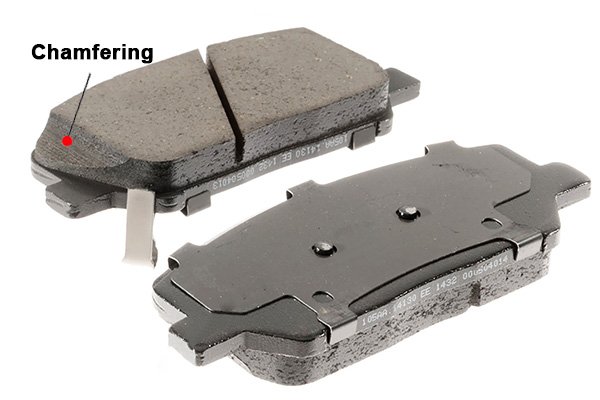
The Chamfer is the angled edge on the ends of the friction material. Without it, the leading edge of the brake pad can “dig” into the rotor, causing a vibration known as “chatter.”
- The Engineering: We use OE-style radial chamfers that reduce the contact area between the brake pad and rotor during the initial “break-in” phase. This ensures a smoother transition and prevents high-pitched squeals during light braking.
- Technical Note: Not all chamfers are created equal. At Goldenstar, we customize the chamfer angle based on the specific vehicle application. For example, a heavy-duty SUV requires a different radial angle than a compact city car to ensure optimal noise suppression and heat dissipation. This attention to detail is why our return rate due to noise is near zero.
Functional Slotting: Managing Heat and Gas
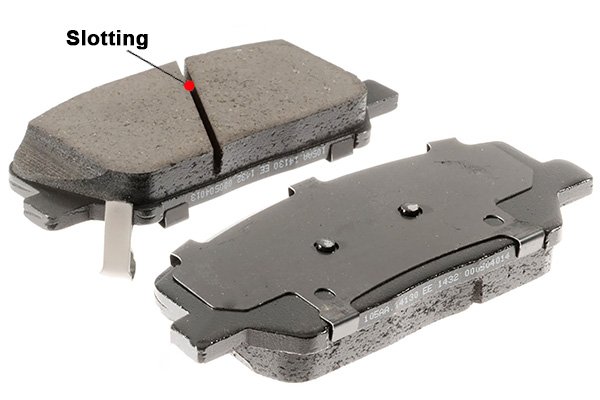
The Slot is the vertical groove cut through the center of the friction material.
- Noise Reduction: The slot changes the vibration frequency of the pad, breaking up the sound waves that would otherwise harmonize into a squeal.
- Added Benefit: Slots also provide a path for brake dust and gases to escape, ensuring that the FF-standard friction coefficient of 0.37 remains stable even during intense use.
Why “Zero Noise” is a Profit Driver for Wholesalers
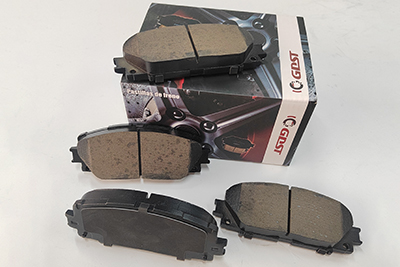
When you supply GDST zero-noise brake pads to your customers, you aren’t just selling a part—you are selling “Peace of Mind.”
- Reduce Return Claims: Address the root cause behind most “defective” product complaints.
- Higher Shop Loyalty: Mechanics love installing pads that don’t result in customer “comebacks” for noise issues.
- Premium Positioning: Position your brand as a high-end alternative to cheap, noisy competitors.
Testing for Silence
Every new formula at GDST undergoes rigorous NVH (Noise, Vibration, and Harshness) testing on a dynamometer. We ensure that our pads stay within the “Comfort Zone” across all operating temperatures.
FAQ: Engineering Secrets of Noiseless Brake Pads
A brake pad shim is a thin layer fixed to the back of the brake pad, usually made of metal combined with rubber. Its function is simple — reduce noise. When the brake pad presses against the rotor, small high-frequency vibrations can occur. The shim helps absorb those vibrations before they turn into annoying squealing sounds.
For our brake pads, multi-layer rubber-coated shims are used to improve noise control and keep braking quieter and more stable.
Chamfers are the angled edges on the friction material. They are designed to manage the contact area between the pad and the rotor. By preventing the leading edge of the pad from “digging” into the disc, chamfers eliminate “chatter” and ensure a smooth, quiet stop during the break-in period.
The slot (the groove in the middle) serves two main purposes: it changes the vibration frequency of the pad to reduce noise, and it provides a vent for brake dust and gases to escape. This helps maintain a stable friction coefficient of 0.37 even under high heat.