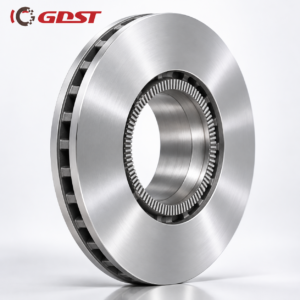
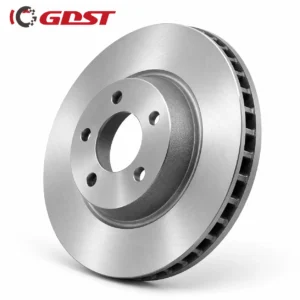
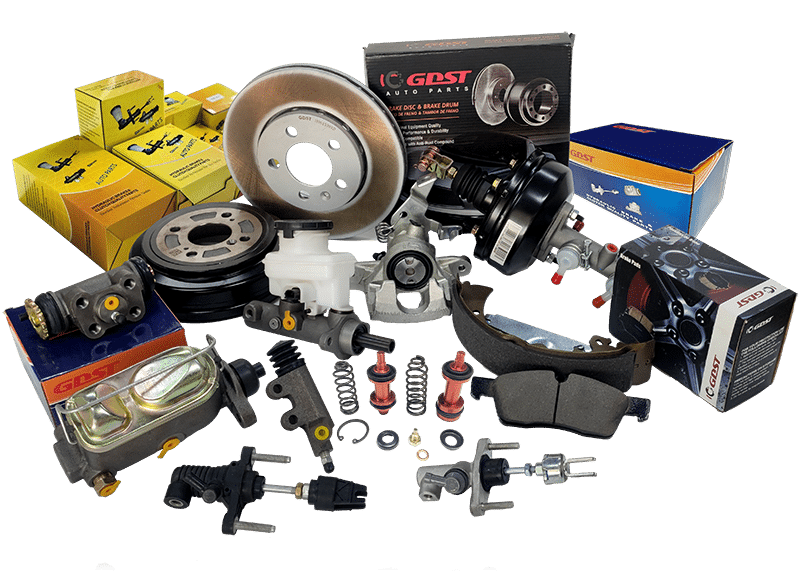


GDST supplies slotted brake rotors made from cast iron for automotive aftermarket distributors, wholesalers, and importers. Featuring machined grooves on the friction surface, these brake discs support OE matching, wholesale supply, OEM/ODM customization, and private-label packaging.
Wuhu GDST Auto Parts Co., Ltd supplies slotted cast iron brake discs for automotive aftermarket distributors, importers, wholesalers and private-label brands. Designed with machined grooves across the friction surface, slotted brake rotors help remove surface debris, moisture, and friction-related gases from the pad-disc interface under suitable operating conditions.
As an experienced automotive brake disc supplier in China, GDST provides aftermarket brake disc solutions with model matching, OEM/ODM support and bulk supply services. Our overall brake disc range covers more than 2,000 references, including different brake disc structures and applications.
Whether you are sourcing slotted brake discs for an existing product line or expanding your aftermarket brake components catalog, GDST can help you identify suitable models and discuss specifications, packaging, and wholesale requirements.
Key Supply Information
Slotted disc brake rotors, also known as slotted brake discs, are automotive brake rotors featuring machined grooves on one or both friction surfaces. These grooves are designed to help clear accumulated dust, small debris, moisture and friction-related gases from the contact area between the brake pad and rotor.
Unlike drilled brake rotors, which feature holes through the friction surface, slotted rotors use grooves that do not pass completely through the disc. Their design provides a different approach to managing the friction interface during braking.
Slotted brake discs are available in different groove configurations, depending on the vehicle application, braking system requirements and product design.
For automotive aftermarket buyers, selecting the correct slotted brake disc requires more than checking its external diameter. Overall height, disc thickness, center bore, bolt pattern, mounting geometry and OE reference compatibility must also be considered.
GDST focuses on supplying cast iron aftermarket brake discs with product specifications and model references suitable for wholesale sourcing and replacement applications.
During braking, the brake pads press against the rotating disc, generating friction that slows the wheel and vehicle.
As the brake pads contact the rotor, friction dust, small particles, moisture and other surface contaminants may accumulate at the friction interface. Under certain operating conditions, friction-related gases can also influence pad-to-disc contact.
The grooves on slotted brake rotors provide channels across the friction surface that can help remove some of these materials as the rotor rotates.
The main functions of slotted brake rotor designs include:
It is important to understand that slots do not automatically increase the rotor’s overall cooling capacity. Actual thermal performance depends on rotor mass, material properties, internal ventilation design, airflow, brake pad compound and the complete braking system.
For this reason, slotted brake discs should be selected according to verified vehicle fitment and application requirements rather than groove appearance alone.
Slotted brake discs are designed to provide a particular friction-surface configuration for automotive braking systems. Their functional characteristics depend on groove geometry, material composition, machining quality, and compatibility with the brake pads.
The defining feature of a slotted brake rotor is its machined groove pattern. The grooves create pathways across the friction surface that can help remove some debris and gases generated during braking.
Different groove arrangements can produce different contact characteristics. The appropriate design should be determined according to the intended application and validated product specifications.
Brake pad friction generates fine dust and small particles during normal operation. Slotted surfaces can help move some of these particles away from the pad contact area.
This characteristic is one reason slotted brake discs are used in various aftermarket braking applications.
GDST’s cast iron brake disc range uses grey cast iron as its primary material category.
Grey cast iron is widely used for automotive brake rotors because of its suitable friction characteristics, thermal properties, castability and manufacturing versatility.
The specific material grade and mechanical requirements should be confirmed against the technical specifications of each brake disc model.
Slotted brake discs can feature different groove directions, lengths, depths and arrangements.
The exact configuration depends on the approved product drawing and vehicle application. Groove dimensions should not be changed without considering friction performance, structural integrity and manufacturing requirements.
Slotted surfaces can be used with different underlying rotor constructions, including solid and internally ventilated designs, depending on the product application.
The friction-surface design and internal ventilation structure are separate design characteristics and should be evaluated independently.
Slotted brake discs can be classified according to their groove patterns and the underlying rotor construction.
These rotors feature machined grooves across the friction surface without drilled-through holes.
Their primary design purpose is to provide pathways for removing some debris, moisture and gases from the pad-disc interface.
Drilled and slotted rotors combine surface grooves with drilled holes.
This configuration incorporates two different surface-design features. However, its suitability depends on rotor material, drilling geometry, structural design and operating conditions.
Drilled and slotted designs should not automatically be considered superior to conventional slotted rotors for every vehicle.
A solid rotor has a single, non-ventilated disc body. When designed with a slotted friction surface, it combines the solid construction with surface grooves.
Its suitability depends on the original braking system and vehicle requirements.
Vented rotors contain internal ventilation passages between the friction faces. When combined with a slotted surface, they feature both internal airflow passages and external grooves.
The ventilation structure helps manage heat transfer, while the slots serve a different function at the friction interface.
The availability of specific configurations should be confirmed against GDST’s current product catalog.
Different brake rotor designs serve different purposes. Understanding their structural differences helps distributors and importers select appropriate products for their aftermarket catalogs.
| Brake Disc Type | Surface Structure | Main Design Characteristics | Considerations |
| Plain Brake Rotors | Smooth friction surface | Conventional friction interface | Suitable for many standard replacement applications |
| Slotted Brake Rotors | Machined surface grooves | Helps remove some debris, moisture and gases | Groove geometry can influence noise and pad wear |
| Drilled Brake Rotors | Holes through friction surface | Provides openings across the friction face | Hole geometry and material integrity require attention |
| Drilled & Slotted Rotors | Both grooves and drilled holes | Combines two surface-design features | Requires appropriate structural and application validation |
There is no universally best rotor design for every vehicle or operating condition.
For wholesale procurement, the most important considerations are OE compatibility, vehicle application, rotor dimensions, material specifications and product quality consistency.
Accurate dimensional information is essential when sourcing aftermarket slotted brake discs. Even when two rotors have similar external diameters, differences in mounting height, center bore or disc thickness can prevent correct installation.
The following table outlines the key technical parameters used for product identification and model matching.
| Technical Parameter | Description | Importance |
| Product Type | Slotted Brake Disc | Identifies the rotor configuration |
| Material | Grey Cast Iron | Determines material category |
| Outer Diameter (OD) | Overall rotor diameter | Determines dimensional compatibility |
| Disc Thickness | Nominal friction plate thickness | Affects installation and brake system compatibility |
| Minimum Thickness | Minimum permitted service thickness | Relevant to maintenance requirements |
| Overall Height | Total rotor height | Determines mounting position |
| Center Bore | Central mounting bore diameter | Ensures hub compatibility |
| PCD | Pitch Circle Diameter | Determines bolt-pattern compatibility |
| Bolt Hole Quantity | Number of mounting holes | Supports correct installation |
| Friction Surface | Slotted | Identifies surface treatment |
| Internal Construction | Solid or Vented, depending on model | Determines rotor construction |
| OE Reference | Original Equipment reference number | Supports vehicle and product matching |
| Position | Front or Rear | Identifies axle application |
Actual values vary by product model. GDST can provide available model-specific specifications for quotation and fitment confirmation.
To help identify the correct slotted brake disc, buyers are encouraged to provide the following information:
| Information Required | Example or Reference |
| OE Number | Original Equipment Part Number |
| Vehicle Make | Toyota, Ford, Volkswagen, etc. |
| Vehicle Model | Specific vehicle model |
| Production Year | Vehicle manufacturing year |
| Axle Position | Front or Rear |
| Outer Diameter | Measured rotor diameter |
| Disc Thickness | Nominal rotor thickness |
| Overall Height | Rotor mounting height |
| Center Bore | Hub center bore dimension |
| PCD | Wheel mounting bolt pattern |
Providing an OE reference number together with available dimensional information can help reduce model-matching errors.
Slotted brake rotors are used in different automotive braking applications where the corresponding rotor design is specified or approved for the vehicle.
Their suitability depends on the original braking system, vehicle weight, braking requirements, brake pad material and rotor construction.
Potential application categories include:
For each application, buyers should verify the OE reference, rotor dimensions, installation geometry and braking system compatibility before placing an order.
GDST supports model identification and aftermarket brake disc sourcing based on available product references and technical requirements.
Consistent brake disc quality is essential for aftermarket distributors and automotive parts wholesalers. Dimensional accuracy, material consistency and manufacturing control all contribute to the reliability of replacement brake components.
GDST supplies cast iron brake discs with attention to product specifications, manufacturing consistency and inspection requirements.
Grey cast iron is widely used in automotive brake disc manufacturing. Its material characteristics make it suitable for producing brake rotors with different dimensions and construction requirements.
During product development and manufacturing, important considerations include:
Quality inspection requirements may include the following items according to the product model and applicable inspection plan.
| Inspection Item | Purpose |
| Dimensional Inspection | Checks critical rotor dimensions and mounting geometry |
| Hardness Testing | Evaluates material hardness against specified requirements |
| Runout Inspection | Checks rotor surface deviation during rotation |
| Dynamic Balance Inspection | Evaluates rotational balance where applicable |
| Visual Inspection | Checks visible surface defects and manufacturing appearance |
| Thickness Inspection | Verifies friction plate thickness |
| Surface Inspection | Checks machining condition and friction surface finish |
Inspection criteria and acceptance limits should be defined according to the approved product drawings and applicable technical requirements.
Model-specific inspection documentation can be discussed during the quotation and order-confirmation process.
Choosing a brake disc supplier involves more than comparing unit prices. Importers and distributors also need consistent product sourcing, model coverage, clear purchasing conditions and dependable communication.
GDST provides automotive aftermarket brake disc sourcing services for international buyers.
GDST’s overall brake disc range includes more than 2,000 product references, covering different rotor types and automotive applications.
This broader product range supports distributors and importers looking to consolidate brake disc sourcing across multiple models.
The actual availability of slotted versions should be checked against the current product catalog.
GDST’s standard minimum order quantity for cast iron brake discs is 50 pieces per model.
This purchasing arrangement allows importers and distributors to evaluate different product references when planning their aftermarket inventory.
Special requirements should be confirmed during quotation.
The standard production lead time is approximately 50 days, subject to order confirmation, order quantity, production scheduling and packaging requirements.
For buyers managing replenishment plans or seasonal demand, confirming the production schedule in advance is recommended.
GDST provides a 12-month warranty from the date the customer receives the goods, subject to the agreed warranty terms.
If product quality issues arise during the warranty period, customers can contact GDST to discuss inspection, responsibility assessment and appropriate compensation arrangements.
GDST supports aftermarket customers looking to develop or expand their own brake disc product lines.
Depending on the product and project requirements, OEM/ODM discussions can cover:
Custom groove designs and structural modifications require technical review and validation before production.
For automotive parts brands, importers and distributors, private-label sourcing can help establish a consistent aftermarket product range.
GDST can discuss OEM and ODM requirements for slotted cast iron brake discs, including product selection, branding and packaging arrangements.
| Customization Area | Possible Requirements |
| Product Selection | Selection of available slotted brake disc references |
| Technical Specifications | Confirmation of dimensions and approved drawings |
| Branding | Customer logo and brand identification |
| Packaging | Customized product boxes and labels |
| Product Identification | OE references and customer part numbers |
| Supply Planning | Model quantities and repeat-order arrangements |
All customization details, tooling requirements, production feasibility and minimum order quantities should be confirmed before order placement.
Whether you are developing a new aftermarket brake disc range or expanding an existing catalog, GDST can discuss the sourcing requirements with your purchasing team.
GDST follows a practical sourcing process to help international buyers identify suitable products and organize bulk orders.
Step 1: Submit Your Requirements
Send your OE numbers, vehicle applications, product specifications or existing brake disc catalog.
Step 2: Product Matching
Our team reviews the available references and discusses product dimensions, construction and application compatibility.
Step 3: Quotation and Confirmation
After confirming the product requirements, we provide a quotation covering model quantities, packaging and commercial terms.
Step 4: Sample or Technical Confirmation
Where required, buyers can discuss samples, drawings and inspection requirements before bulk production.
Step 5: Bulk Production
Production is arranged according to the confirmed specifications and order requirements.
Step 6: Inspection and Shipment
The products are inspected according to the agreed quality requirements before shipment.
Slotted disc brake rotors are brake discs featuring machined grooves on their friction surfaces. These grooves help remove some debris, moisture and gases from the pad-disc interface during braking.
Slotted rotors have machined grooves across the friction surface, while drilled rotors have holes passing through the disc. Both designs have different functional and structural characteristics.
Not necessarily. Slotted rotors provide a different friction-surface design, but the best option depends on the vehicle, brake pad material, operating conditions and original braking system requirements.
Not automatically. Rotor cooling primarily depends on material, rotor mass, internal ventilation design and airflow. Surface slots have a different primary function related to the friction interface.
They can influence brake pad wear depending on groove geometry, surface finish and pad compound. Actual wear characteristics should be evaluated for the specific rotor and pad combination.
Yes, slotted friction surfaces can be incorporated into different underlying rotor constructions. Specific solid or vented models must be confirmed against the available product catalog.
GDST’s cast iron brake disc range uses grey cast iron. The specific material grade and technical requirements should be confirmed for each model.
The standard MOQ for GDST cast iron brake discs is 50 pieces per model. Specific orders and customization requirements are subject to confirmation.
The standard lead time is approximately 50 days, depending on order confirmation, quantity, production scheduling and packaging requirements.
Yes. GDST can discuss OEM/ODM sourcing, customer branding and customized packaging based on available product models and confirmed project requirements.
Looking for a reliable slotted brake disc supplier for your automotive aftermarket business?
GDST supports international importers, wholesalers, distributors and private-label brands with cast iron brake disc sourcing, product matching and OEM/ODM services.
Send us your OE numbers, product drawings or purchasing list. Our team will help you review the available references and discuss suitable sourcing solutions.
Request Your Wholesale Quotation Today.