
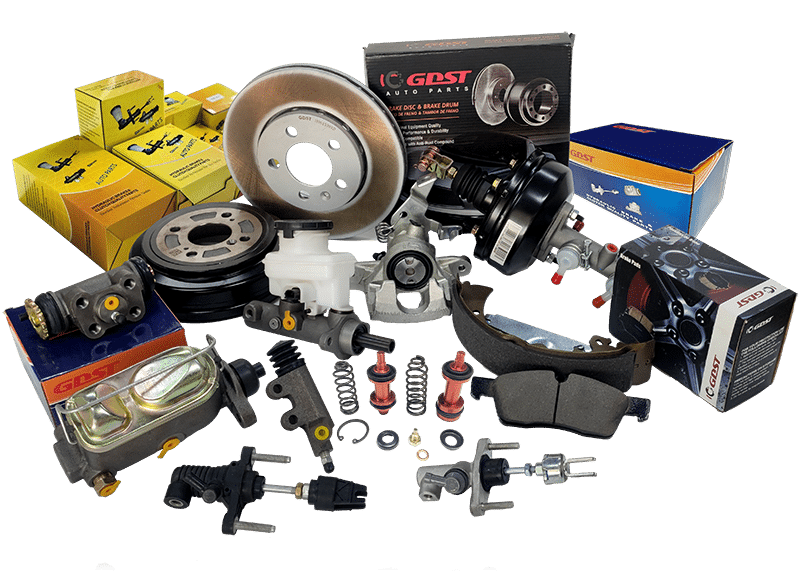


GDST Auto Parts is a China-based supplier of cast iron aftermarket brake discs for passenger vehicles. Our product range includes solid, vented, drilled, slotted, drilled-and-slotted, and coated brake discs. We provide OE reference matching, technical specification support, wholesale supply, and custom brand packaging for global importers, wholesalers, distributors, and automotive aftermarket brands.
Aftermarket Replacement Brake Discs | OE Reference Matching | Wholesale Supply
Wuhu GDST Auto Parts Co.,Ltd supplies cast-iron car brake discs for passenger vehicle aftermarket applications, supporting importers, distributors, wholesalers and automotive parts brands. Our product range covers different disc constructions and friction surface designs, including solid, vented, drilled, slotted and coated brake discs, depending on application availability.
With OE reference matching, product specification support, custom brand packaging and international order coordination, GDST helps automotive parts buyers source replacement brake discs for different vehicle applications.
Looking for a reliable brake disc supply partner? Send us your OE numbers, product requirements or vehicle applications to discuss suitable products and wholesale quotations.
| OE No. | Vehicle | Position | Height | Outer Diameter | Center Bore Diameter | Pitch Circle Diameter (PCD) | Thickness | Number of Holes | Rotor Type | Weight |
| 43512BZ230 | Toyota Agya/Wigo A350 | Front | 42.1mm | 234mm | 55mm | 100mm | 18mm | 6 | Vented | 3.64kg |
| 5001874635 | NISSAN CABSTAR | Rear | 62.2mm | 280mm | 108mm | 127mm | 16mm | 6 | Vented | 6.5kg |
| 51712-G6300 | KIA PICANTO III (JA) | Front | 43 mm | 256 mm | 62.2 mm | 100 mm | 20 mm | 6/4 | Vented | 4.7 kg |
| 45251-THA-H00 | HONDA AVANCIER (TG_) | Front | 47.2 mm | 320 mm | 64.15 mm | 114.3 mm | 28 mm | 5 | Vented | 9.2kg |
| TK78-26-251A | MAZDA CX-9 (TC) | Rear | 45 mm | 324 mm | 68 mm | 114.3 mm | 11 mm | 6/5 | Solid | 5.9 kg |
| 13584679 | VAUXHALL VIVA (C16) | Front | 41.1mm | 256mm | 60.1mm | 100mm | 20mm | 5 | Vented | 4.54kg |
| 42510-TGN-G00 | HONDA CIVIC X | Rear | 36.6 mm | 282 mm | 64.2 mm | 114.3 mm | 10 mm | 9/5 | Solid | 3.9 kg |
| 5171239000 | HYUNDAI XG | Front | 47.2mm | 276mm | 69mm | 114.3mm | 26.2mm | 7 | Vented | 6.9kg |
| 4779196AD | CHRYSLER 300 C | Front | 54.6 mm | 320 mm | 72.5 mm | 115 mm | 28 mm | 5 | Vented | 9.1 kg |
| 98635240301 | Porsche Boxster | Rear | 67 mm | 299 mm | 98 mm | 130 mm | 24 mm | 5 | Vented | 6.5kg |
A car brake disc, also known as a brake rotor, is a rotating metal component of a disc brake system. It is mounted to the wheel hub and rotates with the wheel. When the driver applies the brakes, the brake caliper presses the brake pads against the disc friction surfaces, creating friction that slows down the wheel and vehicle.
Brake discs play an important role in converting vehicle kinetic energy into heat through friction. Their design, material, dimensions and surface condition all influence braking performance, heat management and service life.
GDST supplies aftermarket replacement brake discs designed for different passenger vehicle applications. Our product range includes different disc structures and surface configurations to meet the sourcing requirements of international automotive aftermarket customers.
Key product characteristics include:
Whether you are sourcing standard replacement brake discs or expanding your existing automotive braking product range, GDST can support your product sourcing and wholesale requirements.
A car disc brake system uses hydraulic pressure and friction to slow down or stop a moving vehicle. The brake disc works together with the brake pads, caliper and hydraulic components to generate braking force.
When the driver presses the brake pedal, the master cylinder generates hydraulic pressure. Brake fluid transfers this pressure through the brake lines to the caliper pistons. The pistons push the brake pads against both sides of the rotating brake disc.
The friction between the brake pads and disc slows the rotation of the wheel, reducing vehicle speed. During this process, kinetic energy is converted into heat, which is transferred to the brake disc and surrounding air.
Main components of a car disc brake system:
The brake disc must be compatible with the brake caliper, pads, wheel hub, and vehicle braking specifications to ensure correct installation and operation.
Car brake discs are available in different constructions and friction surface designs. The appropriate type depends on vehicle specifications, braking requirements, axle configuration and intended application.
GDST supports different aftermarket brake disc configurations to meet various passenger vehicle replacement requirements.
| Brake Disc Type | Main Construction | Main Characteristics | Typical Applications |
| Solid Brake Disc | One-piece solid disc without internal ventilation channels | Simple construction and straightforward replacement design | Selected passenger car applications, including some rear axles |
| Vented Brake Disc | Two friction faces separated by internal ventilation vanes | Allows airflow through internal channels to assist heat dissipation | Passenger cars requiring ventilated disc designs |
| Drilled Brake Disc | Holes distributed across the friction surface | Helps manage water and gases at the pad-disc interface | Selected replacement and performance-oriented applications |
| Slotted Brake Disc | Machined grooves on the friction surface | Helps remove surface debris and gases from the friction interface | Selected performance-oriented applications |
| Drilled & Slotted Disc | Combines drilled holes and machined slots | Combines two friction surface design features | Selected vehicle and driving applications |
| Coated Brake Disc | Protective surface coating on specified disc areas | Helps protect exposed surfaces against corrosion | Replacement applications requiring improved corrosion protection |
| Two-Piece Floating Disc | Separate friction ring and center hat connected by mounting hardware | Designed to accommodate relative thermal movement between components | Selected high-performance applications, where available |
Solid Brake Discs
Solid brake discs feature a single-piece construction without internal ventilation channels. Their relatively simple structure makes them suitable for vehicle applications designed around solid rotors.
They are commonly found in selected rear brake applications and certain smaller or lighter vehicles.
Vented Brake Discs
Vented brake discs consist of two friction faces separated by internal ventilation vanes or channels. As the disc rotates, air can move through these internal passages, helping dissipate heat generated during braking.
Vented designs are frequently used on front axles because front brakes often handle a larger proportion of the braking load. However, the correct configuration always depends on the original vehicle design.
Drilled Brake Discs
Drilled brake discs feature holes across their friction surfaces. These openings can help manage water and gases at the pad-disc interface.
The actual braking characteristics depend on hole design, material, disc construction and friction material compatibility. Drilled discs are not automatically superior to plain or vented discs for every vehicle.
Slotted Brake Discs
Slotted brake discs feature machined grooves across the friction surfaces. These grooves help clear surface debris and gases from the pad-disc interface.
Slot geometry and arrangement should be matched to the intended vehicle application and braking requirements.
Drilled and Slotted Brake Discs
These discs combine drilled holes and machined grooves on the friction surfaces. They incorporate features of both designs, but their suitability depends on the vehicle, disc material and intended operating conditions.
Coated Brake Discs
Coated brake discs feature protective surface treatments designed to improve corrosion resistance on exposed areas, particularly the disc hat and outer edges.
Depending on the coating system, friction surface coatings may wear away during initial braking, while protective coatings on non-friction surfaces remain to provide corrosion protection.
Two-Piece Floating Brake Discs
Two-piece floating brake discs generally consist of a friction ring and a separate center hat connected by mounting hardware.
The design allows controlled relative movement between the components to accommodate thermal expansion. This construction differs from a floating caliper system and is typically used in selected performance-oriented applications.
Note: These product classifications describe different design dimensions. For example, a brake disc can be both vented and coated, or vented and slotted. Not every configuration is available for every vehicle.
Cast iron is widely used for automotive brake discs because of its combination of thermal characteristics, friction performance, wear properties, vibration damping and manufacturing suitability.
GDST focuses on cast-iron aftermarket replacement brake discs for passenger vehicle applications.
The material and construction of a brake disc influence its ability to withstand repeated braking cycles, manage friction heat and maintain dimensional stability.
Main brake disc construction features include:
For one-piece brake discs, the friction section and center mounting section form an integrated component. Two-piece designs use separate friction rings and center hats.
Material selection, casting quality, machining accuracy, and surface treatment all contribute to the finished brake disc’s dimensional and functional characteristics.
Correct brake disc selection requires more than matching the outside diameter. Several dimensional and installation parameters must be considered to ensure compatibility with the vehicle’s wheel hub, brake caliper, and braking system.
GDST supports OE reference identification and technical specification matching for aftermarket brake disc sourcing.
| Specification | Technical Term | Description |
| Outer Diameter | Disc Diameter (D) | Overall outside diameter of the brake disc |
| Nominal Thickness | Brake Disc Thickness (T) | Original specified thickness of the friction section |
| Minimum Thickness | MIN TH | Minimum permitted service thickness specified for the disc |
| Overall Height | Disc Height (H) | Overall axial height measured according to the applicable drawing |
| Center Hole Diameter | Centering Diameter | Diameter of the central locating opening |
| Number of Holes | Number of Mounting Holes | Number of mounting holes on the disc |
| Bolt Pattern | PCD / Bolt Hole Circle | Diameter of the circle passing through the mounting hole centers |
| Mounting Hole Diameter | Bore Diameter | Diameter of the mounting holes |
| Disc Construction | Solid / Vented | Internal structural configuration |
| Surface Design | Plain / Drilled / Slotted | Friction surface configuration |
| Surface Treatment | Coated / Uncoated | Protective surface treatment |
| Installation Position | Front / Rear | Intended axle position |
| OE Reference | OE Number | Original equipment reference number used for product cross-reference |
Important specification considerations:
For accurate product matching, GDST recommends confirming the OE reference number and the relevant technical dimensions before placing an order.
Brake discs must be matched to the original vehicle braking system to ensure proper installation and compatibility.
Even vehicles sharing the same model name may use different brake disc specifications depending on production year, engine configuration, trim level, brake package and axle design.
GDST supports aftermarket brake disc identification through OE references and vehicle application information.
Information recommended for product matching:
| Required Information | Example / Description |
| Vehicle Make | Toyota, Honda, Ford, Volkswagen |
| Vehicle Model | Specific passenger vehicle model |
| Production Year | Model year or production year |
| Engine Version | Engine displacement or configuration, where relevant |
| Axle Position | Front or Rear |
| OE Reference Number | Original brake disc part number |
| Brake Disc Diameter | Actual or OE-specified diameter |
| Brake Disc Thickness | Specified disc thickness |
| Disc Construction | Solid or Vented |
| Surface Design | Plain, Drilled or Slotted |
Providing the OE number is usually the most efficient starting point for identifying the correct replacement brake disc.
If the OE number is unavailable, vehicle details and existing disc measurements can help narrow down the appropriate application.
For bulk purchasing programs, GDST can also assist buyers in organizing product requirements by vehicle model, axle position and OE reference.
Brake disc quality depends on material consistency, casting integrity, machining precision, dimensional accuracy and surface condition.
For aftermarket replacement brake discs, accurate dimensions are particularly important because the disc must fit the original wheel hub and work correctly with the vehicle’s braking components.
GDST coordinates product quality requirements with its manufacturing partners and supports inspection arrangements according to agreed product specifications.
Key quality inspection areas include:
Inspection requirements can vary by product model and customer specification. Specific tolerances and test criteria should be confirmed against the approved technical drawings and inspection plan.
GDST is a China-based automotive parts supplier specializing in the development, sourcing and international supply of automotive replacement components.
Established in 2002, GDST works with an extensive network of manufacturing partners to support international automotive aftermarket customers.
For car brake disc sourcing, GDST focuses on product identification, OE reference matching, specification confirmation, order coordination and export supply.
Our services are suitable for:
Why Work with GDST?
OE Reference-Based Product Matching
We support brake disc identification using OE numbers, vehicle applications and relevant technical dimensions to help buyers select suitable replacement products.
Multiple Brake Disc Configurations
Our sourcing range covers different brake disc constructions and surface designs, depending on product availability and vehicle requirements.
Wholesale Order Support
GDST supports bulk purchasing programs with model-based minimum order quantities and coordinated international supply.
Custom Brand Packaging
Custom brand packaging is available for buyers developing their own automotive aftermarket product lines.
International Export Experience
With more than 20 years of automotive parts supply experience, GDST understands the product identification, communication and coordination requirements of international aftermarket customers.
After-Sales Support
GDST provides a one-year product warranty from the date the customer receives the goods, subject to the agreed product and warranty terms.
GDST supports wholesale brake disc orders for international automotive aftermarket buyers.
Our standard purchasing conditions are designed to help importers and distributors plan their sourcing and inventory requirements.
| Item | GDST Supply Terms |
| Minimum Order Quantity | 50 pcs per model |
| Standard Lead Time | 50 days |
| Product Warranty | 1 year from the date the customer receives the goods |
| Brand Packaging | Custom brand packaging supported |
| Product Matching | OE reference and technical specification matching |
| Customer Type | Importers, distributors, wholesalers and aftermarket brands |
Custom Brand Packaging
For customers developing their own automotive aftermarket brands, GDST supports customized brand packaging.
Packaging requirements, artwork, labels and carton specifications can be discussed and confirmed before production.
How to Request a Wholesale Quotation
To help us prepare an accurate quotation, please provide:
Our team can review your requirements and coordinate product matching and quotation details.
A car brake disc, also called a brake rotor, is a rotating metal component mounted to the wheel hub. It works with the brake pads and caliper to generate friction and slow down the vehicle.
Yes. Brake disc and brake rotor generally refer to the same automotive component. Brake disc is commonly used in British English and international automotive parts terminology, while brake rotor is widely used in North America.
Many modern passenger vehicles with four-wheel disc brakes have four brake discs, one at each wheel. However, vehicles equipped with rear drum brakes generally have two front brake discs and two rear brake drums.
The main construction types are solid and vented brake discs. Friction surface designs include plain, drilled, slotted and drilled-and-slotted configurations. Coated brake discs provide additional corrosion protection on specified surfaces.
Solid brake discs have a single solid structure without internal ventilation channels. Vented brake discs have two friction faces separated by internal vanes, allowing airflow through the disc to assist heat dissipation.
Not necessarily. Drilled and slotted designs offer different friction surface characteristics, but their suitability depends on the vehicle’s braking system, disc material, brake pad compatibility and intended application. The original vehicle specification should guide replacement selection.
Start with the OE reference number. You should also confirm the vehicle make, model, production year, engine version and axle position. Technical dimensions such as outer diameter, thickness, overall height, center bore and PCD should be checked before ordering.
MIN TH means minimum thickness. It indicates the minimum permitted thickness of the brake disc during service. If the disc reaches or falls below this limit, it must be replaced according to the vehicle manufacturer’s requirements.
Brake discs are generally replaced in pairs on the same axle to help maintain balanced braking performance. The replacement decision should also consider disc condition, vehicle manufacturer recommendations and the condition of the brake pads.
Yes. GDST supports wholesale aftermarket brake disc sourcing for automotive parts importers, distributors and aftermarket brands. Our standard MOQ is 50 pieces per model, with a standard production time of 50 days.
Yes. GDST supports custom brand packaging for wholesale customers. Packaging artwork, labels and carton specifications can be discussed and confirmed before production.
GDST provides a one-year warranty from the date the customer receives the goods, subject to the agreed product and warranty terms.
Looking for a dependable supply of aftermarket car brake discs?
Whether you need standard replacement brake discs, different disc configurations or custom brand packaging, GDST can support your automotive parts sourcing requirements.
Send us your OE references, vehicle applications and estimated quantities. Our team will help review the product requirements and provide a suitable wholesale quotation.
Work with GDST for your aftermarket brake disc sourcing needs.