
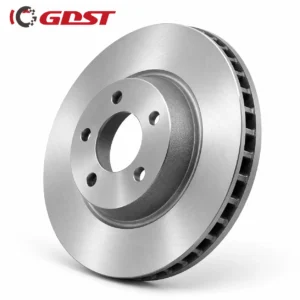
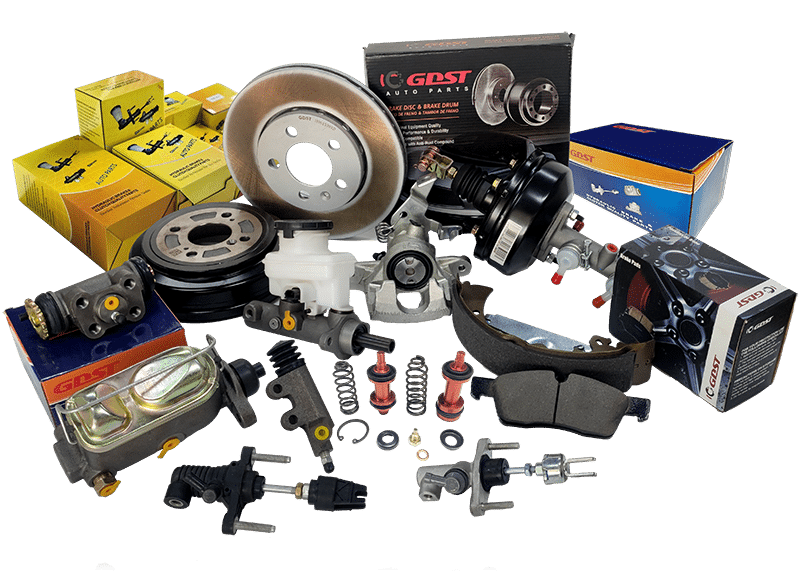


GDST Auto Parts is a China-based supplier of aftermarket disc brake rotors, with over 2,000 models for passenger cars, SUVs, pickups, and selected commercial vehicles. Our product range includes solid, ventilated, coated, drilled, slotted, and two-piece rotors. We provide OEM/ODM services, quality inspection, and private-label packaging for all customers.
Wuhu GDST Auto Parts Co.,Ltd supplies automotive brake discs and brake rotors for aftermarket replacement, wholesale distribution, and private-label programs. With a catalog covering over 2,000 brake disc and rotor models, we support a range of passenger car, SUV, pickup, and commercial vehicle applications.
Our product range covers different rotor constructions, surface designs, and material requirements, including solid rotors, ventilated rotors, coated brake discs, and specialized two-piece configurations. We also support OE reference matching, product identification, and customized sourcing to help buyers find the right brake rotors for their markets.
Whether you are an importer, distributor, automotive parts wholesaler, or aftermarket brand, GDST provides coordinated product sourcing, quality inspection, and export supply solutions.
Looking for a brake rotor supplier for your next order? Send us your OE numbers or product requirements for a quotation.
| OE No. | Vehicle | Mounting Position |
Height | Outside Diameter |
Centering Diameter / Center Bore Diameter |
Pitch Circle Diameter (PCD) |
Thickness | Number of Holes | Rotor Type | Weight |
| 43512BZ230 | Toyota Agya/Wigo A350 | Front | 42.1mm | 234mm | 55mm | 100mm | 18mm | 6 | Vented | 3.64kg |
| 1904531 | IVECO DAILY | Front | 142mm | 280mm | 58.3mm | 170mm | 16mm | 6 | Solid | 13.3kg |
| 3092710 | VOLVO FH12 | Front | 45mm | 434mm | 220mm | / | 45mm | / | Solid | 34.6kg |
| 5001874635 | NISSAN CABSTAR | Rear | 62.2mm | 280mm | 108mm | 127mm | 16mm | 6 | Vented | 6.5kg |
| 68323740 | RENAULT TRUCKS MAGNUM | Rear | 162.8mm | 434mm | 260mm | 335mm | 45mm | 10 | Solid | 50.5kg |
| 6172906 | FORD Cargo | Front | 126mm | 322mm | 148mm | 205mm | 30mm | 6 | Vented | 15.9kg |
| AMPB889 | DAF F1000/F800/F600 | Front | 122mm | 315mm | 119mm | 138mm | 26mm | 10 | Vented | 13kg |
| 81508030010 | MAN L2000 | Front | 102mm | 324mm | 135mm | 158mm | 30mm | 10 | Vented | 13.8kg |
| 1402272 | SCANIA 4 | Front/Rear | 131mm | 430mm | 208mm | 237mm | 45mm | 10 | Vented | 31.94 kg |
| 9754210012 | MERCEDES-BENZ ATEGO | Front | 134mm | 377mm | 105.6mm | 138mm | 45mm | 14 | Vented | 23.9 kg |
Brake discs and brake rotors refer to the same rotating component in automotive disc brake systems. They provide the friction surfaces against which brake pads press to slow down or stop a vehicle.
Different vehicles require different rotor constructions, dimensions, and surface designs. GDST offers a range of brake disc configurations for replacement and aftermarket supply programs.
Our product categories include:
| Product Type | Main Characteristics | Typical Applications |
| Solid Brake Rotors | Non-ventilated construction with two friction faces | Applications specified with solid rotors |
| Ventilated Brake Rotors | Internal air passages help dissipate braking heat | Applications requiring ventilated rotors |
| Plain Brake Rotors | Smooth, unmodified friction surfaces | Standard aftermarket replacement |
| Coated Brake Rotors | Protective surface treatment for corrosion resistance | Replacement applications requiring surface protection |
| Slotted Brake Rotors | Machined grooves across the friction surfaces | Selected performance and replacement applications |
| Drilled Brake Rotors | Engineered holes across the friction surfaces | Selected performance applications |
| Drilled & Slotted Rotors | Combined drilled and slotted surface design | Specific performance-oriented applications |
| Two-Piece Floating Rotors | Separate friction ring and center hat with a floating connection | Selected high-performance braking systems |
Product availability depends on vehicle application, design requirements, and order specifications.
Front and rear brake rotors are not necessarily interchangeable. They may differ in diameter, thickness, overall height, mounting dimensions, and construction.
Front brake rotors often have different thermal and structural requirements because the front axle generally handles a larger proportion of the vehicle’s braking force. Depending on the original brake system, front rotors may use ventilated construction, while rear rotors may use solid or ventilated designs.
GDST supports front and rear brake disc sourcing for selected automotive applications.
Front Brake Rotors
Front disc brake rotors are designed to match the original front braking system. Depending on the vehicle, they may feature larger diameters, ventilated structures, or application-specific vane configurations.
When sourcing front brake rotors, buyers should verify the OE reference number, rotor diameter, nominal thickness, overall height, center bore, and mounting dimensions.
Rear Brake Rotors
Rear brake rotors are designed according to the vehicle’s rear axle braking configuration. Some applications use solid rotors, while others require ventilated or specially configured designs.
The correct rear brake rotor must match the original equipment specifications and rear brake assembly.
Vehicle Applications
GDST’s brake disc catalog covers selected applications for:
Send us your vehicle information or OE references to check the corresponding brake rotor application.
Brake rotors are available in different constructions and surface designs. Understanding these differences helps buyers select suitable products for their aftermarket programs.
Solid Brake Rotors
Solid rotors feature a non-ventilated construction without internal cooling passages. They are commonly used in applications where the original braking system specifies this design, including certain rear brake configurations.
Their relatively simple construction makes them suitable for many standard replacement applications.
Ventilated Brake Rotors
Ventilated rotors contain internal air passages between their friction faces. As the rotor rotates, airflow through these passages helps dissipate heat generated during braking.
Vane designs may vary according to the original equipment requirements, including straight and curved configurations.
Plain Brake Rotors
Plain or blank brake rotors have smooth friction surfaces without drilled holes or machined slots. They are widely used in standard automotive replacement applications.
Drilled Brake Rotors
Drilled rotors feature engineered holes across the friction surface. Their design may assist in managing surface water and debris under specific operating conditions.
Hole geometry, spacing, and structural design must be considered carefully because drilling can introduce additional stress concentrations.
Slotted Brake Rotors
Slotted rotors feature machined grooves on the friction surfaces. Depending on the design, these grooves can help clear friction debris and maintain the pad contact surface during braking.
Drilled and Slotted Brake Rotors
These rotors combine drilled holes and machined slots. Their suitability depends on the intended application, braking conditions, and overall rotor design.
Coated Brake Rotors
Protective coatings are applied to selected rotor surfaces to help reduce corrosion on exposed areas. Coating type and coverage can be specified according to product requirements.
Material selection and dimensional accuracy are important considerations when sourcing automotive brake discs.
Gray Cast Iron Brake Rotors
Cast iron is widely used in conventional automotive brake rotors because of its thermal properties, wear characteristics, and suitability for mass-market replacement applications.
The material grade and mechanical properties should be selected according to the relevant vehicle and product specifications.
High-Carbon Cast Iron Brake Rotors
High-carbon cast iron formulations can be used in selected applications requiring specific thermal and mechanical characteristics. Material composition and performance requirements should be confirmed against the applicable technical specification.
C/SiC Carbon Ceramic Brake Rotors
For selected high-performance applications, GDST also supplies C/SiC carbon ceramic brake rotors.
These products use a carbon-fiber-reinforced silicon carbide material system and are intended for applications requiring specialized thermal and braking characteristics.
Custom center hats and mounting interfaces can be discussed according to customer drawings and vehicle requirements. Two-piece floating configurations are also available for applicable projects.
Brake Rotor Technical Specifications
The following parameters can be used to identify and verify brake rotor models.
| Specification | Description |
| OE Reference Number | Original equipment cross-reference |
| Application Position | Front or rear axle |
| Rotor Construction | Solid, ventilated, one-piece, or two-piece |
| Material | Specified cast iron or C/SiC material |
| Outer Diameter | Outside diameter of the rotor |
| Nominal Thickness | Original specified rotor thickness |
| Minimum Thickness | Manufacturer-defined discard thickness |
| Overall Height | Total rotor height |
| Center Bore | Center mounting bore diameter |
| Bolt Hole Quantity | Number of mounting holes |
| Bolt Hole PCD | Pitch circle diameter of mounting holes |
| Vane Configuration | Internal ventilation vane design |
| Surface Design | Plain, drilled, or slotted |
| Surface Treatment | Specified coating or finishing process |
| Product Weight | Finished rotor weight |
Actual specifications vary by product model. Detailed dimensional information can be provided according to the OE reference, technical drawing, or sample supplied by the customer.
Choosing the correct brake rotor requires more than matching its general appearance. Even rotors designed for the same vehicle model may differ according to model year, engine configuration, trim level, axle position, and brake system specifications.
GDST provides product identification and OE reference support to help customers reduce sourcing errors.
For accurate brake rotor identification, we recommend providing:
Our team can review the available information, cross-reference product numbers, and help identify suitable replacement brake rotors.
For buyers developing a new product line, sample-based evaluation and specification review can also be discussed.
Consistent product dimensions and manufacturing quality are essential for automotive brake rotors. GDST coordinates brake disc production through invested manufacturing facilities and long-term manufacturing partners to support different aftermarket product requirements.
For conventional cast iron brake rotors, manufacturing processes may include:
Inspection requirements are determined by the product specifications and customer requirements.
Quality Inspection
Depending on the product and applicable inspection plan, quality checks may cover:
| Inspection Item | Quality Objective |
| Visual Inspection | Check surface condition and visible defects |
| Dimensional Inspection | Verify critical dimensions against specifications |
| Thickness Inspection | Check nominal thickness and thickness consistency |
| Hardness Testing | Verify material hardness against specified requirements |
| Runout Inspection | Check lateral runout against applicable tolerances |
| Dynamic Balance | Verify balance requirements where applicable |
| Coating Inspection | Check coating coverage and corrosion protection requirements |
GDST’s wider manufacturing network is supported by ISO and IATF 16949 quality management systems within the applicable certified facilities and scopes. Inspection arrangements can be coordinated according to the specific product and order requirements.
Our objective is to help customers source brake rotors with consistent specifications, dependable fitment, and documented quality requirements.
Different aftermarket brands and distributors have different product specifications, packaging requirements, and market positioning.
GDST supports customized sourcing and product development for customers seeking more than standard replacement brake rotors.
Our available customization services include:
Product Specifications
C/SiC Carbon Ceramic Rotor Customization
For applicable carbon ceramic projects, customers can discuss:
Private Label and Packaging
Send your technical drawings, samples, or existing product references for an initial evaluation.
GDST works with international automotive parts wholesalers, importers, distributors, and aftermarket brands.
Our business combines invested manufacturing resources, qualified manufacturing partners, technical coordination, and export supply experience.
Key purchasing information:
| Item | GDST Supply Information |
| Product Coverage | 2,000+ brake disc and rotor model references |
| MOQ | 50 pcs per model |
| Standard Lead Time | Approximately 50 days after order confirmation |
| Warranty | 12 months after receipt of goods |
| OEM / ODM | Available for applicable products |
| Private Label | Customized branding and packaging |
| Product Matching | OE reference and specification verification |
| Sample Support | Available upon discussion; sample freight applies |
Whether you are expanding an existing brake parts catalog or developing a new aftermarket product range, GDST can coordinate product identification, specification review, packaging, and wholesale supply.
Are brake discs and brake rotors the same thing?
Yes. In automotive disc brake systems, brake disc and brake rotor generally refer to the same rotating component. The terminology varies across markets.
Can GDST supply front disc brake rotors?
Yes. GDST supports front and rear brake rotor sourcing for selected vehicle applications. OE references and dimensions help confirm the correct model.
What is the difference between solid and ventilated brake rotors?
Solid rotors have no internal ventilation passages. Ventilated rotors contain internal air channels that help dissipate braking heat.
Are front and rear brake rotors interchangeable?
Not necessarily. They can differ in diameter, thickness, construction, and mounting dimensions. Always verify the axle application and OE specifications.
What information is needed to identify a brake rotor?
An OE number is preferred. Vehicle make, model, year, axle position, rotor dimensions, and product photographs can also help identify the correct part.
Does GDST supply two-piece floating and C/SiC carbon ceramic brake rotors?
Yes. GDST can discuss C/SiC carbon ceramic rotors, including customized center hats, mounting interfaces, and two-piece floating configurations for applicable projects.
What is the MOQ for GDST brake rotors?
The standard MOQ is 50 pieces per model. Specific requirements can be discussed with our sales team.
What are the lead time and warranty?
The standard lead time is approximately 50 days after order confirmation. GDST provides a 12-month warranty after receipt of goods.
Looking for a dependable brake disc supplier for your aftermarket business?
Send us your OE reference numbers, product list, technical drawings, or sample requirements.
Our team can assist with product identification, specification review, customized sourcing, and wholesale quotations.
Contact GDST today to discuss your brake rotor requirements and build a reliable aftermarket supply partnership.