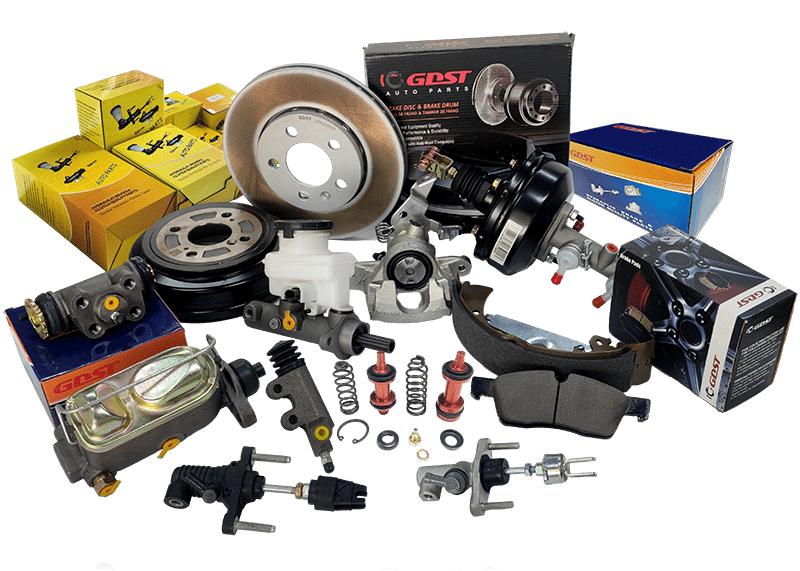
Struggling with suppliers who send great samples but deliver inconsistent bulk orders? You're not alone. This uncertainty can damage your brand and profits, creating a major headache.
Choosing the right manufacturer involves evaluating their ability to maintain batch quality, customize formulations for your market, and provide stable delivery. Focus on your total procurement risk, not just the unit price, to find a long-term partner who supports your business's growth and reputation.
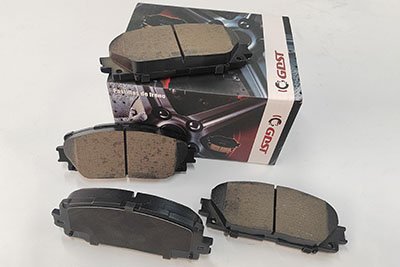
I've talked to countless procurement managers and brand owners over the years. We spend hours on video calls and at trade shows, and the same worries always come up. It's never just about finding the cheapest part; it's about finding a reliable partner who won't let you down when thousands of units are on the water. This is a risk-control decision, not a simple sourcing task. Let's break down the questions I hear most often and what you should really be looking for in a supplier.
Can the Manufacturer Keep the Same Quality in Bulk Orders?
You approved a perfect sample, and it performed beautifully. But now you're worried. Will the thousands of sets in your container match the quality you signed off on?
Yes, they can, but only if they have strong process controls. Look for IATF 16949 certification1, in-house testing for consistency (like shear strength and friction level2), and full material traceability3. This is what ensures the sample's quality is repeatable on a large scale.
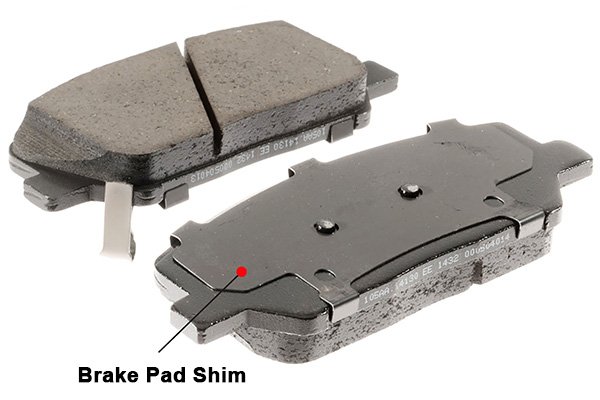
This is the number one question I get from buyers. A sample is one thing; a 40-foot container is another. A factory can put extra effort into making a dozen perfect samples. The real test is whether their standard production process can replicate that quality day in and day out. This is where process control becomes everything. A supplier who talks about their IATF 16949 certification isn't just checking a box; they are showing you they have a system designed for consistency. This system governs everything from raw material inspection to the final packaging. I always tell buyers to dig deeper than just asking "is it certified?" Ask them how they ensure batch consistency.
From Sample to Shipment: The Quality Gap
The real difference between a sample and a bulk order is variability. A supplier must have systems to control it. This includes things like advanced mixing equipment to ensure every batch of friction material is identical and automated presses that apply the exact same pressure and temperature every single time4. Without this, the first set in the container might be great, but the 5,000th set could be completely different, leading to noise or performance complaints from your customers.
Key Questions for Supplier Evaluation
When you talk to a potential supplier, ask them to walk you through their production process. Don't just accept "yes" for an answer. Ask for proof. Here are some key areas to investigate:
| Evaluation Area | What to Ask For | Why It Matters |
|---|---|---|
| Certifications | IATF 16949, ECE R905, ISO 9001 | Shows commitment to a systematic, repeatable quality process. |
| Batch Testing | Proof of in-house testing (shear, density, friction) | Confirms they test every batch, not just random samples. |
| Traceability | A system to track materials from source to final product | Allows you to trace any issue back to its root cause. |
| Equipment | Details on their mixing, pressing, and curing lines | Modern, automated equipment reduces human error and inconsistency. |
Is the Lowest Price Really the Best Deal?
A low price quote looks great on your spreadsheet. But what are the hidden costs of choosing a supplier based on price alone? The answer can be surprisingly expensive.
Not usually. A low unit price often hides risks like inconsistent quality, higher return rates6, and damage to your brand's reputation. Calculating the total cost, including potential warranty claims and lost sales7, provides a more accurate picture of the true cost to your business.

I’ve seen it happen many times. A buyer switches to a new, cheaper supplier to save a few dollars per set. Everything seems fine for the first six months. Then the calls start coming in from their distributors. Customers are complaining about noise, excessive dust, or poor stopping power. Now, that "cheaper" brake pad is costing them a fortune in warranty claims, labor costs for replacements, and, worst of all, damage to their brand's reputation. The price on the invoice is only one part of the equation. A reliable manufacturer helps you avoid costs, not just cut them upfront.
The Hidden Costs of a "Cheap" Brake Pad
A supplier offering a price that seems too good to be true is probably cutting corners somewhere. This can manifest in several ways: using lower-grade raw materials, skipping critical curing or scorching steps8, or failing to perform adequate quality control on each batch. While this saves them money, it transfers the risk directly to you and your customers. The end-user doesn't care that you got a good price; they only care that the brake pads on their car are squealing.
Calculating Your Total Procurement Risk
Instead of focusing only on the unit price, experienced importers think in terms of Total Cost of Ownership (TCO)9. This approach helps you see the bigger picture. A slightly higher unit price from a certified, reliable manufacturer can lead to a much lower TCO because you have fewer problems down the line.
| Cost Factor | Low-Price Supplier | Reliable Partner |
|---|---|---|
| Unit Price | $ | $$ |
| Return/Warranty Costs | High | Very Low |
| Reputation Damage | High Risk | Low Risk |
| Customer Support Load | High | Low |
| Lost Future Sales | Potential | Unlikely |
| Total Cost | Potentially Very High | Predictable & Lower |
When you look at it this way, investing in a quality-focused partner is one of the smartest financial decisions you can make.
Is "Ceramic" a Good Enough Formulation Choice?
You're asked to choose from a list: ceramic, semi-metallic, or low-metallic10. But is that the whole story? Picking a generic label without understanding the details can lead to unhappy customers.
No, it's just a starting point. A good manufacturer should ask about your target market, common vehicles, and customer expectations for noise and dust. The right formulation is a perfect match between the material and the specific driving conditions of your region11.
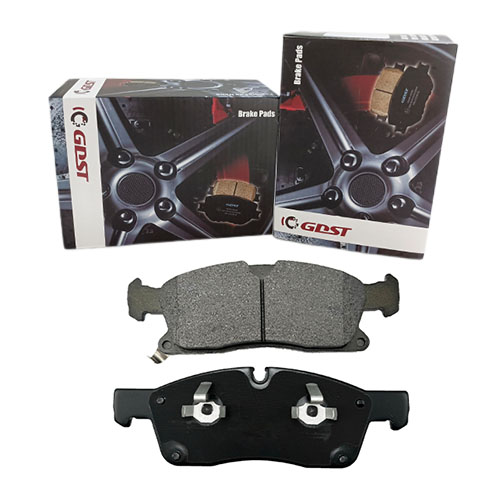
One of the biggest mistakes I see buyers make is treating friction formulations like simple menu items. They say, "I want ceramic for the American market and low-metallic for the European market." While that's a common starting point, a truly expert manufacturer won't just take that order. They will start asking questions. What kind of vehicles are most popular in your region? Are your customers driving in heavy city traffic or on long, high-speed highways? Are they more concerned about a little bit of brake dust or a potential squeal? These questions are a sign that the manufacturer understands that the "best" formulation is different for everyone.
Beyond the Label: What "Ceramic" Really Means
The terms "ceramic" and "semi-metallic" are broad categories. A "ceramic" formulation for a light passenger car in North America is completely different from one designed for a light truck or SUV. A good supplier has dozens of different formulations within each category, each tuned for specific applications. They should be able to explain why a particular formulation is right for you, discussing its wear characteristics, noise-vibration-harshness (NVH) profile, and performance under heat12. If a supplier just says "our ceramic is good," without any follow-up questions, it's a red flag.
A Conversation, Not Just an Order
A procurement discussion should be a two-way street. Your supplier should be a technical consultant, not just an order-taker. Be prepared to share information about your market, and expect them to provide detailed insights in return.
| Discussion Point | What You Provide | What Your Supplier Should Provide |
|---|---|---|
| Target Market | North America, Europe, Middle East, etc. | Recommendations based on regional driving habits and vehicle types. |
| Vehicle Fleet | Predominantly Japanese cars, German SUVs, etc. | Specific formulations tested for those applications. |
| Customer Priority | Quiet operation, low dust, long life, stopping power | A formulation that balances these priorities for your market. |
| Climate | Hot and dry, cold and wet, mountainous terrain | Insight into how temperature and humidity affect performance. |
This collaborative approach ensures you get a product that doesn't just fit the car, but also fits the customer's expectations.
Does the Manufacturer Support Your Business Beyond Production?
Your business needs more than just a box of brake pads. You need a partner who helps you grow, not just a factory that fulfills a single purchase order.
A true partner supports your commercial success. This includes providing stable bulk supply, flexible private labeling and packaging, broad model coverage, and the ability to mix containers. This support is crucial for your channel growth and market expansion.

I remember a conversation with a distributor from South America. He had a strong brand, but his previous supplier was inflexible. They had high minimum order quantities (MOQs) per model, which tied up his cash in slow-moving inventory. They couldn't help him with custom packaging, and their model coverage was limited. He was a successful distributor, but his supplier was holding his business back. When he switched to a partner who understood his commercial needs, his business took off. The right manufacturer understands they are a component of your supply chain and that their job is to make you successful in your market.
Your Brand, Your Box
For private label brand owners, the packaging is almost as important as the part inside. It’s your primary marketing tool on the shelf. A good manufacturing partner should offer comprehensive support for your branding. This isn't just about printing your logo on a box. It involves helping with box design that protects the product during long-distance shipping, using the correct barcodes for your distribution system, and ensuring all labeling meets your region's legal requirements. This level of detail shows that the supplier is invested in your brand's success, not just in shipping a product.
The Importance of Model Coverage and Logistics
You can't be a major player in your market if you're constantly telling customers "we don't have that part number." A top-tier manufacturer must offer a wide range of models covering the most popular Asian, European, and American vehicles in your region. Furthermore, they need to be flexible. For importers and distributors, managing cash flow is critical. The ability to mix many different part numbers in a single container, even in smaller quantities, is a massive advantage. It allows you to offer a broad catalog without tying up all your capital in inventory for just a few fast-moving parts.
| Value-Added Service | Why It's Critical for Your Business |
|---|---|
| Private Labeling | Builds your brand equity and customer loyalty. |
| Custom Packaging | Protects the product and reinforces your brand identity. |
| Broad Model Coverage | Makes you a one-stop-shop for your customers. |
| Mixed Container Loading | Improves your inventory efficiency and cash flow. |
Conclusion
Choosing the right brake pad manufacturer is about managing risk and building a partnership. Focus on consistent quality, formulation expertise, and commercial support, not just the initial unit price.
"IATF 16949 - Wikipedia", https://en.wikipedia.org/wiki/IATF_16949. The IATF 16949 automotive quality-management standard specifies requirements intended to prevent defects and reduce variation and waste in automotive supply chains; this supports using certification as evidence of process discipline, although certification alone does not verify the quality of a particular shipment. Evidence role: definition; source type: institution. Supports: The source should explain that IATF 16949 defines automotive quality management requirements emphasizing defect prevention and reduction of variation and waste in the supply chain.. Scope note: Certification supports the presence of a management system, not direct proof that every production batch will meet the approved sample. ↩
"[PDF] Compositions, Functions, and Testing of Friction Brake Materials ...", https://info.ornl.gov/sites/publications/Files/Pub57043.pdf. Standardized brake-lining test methods such as ISO shear-strength testing and SAE friction-material testing measure mechanical bonding and friction behavior, supporting the use of shear strength and friction level as indicators of brake-pad production consistency. Evidence role: mechanism; source type: institution. Supports: The source should document recognized test methods for brake lining shear strength and friction characteristics.. Scope note: These tests characterize important properties, but a passing result does not by itself cover all safety, durability, noise, or wear outcomes. ↩
"ISO 9001 – Clause 8.7 – Control of Nonconforming Outputs", https://www.isms.online/iso-9001/clause-8-7-control-of-nonconforming-outputs/. Quality-management guidance on traceability links product outputs to materials, processes, and records, enabling investigation of nonconformities and corrective action; this supports the claim that material traceability aids root-cause analysis in brake-pad production. Evidence role: mechanism; source type: institution. Supports: The source should explain that traceability in quality management links inputs, processes, and outputs to support investigation of nonconforming products.. Scope note: Traceability helps locate likely sources of defects, but it does not prevent defects unless paired with effective process controls. ↩
"Investigation of mechanical properties and performance ... - PMC - NIH", https://pmc.ncbi.nlm.nih.gov/articles/PMC12402442/. Research on brake friction materials reports that processing variables such as pressure, temperature, compaction, and curing influence material density, bonding, friction behavior, and wear; this supports the importance of controlled pressing conditions for repeatable production. Evidence role: mechanism; source type: paper. Supports: The source should show that processing conditions such as pressure, temperature, curing, and compaction influence brake friction-material density, bonding, wear, or friction behavior.. Scope note: The evidence supports the mechanism generally and may not test the specific manufacturer or equipment described in the article. ↩
"ECE Regulation 90 - Wikipedia", https://en.wikipedia.org/wiki/ECE_Regulation_90. UNECE Regulation No. 90 sets type-approval requirements for replacement brake linings and related components, including performance-related criteria; this supports the relevance of ECE R90 in supplier evaluation, although it does not replace buyer-specific quality audits. Evidence role: definition; source type: institution. Supports: The source should show that UNECE Regulation No. 90 governs approval requirements for replacement brake linings and related brake components.. Scope note: The regulation establishes approval requirements, but it does not guarantee ongoing production consistency for every supplier batch. ↩
"Supply Chain Proximity and Product Quality", https://www.kellogg.northwestern.edu/faculty/bray/doc/prox/Bray,%20Serpa,%20Colak%20-%202019%20-%20Supply%20Chain%20Proximity%20and%20Product%20Quality(2).pdf. Studies of supplier quality and the cost of poor quality associate upstream quality defects with downstream failures, warranty costs, and product returns; this supports treating higher return rates as a plausible procurement risk when supplier quality is weak. Evidence role: general_support; source type: paper. Supports: The source should show that supplier quality problems can increase failures, warranty costs, returns, or other costs of poor quality.. Scope note: The evidence supports the general relationship between supplier quality and returns, not a universal rule that every lower-priced supplier will have higher returns. ↩
"(PDF) Total Cost Of Ownership - Academia.edu", https://www.academia.edu/25629804/Total_Cost_Of_Ownership. Purchasing research on total cost of ownership treats supplier cost as extending beyond invoice price to include quality, service, failure, and lifecycle costs; this supports including warranty claims and lost sales in procurement evaluation. Evidence role: expert_consensus; source type: paper. Supports: The source should describe total cost of ownership in purchasing as including acquisition, use, quality, service, and failure-related costs beyond the purchase price.. Scope note: The literature provides a general procurement framework rather than brake-pad-specific cost estimates. ↩
"Temperature Influence on Brake Pad Friction Coefficient Modelisation", https://pmc.ncbi.nlm.nih.gov/articles/PMC10779514/. Brake-friction-material studies describe curing and scorching as processing steps that can alter resin stabilization, surface condition, friction behavior, fade resistance, and sometimes noise-related characteristics; this supports the claim that omitting such steps can affect product performance. Evidence role: mechanism; source type: paper. Supports: The source should explain how post-curing or scorching treatments affect resin stabilization, friction behavior, fade, emissions, or noise in brake friction materials.. Scope note: The exact effect depends on the specific formulation and process parameters used by a given manufacturer. ↩
"Analyzing Costs Using Total Cost of Ownership", https://psep.smeal.psu.edu/short-courses/supply-chain-accelerator/advanced-procurement-analyzing-costs-using-total-cost-of-ownership. Procurement scholarship defines total cost of ownership as a structured approach for estimating all significant costs associated with acquiring, using, and managing a supplier relationship, supporting its use as an alternative to unit-price-only evaluation. Evidence role: definition; source type: paper. Supports: The source should define TCO in purchasing and explain its role in supplier evaluation and cost analysis.. Scope note: TCO is a decision framework and requires buyer-specific data to quantify actual costs. ↩
"Brake pad - Wikipedia", https://en.wikipedia.org/wiki/Brake_pad. Reference sources on brake pads classify friction materials into categories such as ceramic, semi-metallic, and low-metallic while also describing them as composite mixtures with varied constituents; this supports treating the labels as broad categories rather than complete formulation specifications. Evidence role: definition; source type: encyclopedia. Supports: The source should describe common brake pad material categories and note that friction materials contain varied mixtures of fibers, binders, abrasives, fillers, and modifiers.. Scope note: An encyclopedia source gives background definitions and may not capture proprietary formulation differences among manufacturers. ↩
"Study on the Influence of Friction and Wear Properties of High ...", https://pmc.ncbi.nlm.nih.gov/articles/PMC9961943/. Experimental studies of brake friction materials show that friction and wear behavior vary with operating conditions including temperature, sliding speed, pressure, humidity, and load, supporting the need to match formulations to regional driving conditions. Evidence role: mechanism; source type: paper. Supports: The source should show that brake friction performance is affected by operating variables such as temperature, speed, pressure, humidity, and load.. Scope note: The evidence supports the physical relationship between conditions and performance, but regional formulation selection still requires application-specific validation. ↩
"Investigation of mechanical properties and performance ... - PMC - NIH", https://pmc.ncbi.nlm.nih.gov/articles/PMC12402442/. Reviews of automotive disc-brake friction materials identify brake noise, vibration, harshness, thermal fade, and friction stability as central performance considerations, supporting the article’s emphasis on NVH profile and heat performance in formulation selection. Evidence role: expert_consensus; source type: paper. Supports: The source should document that brake friction materials are evaluated for noise, vibration, harshness, thermal fade, and friction stability.. Scope note: Review literature establishes these as engineering criteria but does not determine which specific formulation is best for a particular market. ↩