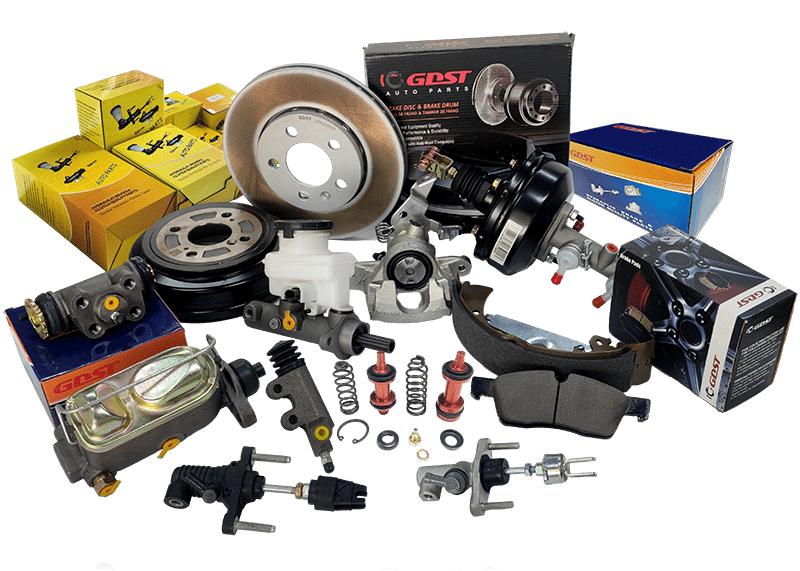
Customers often complain that a brake disc (also called brake rotor) “does not fit” even when the catalog says it should. In many cases, the real problem is incorrect measurement. Knowing how to measure a brake disc correctly can prevent returns, delays, and costly misunderstandings.
To measure a brake disc correctly, you need to check the outer diameter, thickness, total height, center bore, and bolt pattern using a caliper or micrometer. Always compare the measurements with OEM specifications and minimum thickness standards. Accurate brake disc measurement helps avoid incorrect fitment and customer complaints.
Many brake disc complaints happen because customers measure only one dimension while ignoring other critical specifications.
Why Brake Disc Measurements Matter?
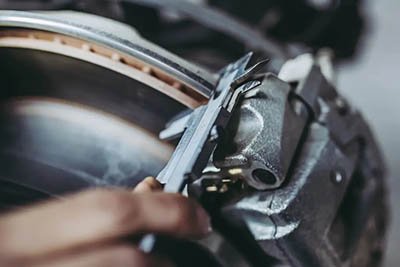
In the brake parts industry, size complaints are extremely common. A customer may say:
- “The brake disc is too big.”
- “The rotor thickness is different.”
- “The disc cannot fit the caliper.”
- “The center hole is wrong.”
However, after checking carefully, many of these problems are not caused by manufacturing defects. The issue is often an incomplete or inaccurate measurement.
For example, some customers only measure the outer diameter and ignore the total height or center bore. Others compare a heavily worn old rotor with a brand-new brake disc. This can easily create confusion.
Different vehicle trims may also use different brake systems even within the same model year. That is why relying only on vehicle year and model is risky.
Understanding brake rotor thickness mm standards and using a brake rotor thickness chart can significantly reduce installation problems and unnecessary returns.
What Tools Are Needed to Measure a Brake Disc?
Using the right tools is the first step toward accurate brake disc measurement.
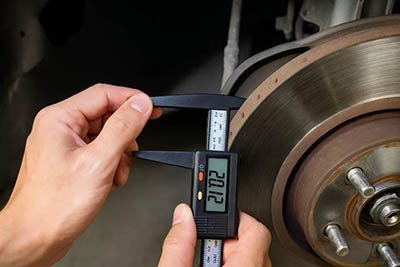
Digital Caliper
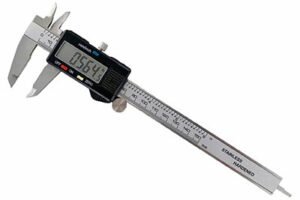
A digital caliper is one of the best tools for measuring brake disc dimensions accurately. It can measure:
- Outer diameter
- Thickness
- Center bore
- Total height
Micrometer
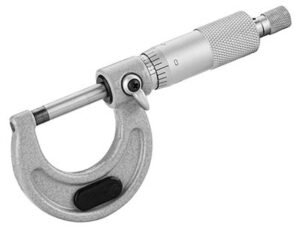
A micrometer provides higher precision when checking brake rotor thickness.
This is especially important when comparing measurements against minimum rotor thickness standards.
Tape Measure
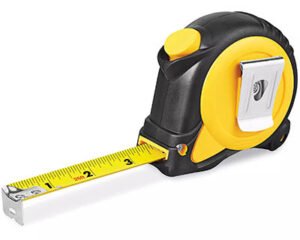
Some customers try to measure rotor size with a tape measure. While this may help estimate the outer diameter, it is not accurate enough for professional verification.
How to measure rotor size with a tape measure should only be used for quick reference, not final confirmation.
Brake Rotor Gauge
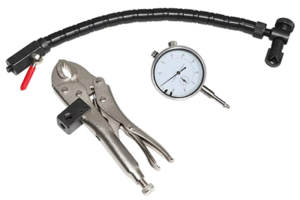
Professional workshops often use dedicated brake rotor gauges to measure disc wear quickly.
How to Measure a Brake Disc Correctly?
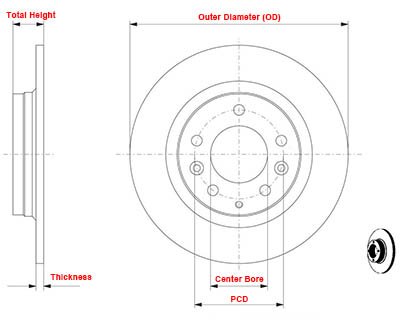
To avoid customer complaints, every important dimension must be checked carefully.
Measure the Outer Diameter (OD)
The outer diameter is the distance from one outer edge of the disc to the opposite edge.
Steps
- Position the brake rotor securely on a clean and stable working area.
- Use a digital caliper or tape measure.
- Measure across the center of the rotor.
- Record the result in millimeters.
Most brake discs are measured in mm because OEM catalogs use metric specifications.
Common Mistakes
- Measuring worn edges
- Measuring at an angle
- Confusing inches with millimeters
When customers search “how to measure a brake disc for a car,” this is usually the first dimension they check.
However, OD alone is never enough.
Measure Brake Rotor Thickness
Brake rotor thickness is one of the most important dimensions.
A small thickness difference can cause:
- Brake noise
- Poor fitment
- Uneven braking
- Safety risks
How to Measure Thickness Correctly
- Clean the rotor surface.
- Use a micrometer or caliper.
- Measure several points around the rotor.
- Do not measure near the raised edge of the rotor, as wear in this area can affect accuracy.
Professional technicians usually measure at least 8 points around the disc.
Minimum Rotor Thickness
Manufacturers specify a minimum allowable thickness for every brake disc.
If the rotor becomes thinner than this limit, it must be replaced.
Example:
| Brake Disc Type | Standard Thickness | Minimum Thickness |
|---|---|---|
| Front Rotor | 28 mm | 26 mm |
| Rear Rotor | 12 mm | 10 mm |
Understanding brake rotor thickness mm specifications helps reduce incorrect claims about “wrong thickness.”
Measure Total Height
Total height is often ignored, but it is critical.
This dimension affects the rotor’s position inside the brake assembly.
If the total height is incorrect:
- The rotor may sit too close to the caliper
- Brake pads may not align correctly
- Installation may fail completely
How to Measure
- Place the rotor flat on a table.
- Measure from the bottom mounting surface to the top braking surface.
Even a small difference can create fitment issues.
Measure the Center Bore
The center bore is the hole in the middle of the brake disc.
This dimension must match the vehicle’s hub.
Problems Caused by Incorrect Center Bore
- Vibration
- Improper centering
- Wheel wobbling
- Noise during braking
Measuring Method
Use a digital caliper to measure the inner diameter of the center hole accurately.
Never estimate this dimension visually.
Measure Bolt Pattern (PCD)
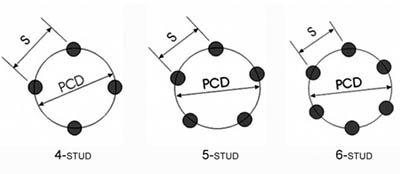
The bolt pattern, also called PCD (Pitch Circle Diameter), refers to the wheel bolt arrangement.
For example:
- 5×114.3
- 5×112
- 4×100
If the bolt pattern is wrong, the rotor simply cannot be installed.
Common Customer Mistake
Some customers count the bolt holes but forget to measure the bolt circle diameter itself.
Always confirm both numbers.
How to Check Rotor Size by VIN Number?
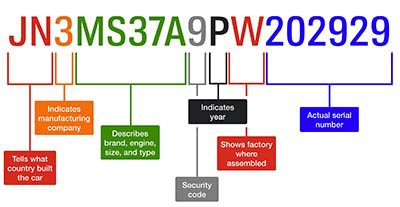
Many modern vehicles have multiple brake options.
Two cars from the same year may use completely different brake discs.
That is why checking rotor size by VIN number is highly recommended.
Why VIN Matters
The VIN can reveal:
- Brake package
- Engine type
- Production plant
- Trim level
This information helps identify the correct brake disc specification.
Common Problem
Customers often provide only:
- Vehicle year
- Brand
- Model
But this information may not be enough.
In our experience, VIN verification can prevent a large percentage of brake disc complaints.
Common Reasons Why Brake Disc Sizes Do Not Match
Even experienced buyers sometimes receive the wrong brake disc.
Here are the most common reasons.
The Old Rotor Was Measured Incorrectly
An old rotor often develops wear ridges and irregular surfaces over time.
If customers measure the worn lip instead of the actual braking surface, the result will be inaccurate.
The Vehicle Was Modified
Some vehicles have upgraded brake systems.
For example:
- Bigger calipers
- Sport brake kits
- Performance rotors
In these situations, OEM specifications may no longer apply.
Different Markets Use Different Brake Systems
European, American, and Asian versions of the same vehicle sometimes use different brake dimensions.
This is especially common in imported vehicles.
The Customer Ignored Total Height
Many customers only compare diameter and thickness.
But total height differences are a major cause of installation failure.
Wrong Catalog Information
Although rare, catalog mistakes can happen.
That is why physical measurement is still important.
How to Avoid Brake Disc Size Complaints
Preventing brake disc complaints involves more than just manufacturing quality — clear communication is equally important.
Below are some effective methods that can help reduce common fitment and sizing issues.
Ask for VIN Number
VIN verification should always be the first step whenever possible.
Request Photos of the Old Rotor
Photos can help identify:
- Ventilated or solid rotor
- Bolt pattern
- Surface design
- Brake configuration
Measure All Key Dimensions
Never rely on only one measurement.
Always check:
- Outer diameter
- Thickness
- Total height
- Center bore
- PCD
Compare OEM Numbers
OEM part numbers are often more reliable than general vehicle descriptions.
Explain Measurement Tolerance Clearly
Customers may expect zero difference between old and new parts.
However, small tolerances are normal in manufacturing.
Clear communication helps prevent misunderstandings.
How to Measure a Brake Disc Without Removing the Wheel?
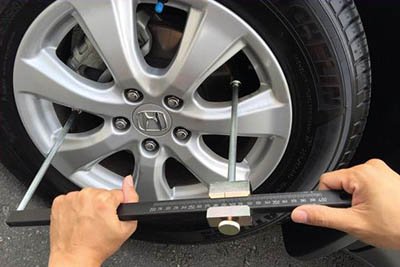
Some customers want to measure rotor size without removing the wheel.
This is possible for quick reference, but accuracy is limited.
What Can Be Measured
Usually you can estimate:
- Outer diameter
- Rotor type
- Ventilated or solid design
What Cannot Be Measured Accurately
It is difficult to measure:
- Total height
- Exact thickness
- Center bore
For professional confirmation, wheel removal is still recommended.
Summary
Correct brake disc measurement is the simplest way to reduce fitment mistakes and customer complaints. By checking all key dimensions carefully, customers can save time, avoid returns, and ensure safe braking performance.