


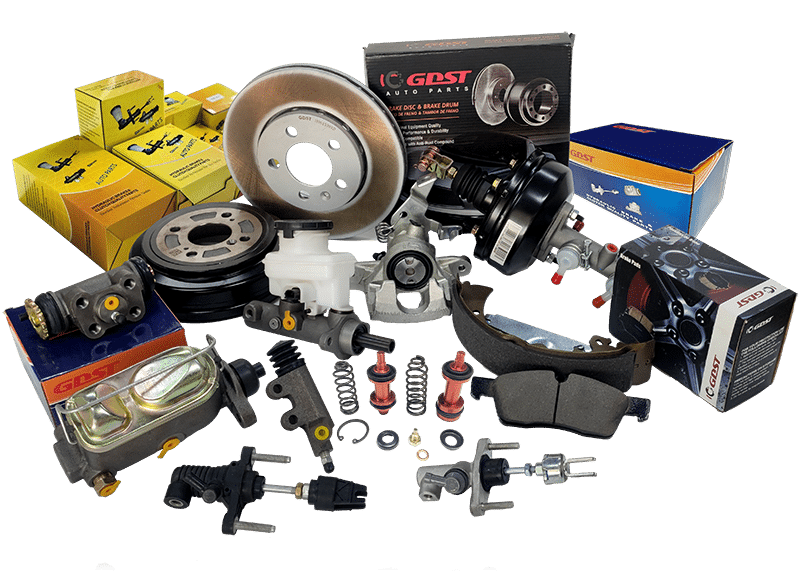

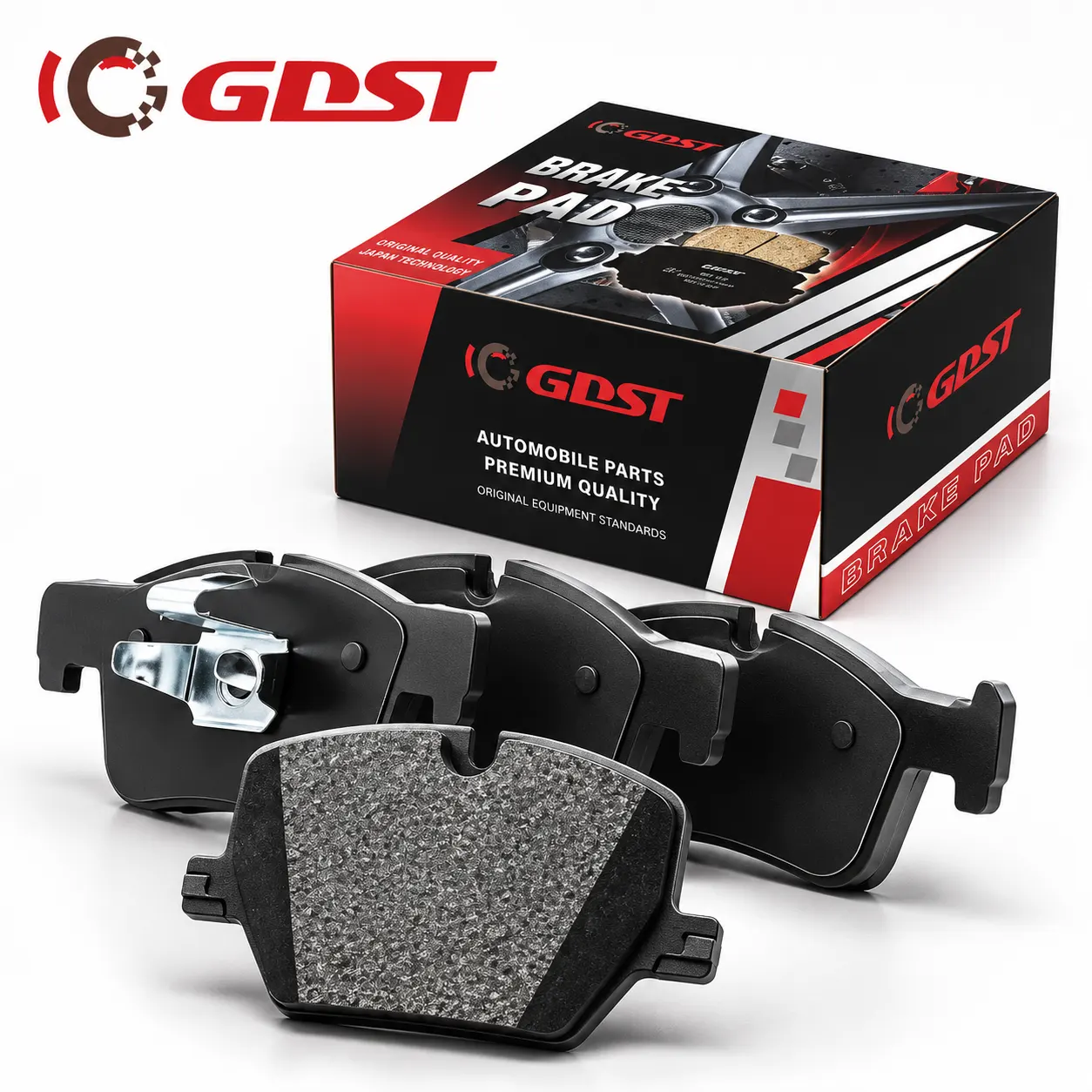
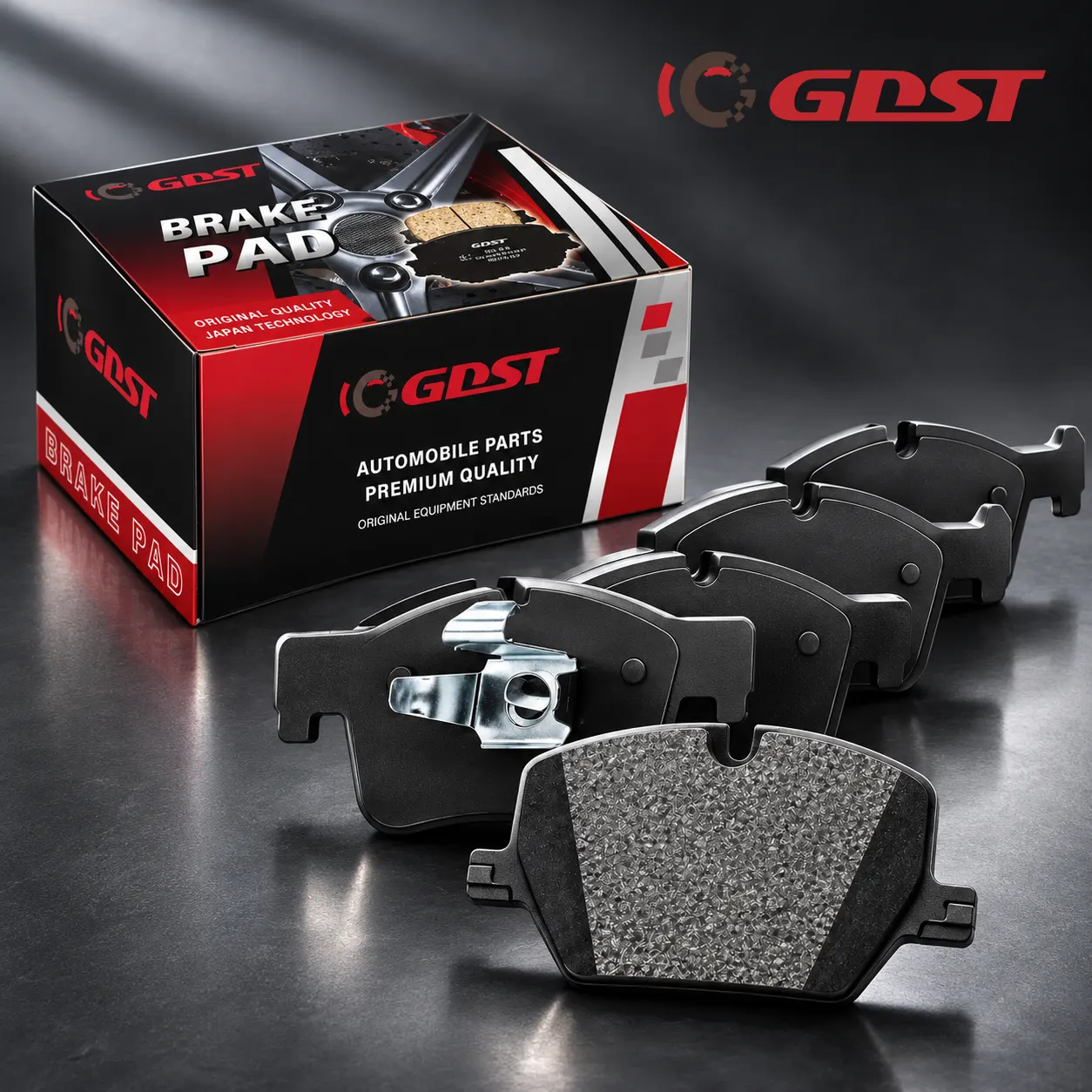
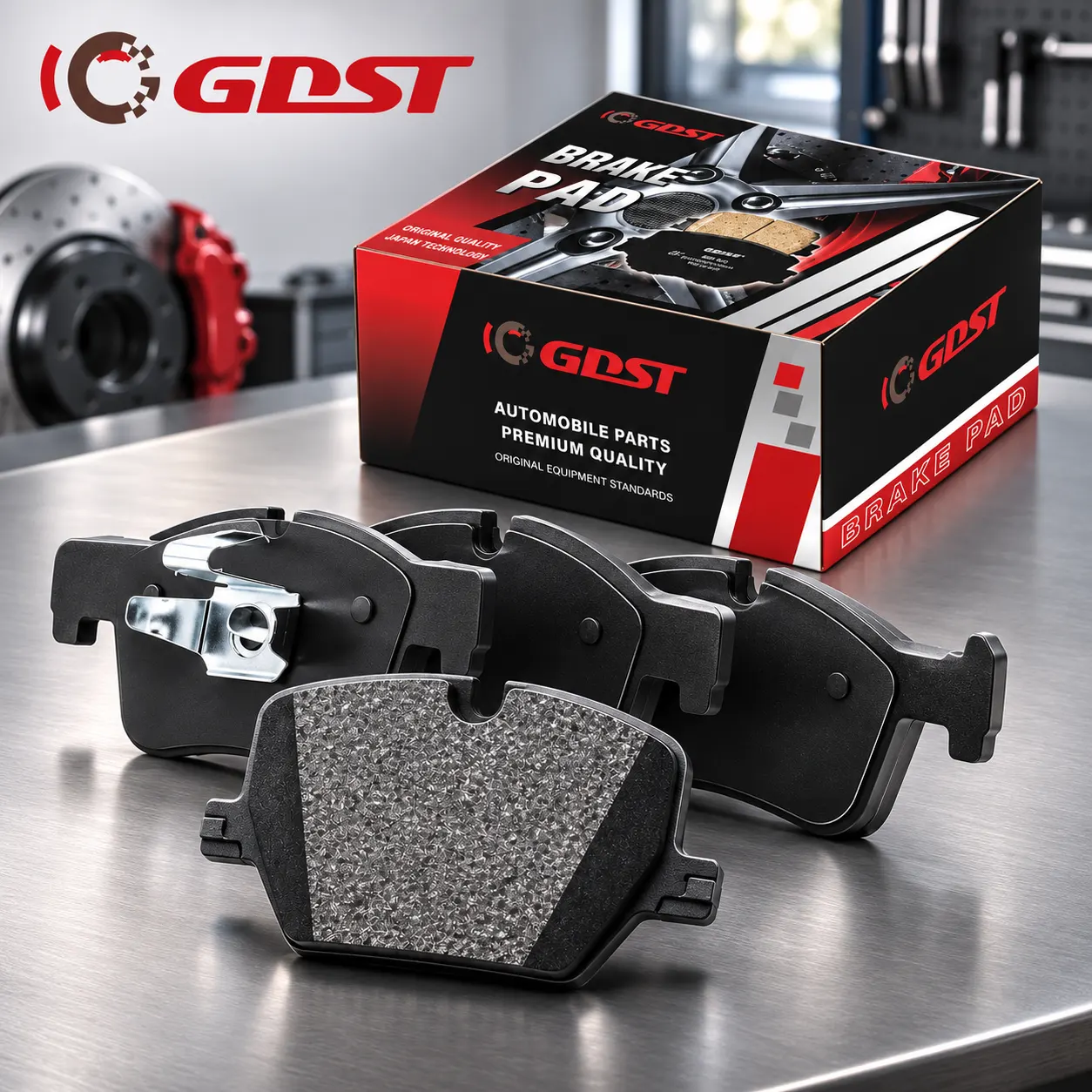
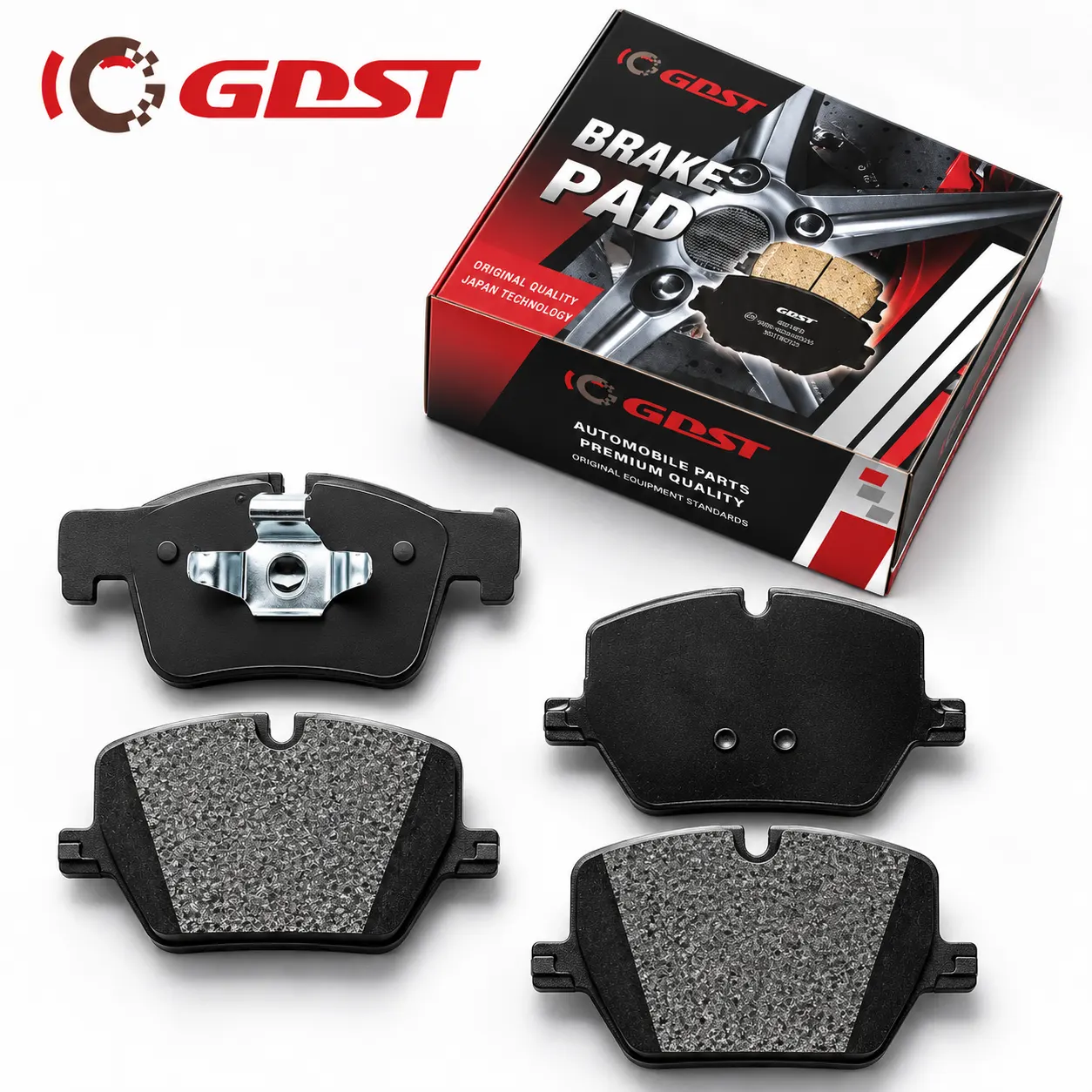
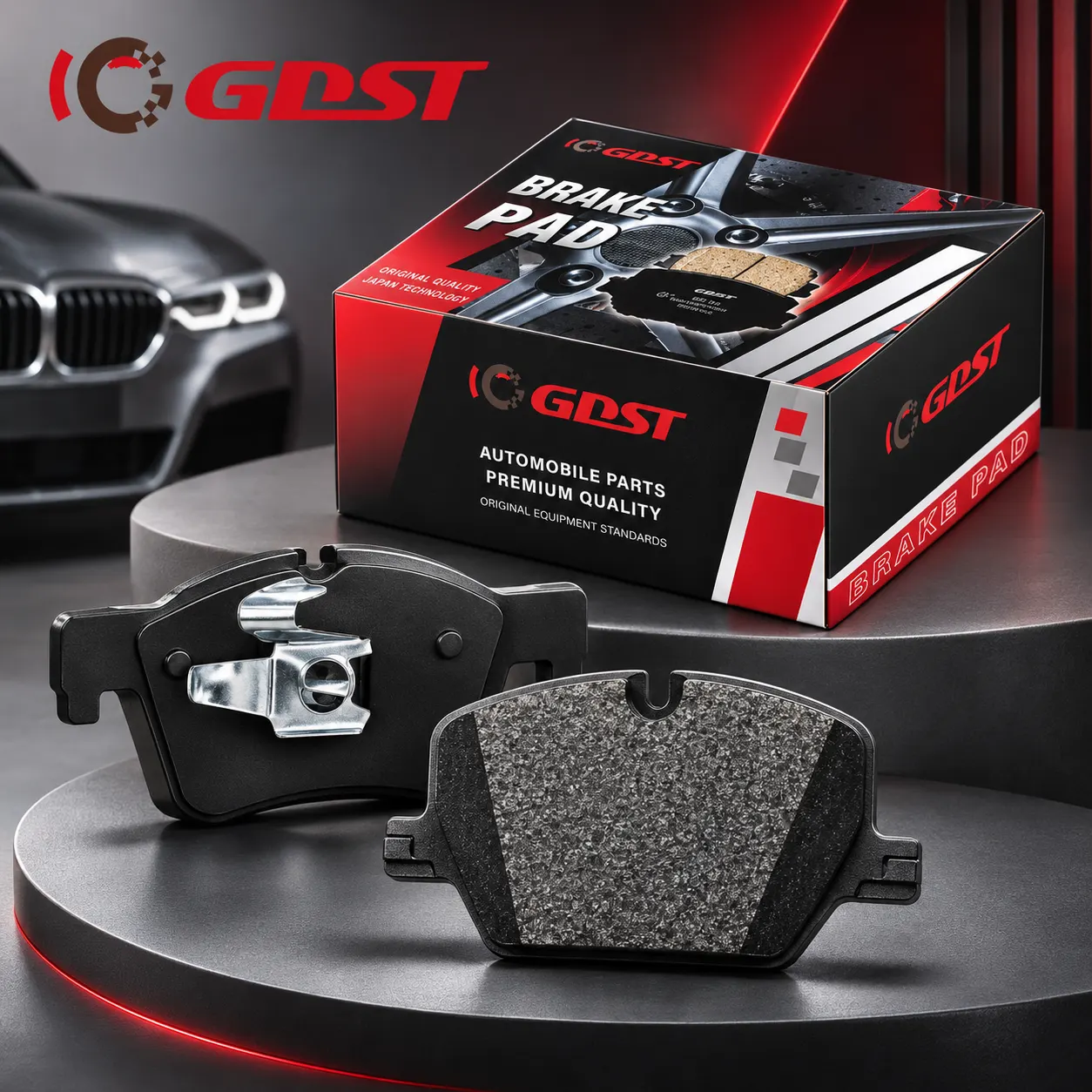
Looking for a reliable aftermarket BMW brake pad manufacturer and supplier? Wuhu GDST Auto Parts Co,Ltd develops and manufactures automotive brake pads for international aftermarket distributors, wholesalers, importers and private-label brands.
Our brake pad portfolio covers multiple friction material formulations, including Ceramic, Low-Metallic and Semi-Metallic options. We support product selection and OE reference matching for selected BMW applications, helping buyers identify suitable front and rear brake pad solutions based on vehicle specifications and braking system requirements.
| FMSI No. | OE No. | WVA No. | Car | Model | Position | Length | Height | Thickness |
| D1892 | 34106860019
34106872418 34106876245 34106882418 34106884492 34106884497 34116866309 |
25617
25618 |
BMW | BMW X1 xDrive28i 2016-
MINI Cooper Clubman 2.0 Liter 2016- |
Front | 129.8 mm | 76.2 mm/
70.9 mm |
17.4 mm |
| D1922 | 3411 6850 568
3411 6874 331 |
25506
25507 |
BMW | BMW1 (F20,F21)
BMW3 (F30, F35, F80) BMW 4 Gran Coupe (F36) BMW 3 GRAN TURISMO (F34) |
Front | 155.8 mm | 61.7 mm | 18.2 mm |
| D2220-9460 | 04466-WAA03
34206888835 |
21474
21475 |
BMW | BMW 430i (G22)
BMW Z4(G29) |
Rear | 110.6 mm | 66 mm/
73.3 mm |
16.8 mm |
| D1875 | 34106884224 | 22334 | BMW | MINI Cooper S 2015-
MINI Cooper JCW 2016- |
Front | 114.6 mm | 91.4 mm | 14.6 mm |
| D1609 | 2464195
34106799805 6799805 |
25028 | BMW | BMW 335T F30 | Front | 114.8mm | 91.2mm | 18.2mm |
| D1504 | 34116775310
34116796844 34116858047 |
23794
24697 |
BMW | BMW 528i 2011-2015
BMW 528i xDrive 2012-2015 |
Front | 155.1 mm/
154.6 mm |
63.9 mm/
63.7 mm |
19.3 mm/
20.3 mm |
| D1850 | 34216870552 | BMW | BMW 740Li 2016
BMW 750Li xDrive 2016 |
Rear | 116 mm | 65.5 mm/
72.6 mm |
16.8 mm | |
| D1473 | 34216796741
34216798193 34216862202 34216870558 34216870565 34216885451 34216885452 |
24561
24562 |
BMW | BMW 528i 2011-2015
BMW 528i xDrive 2012-2015 BMW 535d 2014 BMW 535d xDrive 2014 BMW 535i 2011-2015 BMW 535i xDrive 2011-2015 BMW ActiveHybrid 5 2012-2015 BMW X3 2011-2015 BMW X4 2015 BMW Z4 sDrive35is 2011-2015 |
Rear | 106 mm | 62.4 mm/
56 mm |
18 mm |
| D1433 | 34216788275
34216797861 |
24559
24560 |
BMW | BMW Z4 2009-2010
BMW Z4 sDrive28i 2012-2015 BMW Z4 sDrive30i 2011 BMW Z4 sDrive35i 2011-2015 |
Rear | 106 mm | 51.5 mm/
45.1 mm |
18 mm |
| D1372-8484 | 34216784808
34216791421 |
24315 | BMW | BMW 135i 2008-2013
BMW 135is 2013 |
Rear | 86.5 mm | 76.2 mm | 16.8 mm |
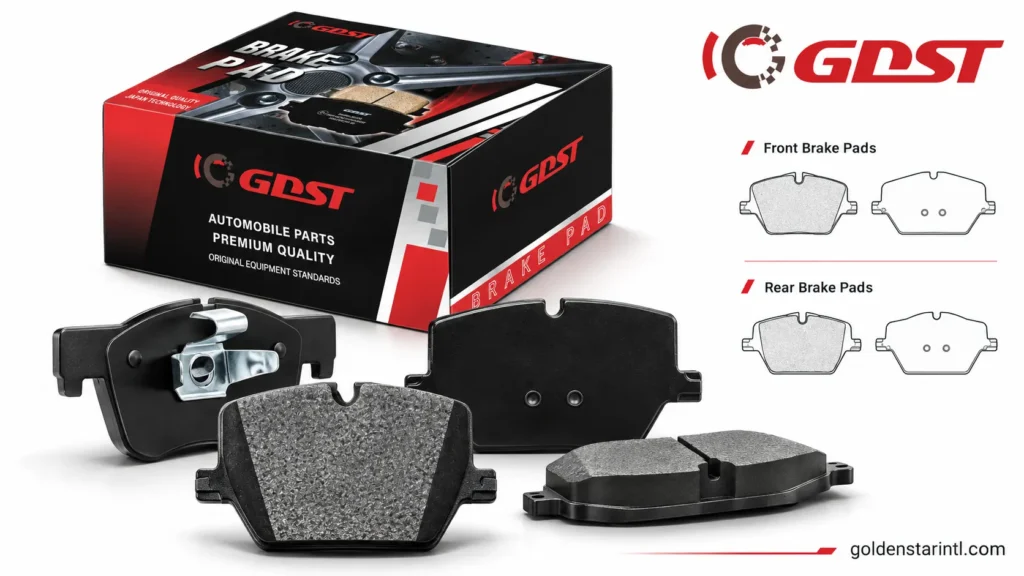
BMW brake pads are application-specific friction components designed to work with the vehicle’s brake calipers and rotors. Selecting the correct replacement pads requires matching the vehicle generation, production year, brake configuration, axle position and OE reference.
GDST provides aftermarket brake pad sourcing solutions for selected BMW applications, supporting distributors and automotive parts suppliers looking for reliable replacement products and long-term manufacturing partnerships.
Our product selection covers different friction material formulations and brake pad configurations to meet varying aftermarket requirements.
| Product Category | Axle Position | Main Application | Key Identification |
| BMW Front Brake Pads | Front Axle | Front braking system replacement | OE number, caliper type, pad dimensions |
| BMW Rear Brake Pads | Rear Axle | Rear braking system replacement | OE number, rear caliper configuration, sensor compatibility |
| Ceramic Brake Pads | Front / Rear | Applications requiring specific noise and dust characteristics | Friction formulation and vehicle compatibility |
| Semi-Metallic Brake Pads | Front / Rear | Applications requiring specific friction and thermal characteristics | Friction formulation and operating requirements |
| Low-Metallic Brake Pads | Front / Rear | Applications requiring a balanced friction performance profile | Material composition and application validation |
Actual availability depends on the confirmed GDST product catalog and vehicle application.
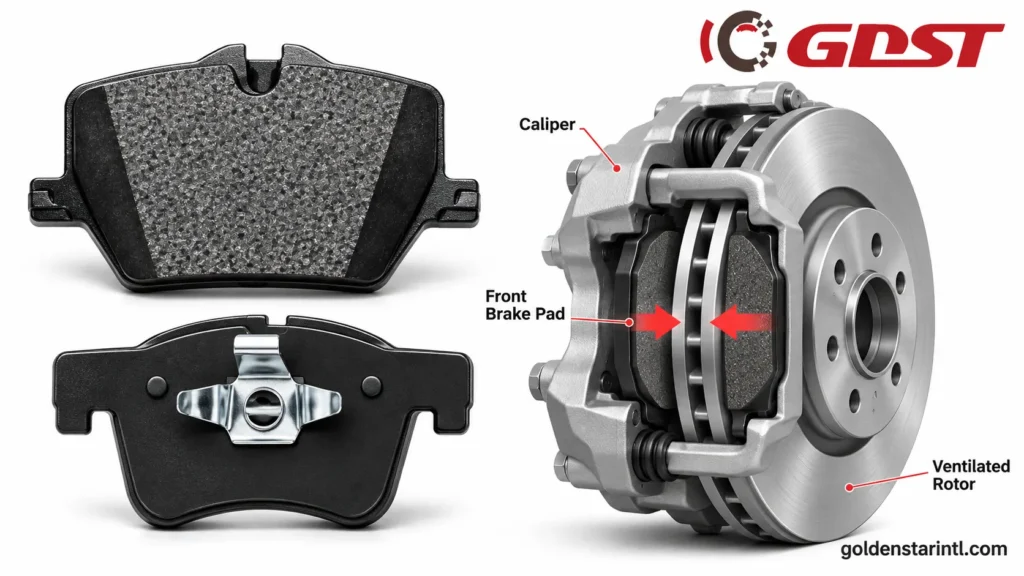
BMW front brake pads are designed to work with the front brake calipers and rotors of the corresponding vehicle configuration.
Because the front and rear braking systems may have different dimensions, friction requirements and hardware configurations, front brake pads must be selected according to the correct OE reference and brake system specifications.
GDST supports front brake pad sourcing for selected BMW applications, with product identification based on OE references, pad dimensions and customer application requirements.
Key front brake pad identification points:
For wholesale orders, buyers can provide OE numbers, reference samples or technical drawings to support product identification.
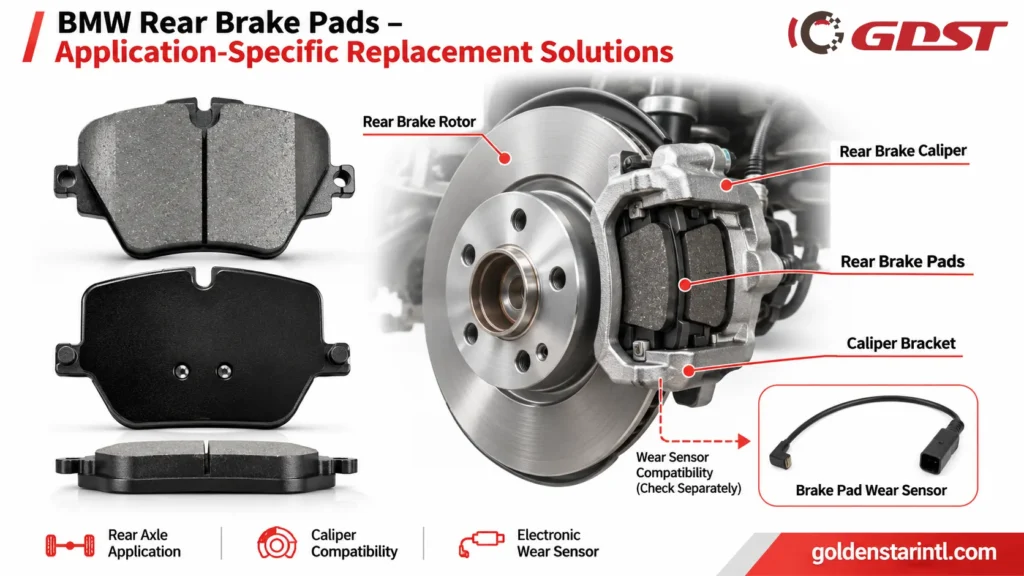
BMW rear brake pads are designed for the rear braking system and are not interchangeable with front brake pads.
Although front and rear pads perform the same basic friction function, their backing plate shapes, dimensions, thicknesses, friction requirements and hardware configurations can differ significantly.
For BMW rear brake pad sourcing, buyers should pay particular attention to the rear caliper configuration and electronic brake pad wear sensor compatibility.
The rear brake pad shape and dimensions must match the corresponding rear brake caliper and rotor configuration.
Some BMW braking systems use electronic brake pad wear sensors. Sensor location, connector design and installation configuration vary by vehicle application.
The sensor should be checked separately when confirming the brake pad reference. It should not be assumed to be included in every brake pad set.
Rear brake pads must use a friction formulation suitable for the corresponding vehicle and braking system. The same material specification should not automatically be applied to every BMW rear brake application.
Depending on the application, rear brake pads may use specific shims, clips, slots and chamfer designs. These details should be confirmed against the original product reference or technical drawing.
GDST supports BMW rear brake pad identification and aftermarket sourcing based on confirmed product specifications.

Different BMW brake pad applications may require different friction material formulations depending on vehicle weight, braking system design, driving conditions and customer expectations.
GDST offers multiple friction material formulations for automotive brake pad manufacturing, including Ceramic, Low-Metallic and Semi-Metallic options.
| Material Type | General Characteristics | Potential Advantages | Important Considerations |
| Ceramic Brake Pads | Ceramic-based friction formulation with other controlled components | Can offer lower dust and quieter operation in suitable applications | Performance depends on formulation and vehicle compatibility |
| Low-Metallic Brake Pads | Organic friction base with metallic components | Can provide responsive braking characteristics | Dust and noise characteristics depend on formulation |
| Semi-Metallic Brake Pads | Friction formulation containing metallic materials | Can provide strong friction performance and thermal stability | May produce more noise and dust depending on composition |
The correct material should be selected according to the original brake system requirements rather than material type alone.
For example:
GDST can assist buyers in evaluating suitable material options based on vehicle application, existing product references and technical requirements.
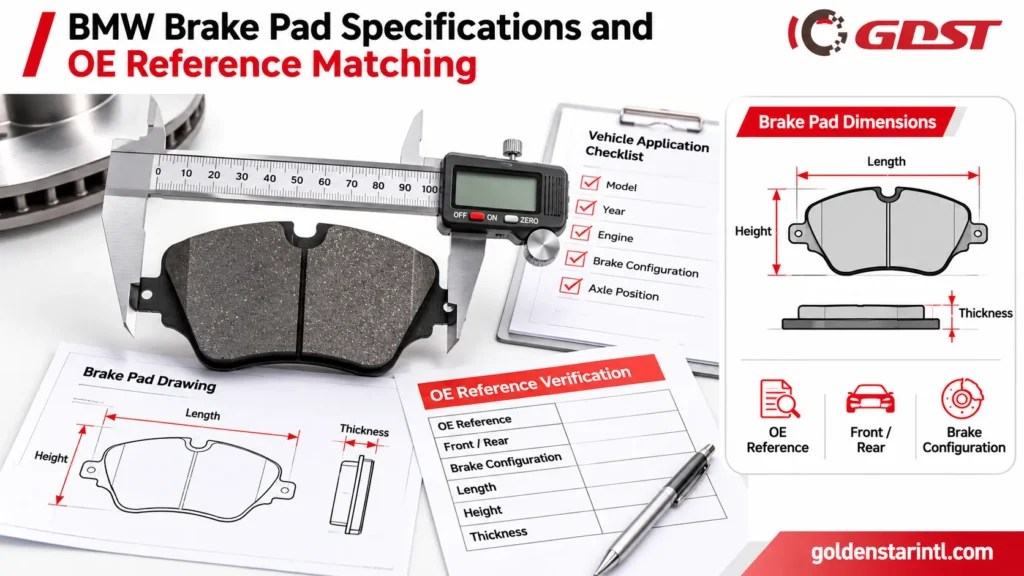
Accurate fitment identification is essential when sourcing aftermarket BMW brake pads.
BMW vehicles within the same model series may use different brake systems depending on production year, engine, trim level and optional braking packages.
For this reason, matching brake pads only by vehicle model name is not sufficient.
GDST recommends using OE reference numbers together with vehicle and brake system information to confirm the correct replacement product.
| Specification | Description | Importance for Product Matching |
| OE Reference Number | Original equipment reference number | Supports cross-reference identification |
| FMSI / WVA Number | Industry product identification reference, where applicable | Provides additional product identification |
| Axle Position | Front or Rear | Prevents incorrect axle selection |
| Overall Length | Brake pad length in mm | Confirms backing plate dimensions |
| Overall Height | Brake pad height in mm | Confirms pad geometry |
| Total Thickness | Backing plate and friction material thickness | Confirms dimensional compatibility |
| Friction Material | Ceramic, Low-Metallic or Semi-Metallic | Identifies the material formulation |
| Friction Coefficient | Measured friction performance under specified test conditions | Supports technical evaluation |
| Wear Sensor | Sensor configuration and compatibility | Confirms electronic wear monitoring requirements |
| Shim / Hardware | Anti-noise shim and fitting hardware configuration | Supports correct installation |
Actual dimensions and performance values must be confirmed against the corresponding GDST product specification or test report. There is no single universal BMW brake pad dimension or friction coefficient.
For accurate product matching, GDST recommends collecting the following information:
| Information Required | Example / Description |
| Vehicle Brand | BMW |
| Model Series | 3 Series, 5 Series, X5, etc. |
| Production Year | Specific production year |
| Engine | Engine type and displacement |
| Brake Configuration | Standard, M Sport or other applicable brake configuration |
| Axle Position | Front or Rear |
| OE Part Number | Original brake pad reference |
| Brake Pad Dimensions | Length, height and thickness |
| Wear Sensor | Required / Not Required / To Be Confirmed |
A specific BMW model series may have multiple brake pad configurations. OE reference verification and dimensional comparison are therefore recommended before mass production or bulk ordering.
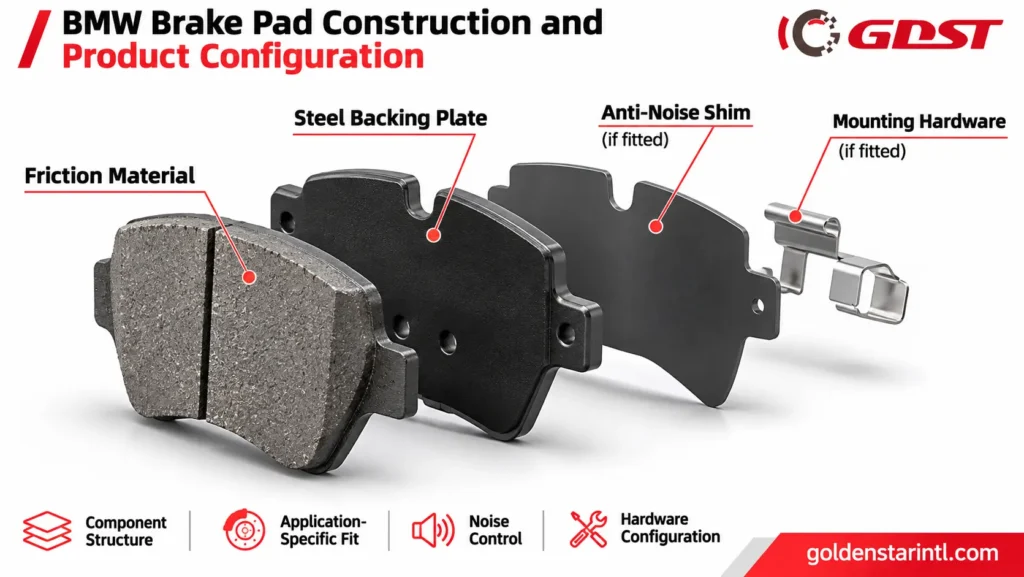
Brake pad construction affects friction performance, noise control, durability and installation compatibility.
For aftermarket BMW brake pad applications, the following product construction elements should be considered during technical confirmation.
The friction material is the working surface that contacts the brake rotor to generate braking force.
GDST offers different friction material formulations to support various automotive aftermarket applications.
Material selection should be based on the corresponding vehicle application and validated performance requirements.
The backing plate provides structural support for the friction material and transfers braking force through the brake caliper assembly.
Its dimensions, shape and mounting configuration must correspond to the intended brake pad application.
Shims are used in applicable brake pad designs to help control vibration and noise during braking.
Shim material, thickness and attachment method should be confirmed according to the product specification.
Slots and chamfers are design features used in certain brake pad applications to influence friction material behavior, noise characteristics and contact conditions.
Their configuration should follow the validated product design rather than being added as universal features.
Certain BMW brake systems use electronic wear sensors to monitor brake pad condition.
Sensor compatibility should be checked according to the vehicle’s braking system and OE reference. Sensor inclusion in the supplied product set must be specified separately.

Choosing a brake pad manufacturer involves more than comparing unit prices. Buyers also need to evaluate product development capabilities, material consistency, production capacity, quality control and long-term supply reliability.
GDST provides automotive brake pad manufacturing and export services for international aftermarket customers.
GDST has developed more than 3,000 brake pad models across its product portfolio.
This product development experience supports aftermarket sourcing for different vehicle applications and customer requirements.
GDST has 26 friction material formulations across its brake pad portfolio.
These formulations provide different material options for product selection and application development.
The appropriate formulation for a BMW application should be confirmed through technical evaluation rather than assumed from the vehicle brand alone.
GDST supports aftermarket customers with manufacturing cooperation and product customization, including:
Customized solutions are subject to product feasibility and confirmed order requirements.
With experience in automotive parts manufacturing and export, GDST works with international distributors, importers and aftermarket brands.
Our objective is to provide consistent product supply, clear technical communication and long-term manufacturing cooperation.
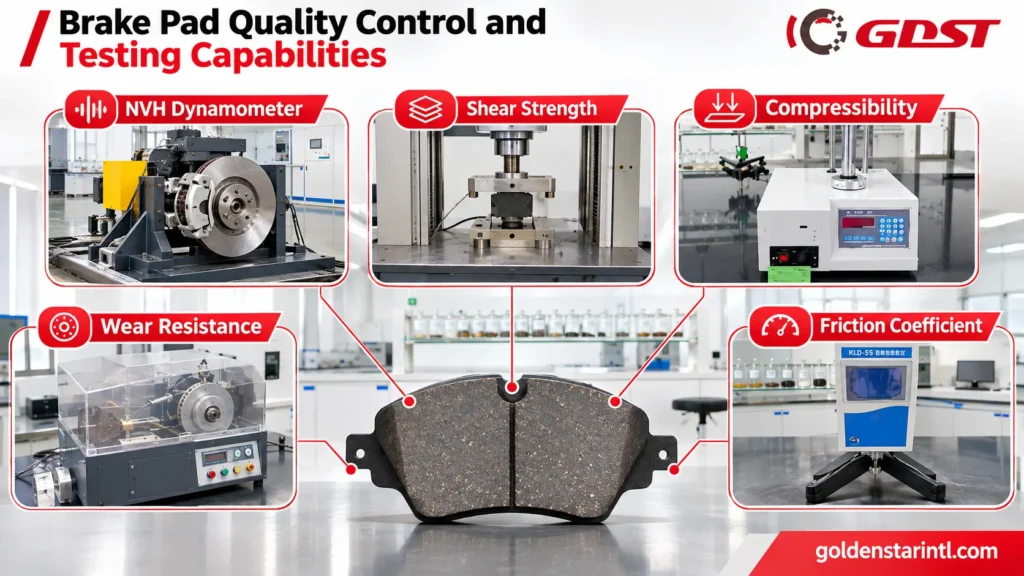
Brake pad quality directly affects braking performance, product consistency and service reliability.
GDST has testing capabilities to evaluate important brake pad material and performance characteristics.
| Testing Equipment | Testing Purpose |
| NVH Dynamometer | Evaluates brake noise, vibration and harshness under specified test conditions |
| Shear Strength Tester | Evaluates bonding strength between friction material and backing plate |
| Compressibility Tester | Measures friction material compressibility under defined loading conditions |
| Wear Resistance Tester | Evaluates material wear characteristics |
| Friction Coefficient Tester | Evaluates friction coefficient under specified test conditions |
These testing capabilities support product development, quality evaluation and production quality control.
Test results should be interpreted according to the relevant test methods, product specifications and applicable requirements.
Product-specific test reports and technical documentation can be discussed during the quotation and product confirmation process.
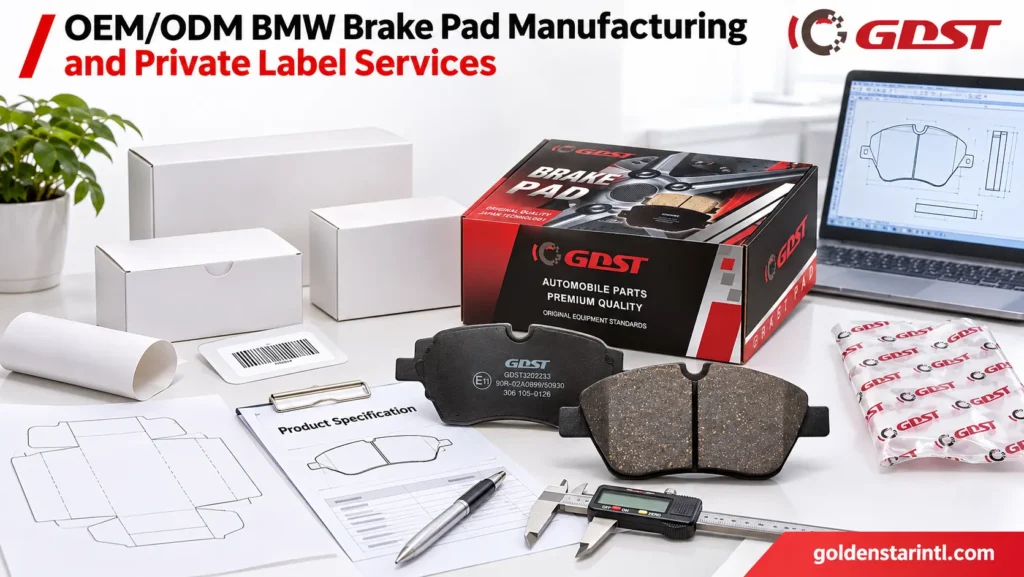
For automotive parts distributors and aftermarket brands, product consistency and brand differentiation are important factors in long-term market development.
GDST supports OEM/ODM manufacturing cooperation for customers sourcing aftermarket brake pads.
Private Label Branding
Customized brand identification for aftermarket brake pad products.
Packaging Customization
Customized product boxes, labels, barcodes and packaging configurations according to customer requirements.
Product Development
Technical evaluation and product development discussions based on OE references, samples or technical drawings.
Material Selection
Selection of suitable friction material formulations according to the intended application and customer requirements.
Bulk Supply Cooperation
Production planning and order coordination for distributors, wholesalers and automotive parts importers.
Customization scope, MOQ and lead time should be confirmed according to the selected product models, packaging requirements and order quantities.

To improve product identification accuracy and quotation efficiency, we recommend that buyers provide the following information when requesting BMW brake pad quotations.
Step 1: Provide OE Reference Numbers
Share the original brake pad OE number or existing aftermarket cross-reference number whenever available.
Step 2: Confirm Vehicle Application
Provide the BMW model, production year, engine and brake configuration.
Step 3: Specify Axle Position
Indicate whether you require front brake pads, rear brake pads or complete front and rear product assortments.
Step 4: Confirm Technical Requirements
Specify the preferred friction material, product dimensions, wear sensor requirements and hardware configuration.
Step 5: Confirm Purchasing Requirements
Provide the expected order quantity, target market, packaging requirements and private-label requirements.
GDST will review the supplied information to confirm product availability, application compatibility and quotation details.
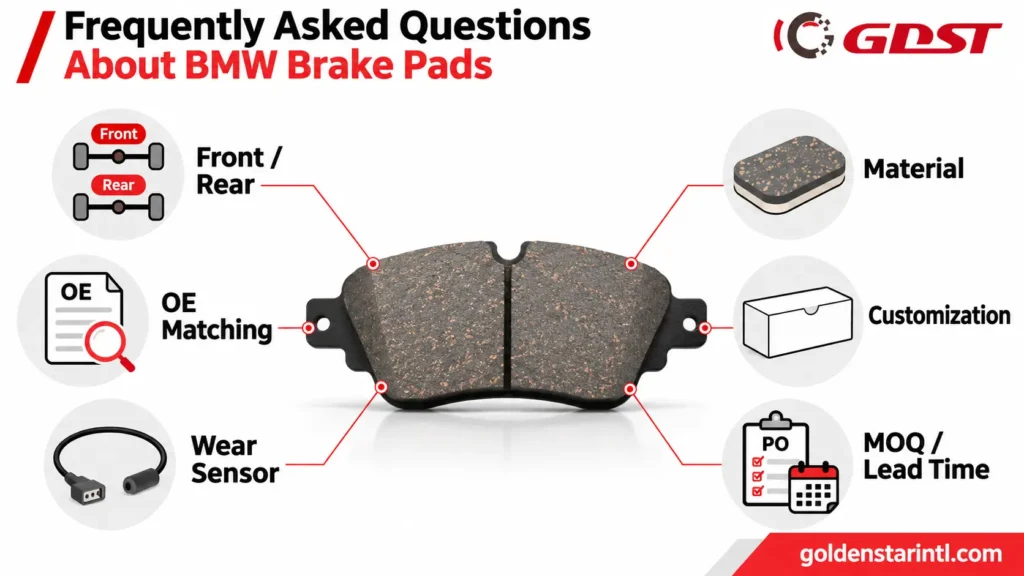
GDST is an automotive brake pad manufacturer offering aftermarket brake pad development and production for different vehicle applications.
For BMW-related sourcing projects, product availability and fitment should be confirmed against the corresponding OE reference, technical drawings or product samples.
GDST can evaluate and support sourcing for selected BMW rear brake pad applications.
The correct rear brake pad must match the vehicle’s rear caliper, rotor configuration, dimensions and applicable wear sensor requirements.
Buyers can provide OE reference numbers or product samples for identification.
BMW front and rear brake pads are designed for different axle-specific brake systems.
They may differ in backing plate shape, dimensions, thickness, friction requirements and sensor configuration.
They should not be considered interchangeable unless the vehicle manufacturer’s application information explicitly confirms compatibility.
The most reliable starting point is the OE brake pad part number.
You should also confirm the BMW model, production year, engine, brake package and front or rear axle position.
For applications with different brake calipers or rotor dimensions, additional dimensional verification may be necessary.
Neither material is universally better.
Ceramic brake pads may offer advantages in noise and dust characteristics for suitable applications, while semi-metallic formulations can provide different friction and thermal performance characteristics.
The appropriate choice depends on the original brake system requirements, material formulation and intended driving conditions.
Not necessarily.
Some BMW brake systems use electronic brake pad wear sensors, but sensor configuration varies by vehicle and axle.
The wear sensor may be supplied separately from the brake pad set. Buyers should confirm sensor compatibility and package contents before ordering.
GDST can use supplied OE references as a starting point for product identification and cross-reference evaluation.
However, an OE number should be verified against the actual application, product dimensions and brake system configuration before confirming compatibility.
GDST supports OEM/ODM manufacturing discussions, private-label packaging and product customization.
Specific customization possibilities depend on the product design, available tooling, technical requirements and order quantities.
MOQ depends on the selected product model, production requirements and customization options.
Please provide the required part numbers and estimated order quantities so GDST can confirm the applicable MOQ.
Production lead time depends on product availability, material requirements, order quantity and packaging specifications.
The confirmed production schedule will be provided after reviewing the order details.
Sample availability should be confirmed according to the selected product reference and application.
Buyers can provide their target OE numbers or existing brake pad samples to support product evaluation before placing bulk orders.
GDST supplies aftermarket automotive brake pads and is an independent automotive parts manufacturer.
GDST does not represent itself as BMW AG or as an authorized BMW Genuine Parts distributor. BMW names and trademarks are used solely to identify vehicle applications and compatibility references.
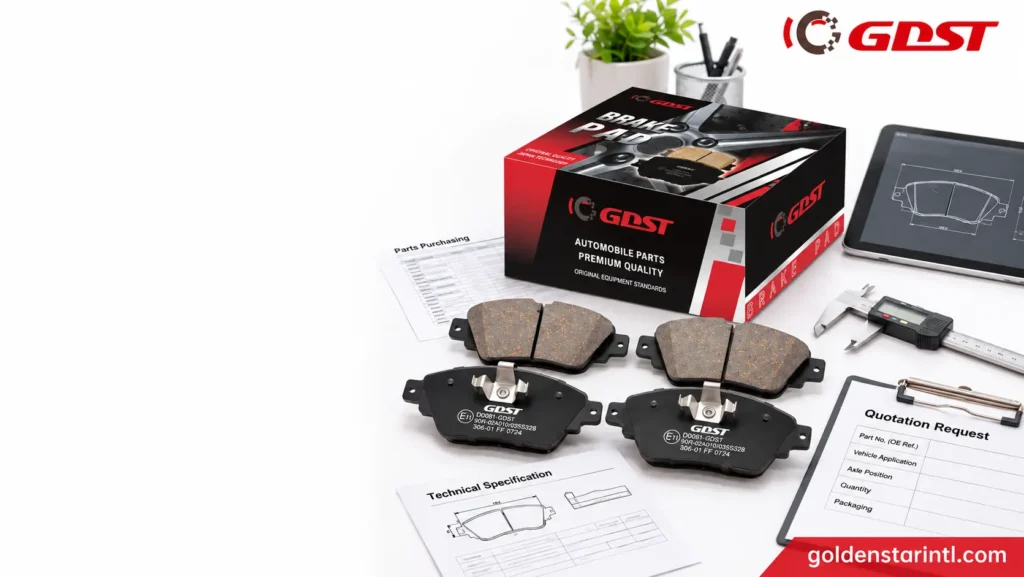
Whether you are sourcing BMW front brake pads, BMW rear brake pads or multiple aftermarket brake pad references, GDST can support product identification, friction material selection and manufacturing cooperation.
With an established brake pad product portfolio, multiple friction formulations and OEM/ODM manufacturing capabilities, GDST works with international automotive parts distributors, wholesalers and private-label brands.
Send us your OE references, product drawings or target vehicle applications to discuss suitable aftermarket brake pad solutions.