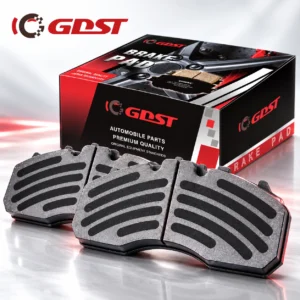
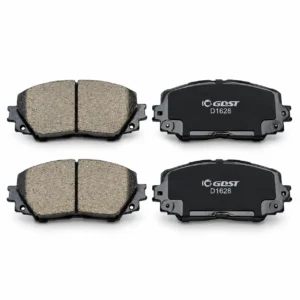
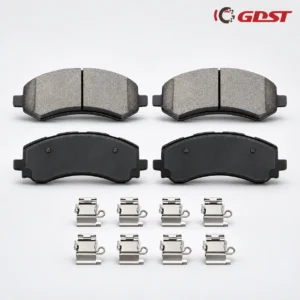
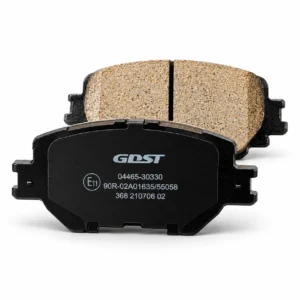
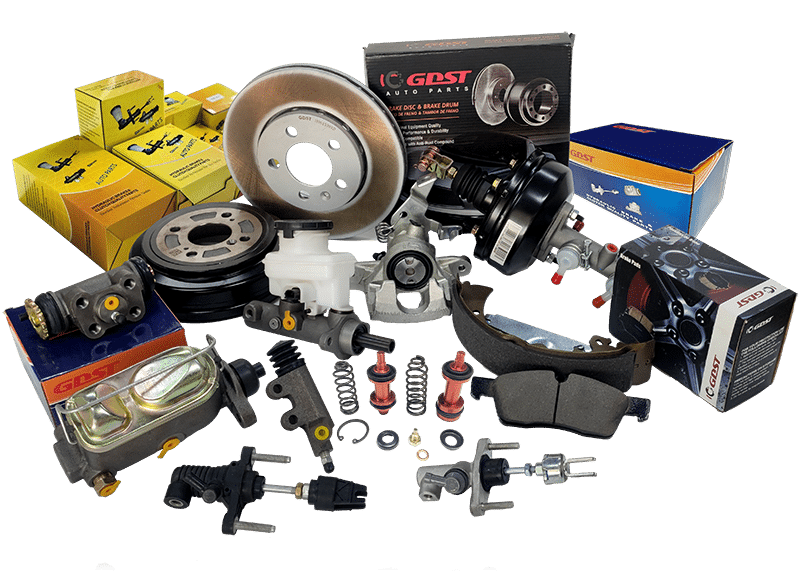


GDST Auto Parts supplies aftermarket brake pads for selected Mercedes-Benz passenger cars and SUVs, covering front and rear applications. Available friction materials include ceramic, low-metallic, and semi-metallic options. We provide OE reference matching, OEM/ODM development, and private-label packaging for global importers, wholesalers, distributors, and automotive aftermarket brands.
Aftermarket Brake Pads for Mercedes-Benz Applications | Wholesale Supply | OEM & Private Label
Wuhu GDST Auto Parts Co.,Ltd supplies aftermarket brake pads for a wide range of vehicle applications, including selected Mercedes-Benz passenger cars and SUVs. With over 3,000 developed brake pad models and 26 friction formulations across our overall product portfolio, we support automotive parts importers, wholesalers, distributors, and private-label brands with product sourcing and manufacturing solutions.
Our Mercedes-Benz brake pad sourcing service covers ceramic, low-metallic, and semi-metallic friction material options, subject to specific model availability and application requirements. Whether you are looking for existing brake pad models, OE cross-reference matching, or custom product development, our team can help evaluate your requirements.
| FMSI No. | OEM Ref. | Width | Height | Overall Thickness | Position | Car | Model |
| D31-736 | 006 0526 040 | 61.55 mm | 56.55 mm | 15 mm | Front | M-BENZ | S-CLASS (W126)/ (W115)/ (W114) |
| D45-734 | 001 420 7720 | 76.5 mm | 69.6 mm | 15 mm | Front | M-BENZ | S-CLASS (W108, W109) |
| D145-7036 | 000 420 6320
001 420 7820 |
89.7 mm | 73.8 mm | 15 mm | Front | M-BENZ | UNIMOG U 318 2013- |
| D278-7181 | 001 420 1020 | 95 mm | 51 mm | 17.5 mm | Front | M-BENZ | W201 |
| D424-7312 | 001 420 8520 | 89.9 mm | 70.15 mm | 17.5 mm | Rear | M-BENZ | SL (R107) 300 SL (107.041) |
| D561-7525 | 002 420 1920
002 420 3720 |
99.4 mm | 73.3 mm | 16 mm | Front | M-BENZ | E-CLASS (W124) |
| D578-7459 | 002 420 0320 | 90.1 mm | 81 mm | 18.5 mm | Front | M-BENZ | S-CLASS (W140) |
| D760-7628 | 163 420 1220
163 420 0320 163 420 0020 |
188 mm | 58.9 mm | 16.3 mm | Front | M-BENZ | M-BENZ ML350 |
| D761-7629 | 163 420 0420
163 420 0120 |
140 mm | 50 mm | 16.6 mm | Rear | M-BENZ | M-CLASS SUV (W163) |
| D950 | 002 420 9920
002 420 3920 |
156.3 mm | 64.92 mm | 20.5 mm | Front | M-BENZ | M-BENZ (COMMERCIAL) Sprinter 2500 |
GDST provides aftermarket brake pad sourcing and manufacturing solutions for selected Mercedes-Benz vehicle applications. Our product range is designed to support different vehicle configurations, braking requirements, and aftermarket distribution needs.
Rather than offering a one-size-fits-all brake pad, we evaluate each product according to its vehicle application, brake system configuration, friction material requirements, and corresponding part references.
Front brake pads are designed to work with the vehicle’s front disc brake system. Their dimensions, friction characteristics, and backing plate configurations must match the corresponding brake caliper and rotor assembly.
GDST can assist with front brake pad identification based on vehicle information, OE references, or existing product samples.
Rear brake pads are developed for the specific rear braking configuration of each vehicle. Depending on the model, rear brake pad assemblies may have different dimensions, wear sensor arrangements, and mounting hardware.
When sourcing rear brake pads, it is important to confirm the vehicle’s rear brake system and parking brake configuration before selecting a replacement product.
AMG models may use braking systems that differ significantly from standard Mercedes-Benz passenger vehicles. Differences can include brake caliper configurations, rotor dimensions, friction material requirements, and operating conditions.
GDST recommends checking the exact vehicle model, production year, brake system specification, and OE reference before confirming any AMG-related brake pad application.
Mercedes-Benz SUVs, including GLC, GLE, GLS, and G-Class models, may have different brake pad dimensions and friction requirements depending on their weight, engine configuration, and braking system.
Our team can review your target vehicle applications and product references to help identify suitable aftermarket brake pad models.
Choosing the correct Mercedes-Benz brake pads requires more than identifying the vehicle brand or model name.
The same model series may use different brake pad configurations depending on its production year, chassis code, engine version, brake package, and front or rear axle specifications.
GDST supports product identification based on vehicle applications and available OE cross-reference information.
The following table shows the vehicle families used to organize our application inquiries. Actual product availability and fitment must be confirmed against the corresponding part number.
| Mercedes-Benz Model | Common Chassis Codes | Application |
| A-Class | W176, W177 | Front / Rear |
| B-Class | W246, W247 | Front / Rear |
| C-Class | W204, W205, W206 | Front / Rear |
| E-Class | W212, W213, W214 | Front / Rear |
| S-Class | W221, W222, W223 | Front / Rear |
| CLA | C117, C118 | Front / Rear |
| CLS | C218, C257 | Front / Rear |
| GLA | X156, H247 | Front / Rear |
| GLB | X247 | Front / Rear |
| GLC | X253, X254 | Front / Rear |
| GLE | W166, W167 | Front / Rear |
| GLS | X166, X167 | Front / Rear |
| G-Class | W463, W464 | Front / Rear |
| SL | R231, R232 | Front / Rear |
| AMG Models | Model-specific | Application confirmation required |
Note: These are vehicle family references, not a confirmed list of GDST brake pad part numbers. Model-year coverage and exact fitment depend on the specific braking system and OE reference.
To identify a suitable replacement brake pad, we recommend providing the following information:
Providing an OE number or a clear photograph of the original brake pad can help our team review the product configuration more efficiently.
Brake pad friction material has a direct influence on braking characteristics, noise, wear, temperature behavior, and rotor compatibility.
GDST has developed 26 friction formulations across its brake pad portfolio, including ceramic, low-metallic, and semi-metallic options.
Different Mercedes-Benz applications may require different friction characteristics. The correct material should be selected according to the original braking system, target market requirements, and product performance specifications.
Ceramic brake pads are commonly considered for applications where braking comfort, noise control, and dust characteristics are important.
General characteristics include:
Ceramic formulations should be evaluated for the target vehicle’s braking system rather than assumed to be suitable for every Mercedes-Benz model.
Low-metallic brake pads combine metallic components with other friction materials to achieve a balance of braking response, wear characteristics, and comfort.
General characteristics include:
Semi-metallic brake pads contain a higher proportion of metallic components compared with many ceramic or low-metallic formulations.
General characteristics include:
| Comparison | Ceramic | Low-Metallic | Semi-Metallic |
| Main Composition | Ceramic-based friction formulation | Mixed friction materials with metallic components | Higher metallic content |
| Noise Characteristics | Generally designed for quieter operation | Depends on formulation | May produce more braking noise |
| Brake Dust | Often designed for lower visible dust | Formulation-dependent | May produce more visible dust |
| Wear Characteristics | Application-dependent | Application-dependent | Often designed for demanding wear conditions |
| Thermal Behavior | Depends on compound design | Depends on compound design | Often suitable for higher thermal demands |
| Typical Application | Selected passenger vehicles | Selected passenger vehicles | Selected passenger and demanding applications |
The characteristics above are general material considerations. Actual performance depends on the specific friction formulation, brake pad geometry, rotor compatibility, and vehicle application.
Accurate product specifications are essential for identifying compatible replacement brake pads and reducing incorrect orders.
For Mercedes-Benz applications, GDST recommends confirming the complete product configuration before placing a bulk order.
| Specification | Description |
| Product Type | Disc Brake Pads |
| Vehicle Brand | Mercedes-Benz |
| Vehicle Application | Selected Passenger Cars and SUVs |
| Product Position | Front / Rear |
| Friction Material | Ceramic / Low-Metallic / Semi-Metallic |
| Backing Plate | Model-Specific Design |
| Friction Material Dimensions | According to Product Drawing |
| Pad Width | Model-Specific |
| Pad Height | Model-Specific |
| Friction Material Thickness | Model-Specific |
| Anti-Noise Shim | According to Product Configuration |
| Wear Sensor | According to Vehicle Application |
| Mounting Hardware | According to Product Configuration |
| OE Cross Reference | Available for Confirmed Models |
| Private Label | Available |
Brake pad width, height, and thickness must match the corresponding brake caliper and rotor assembly. Products with similar appearances are not necessarily interchangeable.
The backing plate shape, mounting points, and retaining features must correspond to the original brake pad configuration.
Shims may be used to help control vibration and braking noise. Their material and configuration depend on the specific brake pad model.
Some Mercedes-Benz brake pad applications use electronic wear sensors. The sensor type, position, connection, and installation configuration must be checked for each application.
Clips, springs, and other mounting accessories should be confirmed according to the original brake assembly and the required product configuration.
OE numbers provide an important reference for aftermarket brake pad identification.
GDST can review available OE numbers, product references, and samples to help identify potentially compatible aftermarket products.
However, an OE number should always be checked against the complete vehicle application before final fitment confirmation.
Brake pads are safety-critical automotive components. Consistent manufacturing and product testing are important for maintaining reliable friction characteristics and product quality.
GDST works with specialized brake pad manufacturing facilities and applies quality inspection procedures throughout the manufacturing process.
Friction materials are prepared according to the selected formulation. The composition influences friction characteristics, wear behavior, noise, and thermal performance.
Steel backing plates undergo surface preparation, cleaning, and adhesive application to support bonding between the friction material and backing plate.
The friction material is molded and bonded to the backing plate through controlled pressing and heat treatment processes.
Brake pad surfaces are processed to achieve the required dimensions and surface configuration. Chamfers and slots are applied according to the product design.
Protective coatings are applied to the backing plate to help resist corrosion and provide a consistent finish.
Depending on the model, shims, wear indicators, clips, and other accessories are assembled before product identification and packaging.
GDST’s brake pad manufacturing resources include testing equipment for evaluating important product characteristics.
| Testing Equipment | Main Evaluation |
| NVH Dynamometer | Noise, vibration, and harshness characteristics |
| Shear Strength Tester | Bonding strength between friction material and backing plate |
| Compressibility Tester | Friction material compressibility |
| Wear Resistance Tester | Wear characteristics |
| Friction Coefficient Tester | Friction coefficient behavior |
Testing requirements and acceptance criteria depend on the product specification and applicable test procedures.
For qualified sourcing projects, customers can request available product specifications and relevant quality documentation for review.
For automotive parts importers, wholesalers, and aftermarket brands, sourcing the right product is only one part of building a competitive product range.
GDST supports OEM/ODM cooperation, private-label branding, existing model sourcing, and new brake pad development based on customer samples.
If you already have OE numbers, brake pad references, or an established product list, our team can review the information and check whether a suitable existing model is available.
This approach is suitable for distributors looking to expand their Mercedes-Benz aftermarket brake pad catalog.
If your required brake pad is not available in the existing product range, we can discuss new model development based on physical samples, technical drawings, and application requirements.
Depending on the project, customization may involve:
Technical feasibility and development requirements must be reviewed before confirmation.
GDST supports private-label cooperation for aftermarket brands.
Available customization options may include:
Customers should provide the required brand artwork and relevant authorization documents before customized production.
| Required Information | Purpose |
| Vehicle Model | Identify the target vehicle |
| OE Number / Product Number | Review product references |
| Product Sample or Drawing | Confirm geometry and configuration |
| Friction Material Requirement | Evaluate formulation options |
| Front / Rear Position | Confirm axle application |
| Target Quantity | Evaluate production arrangements |
| Packaging Requirements | Prepare private-label solutions |
| Target Market | Understand relevant market requirements |
GDST provides automotive aftermarket customers with brake pad sourcing, manufacturing cooperation, and product customization services.
Our experience in brake components and established manufacturing partnerships allow us to support different purchasing and product development requirements.
Our overall brake pad portfolio includes more than 3,000 developed models covering multiple vehicle markets, including European and German vehicle applications.
We can review your Mercedes-Benz product references and help identify potentially suitable models from our existing range.
Our brake pad portfolio includes ceramic, low-metallic, and semi-metallic friction material options, with multiple formulations developed for different application requirements.
We support customized branding, packaging, and product development discussions for aftermarket brands, distributors, and importers.
Our brake pad manufacturing resources include production and inspection equipment for evaluating friction characteristics, wear resistance, compressibility, bonding strength, and NVH performance.
In addition to brake pads, GDST supplies a broader range of automotive aftermarket components through its established supplier network.
Our product portfolio includes brake shoes, brake discs, brake drums, brake calipers, brake cylinders, and suspension components.
This provides importers and distributors with opportunities to consolidate different automotive parts sourcing requirements.
GDST supplies aftermarket brake pads for multiple vehicle applications, including selected German vehicle applications such as Mercedes-Benz.
Our overall brake pad portfolio includes more than 3,000 developed models. Please provide your Mercedes-Benz OE number, vehicle information, or existing brake pad reference so our team can check the availability of a suitable model.
Not necessarily. Mercedes-Benz brake pad compatibility varies according to model year, chassis code, engine version, brake system, and axle position.
The correct replacement should be confirmed using the OE number, product reference, or complete vehicle information.
We can review sourcing requirements for C-Class and E-Class applications. Please provide the production year, chassis code, front or rear axle position, and OE reference so we can check the corresponding product availability.
AMG models may use different brake systems and friction requirements compared with standard Mercedes-Benz vehicles.
Please provide the exact AMG model, production year, brake system details, and OE reference for application evaluation.
Our overall brake pad portfolio includes three main material categories:
The suitable material depends on the vehicle application, brake system, target market, and required performance characteristics.
Front and rear brake pad products can be evaluated separately according to the vehicle’s braking system.
Please provide the relevant OE numbers or vehicle information to confirm available models.
Wear sensor availability depends on the specific brake pad model and vehicle configuration.
Please provide the original part number or a photograph of the existing product so we can check the required sensor arrangement.
We support new brake pad development discussions based on customer samples, drawings, and technical requirements.
Our engineering team can review the product geometry, backing plate configuration, friction material requirements, and relevant accessories to evaluate development feasibility.
Our published standard MOQ is normally 100 sets per model. For selected new-customer projects, a lower MOQ may be discussed.
Please contact our sales team with your product list and expected order quantity for confirmation.
Our published normal production lead time is approximately 40–45 days, depending on order quantity, product availability, and production arrangements.
New product development, special formulations, and customized packaging may require additional time.
Yes. We support private-label branding and customized packaging for qualified projects.
Customers can provide their logo, product identification requirements, and packaging artwork for review.
Sample requests can be discussed according to the required model and product availability.
Please provide the part number or vehicle application so our team can confirm the sample arrangement and related shipping costs.
Looking for a reliable aftermarket Mercedes-Benz brake pad supplier for your wholesale or private-label business?
GDST can help you review existing brake pad models, OE cross references, friction material requirements, and customized manufacturing possibilities.
To help us identify the correct product and prepare an accurate quotation, please provide:
If you have an existing brake pad sample, product drawing, or reference photograph, you can also send it to our team for evaluation.
Contact GDST today to discuss your Mercedes-Benz aftermarket brake pad sourcing requirements.