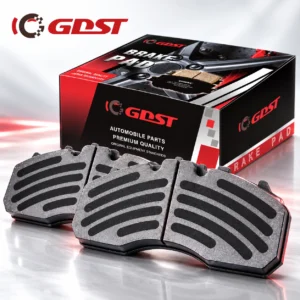
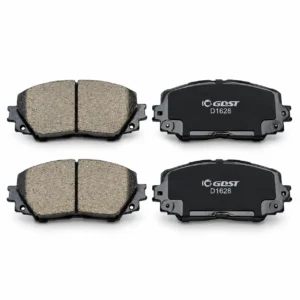
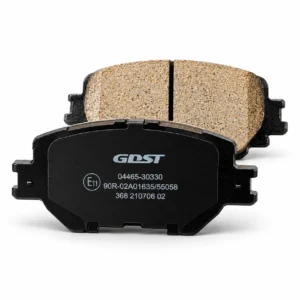
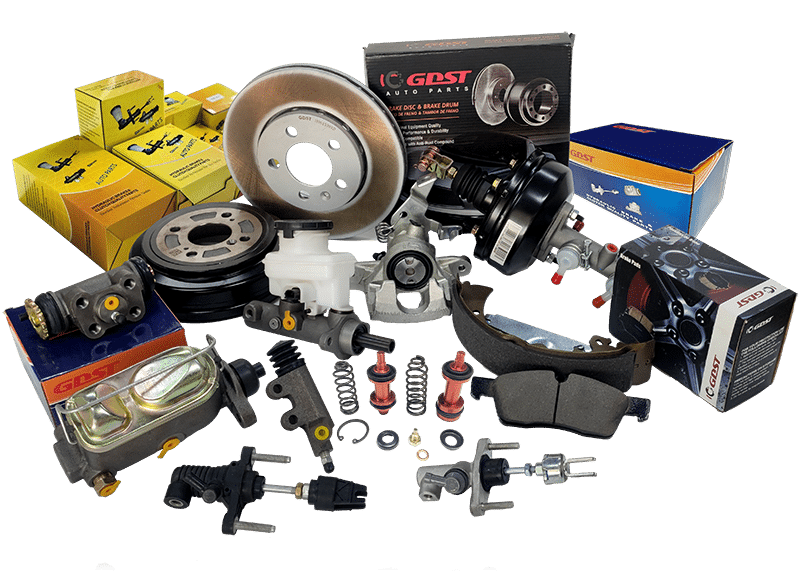


GDST Auto Parts supplies aftermarket ceramic brake pads for global automotive parts distributors, importers, and private-label brands. With wide vehicle coverage, customization and quality assurance support, we offer reliable ceramic brake pads to global customers for their target markets.
Looking for a trusted ceramic brake pad manufacturer in China? GDST provides ceramic brake pad solutions for Japanese, Korean, European and American vehicle applications. Our brake pad catalog covers over 3,000 models, helping old and new customers expand their aftermarket product portfolios.
From friction material selection to OEM packaging and bulk supply, GDST supports your business with flexible purchase solutions.
|
FMSI No. |
OE No. |
Car Model |
Position |
|
D1414 |
AL3Z-2001-A |
Ford |
Front |
|
D2382 |
ML3Z2001C |
Ford |
Front |
|
D898 |
5080563AA |
Dodge |
Rear |
|
D967 |
04492-14050 |
Toyota |
Rear |
|
D1084 |
05143-350AB |
Mitsubishi |
Rear |
|
D2102 |
04465-32080 |
Toyota |
Front |
|
D1001 |
26296-FE010 |
Cadillac |
Front |
|
D2176 |
04465-02460 |
Toyota |
Front |
|
D2183 |
04465-17100 |
Toyota |
Front |
|
D1212 |
04466-02220 |
Toyota |
Rear |
Ceramic brake pads are aftermarket disc brake pads made with ceramic-based composite friction materials. They are designed to provide controlled friction between the brake pad and rotor, helping vehicles slow down smoothly during braking.
Unlike solid ceramic components, automotive ceramic brake pads are composite products. Their friction formulations may contain ceramic or mineral fibers, binders, fillers, friction modifiers and other functional additives.
Ceramic brake pads are commonly selected for passenger vehicles where comfortable braking, reduced visible brake dust and noise control are important considerations.
For automotive parts distributors, ceramic brake pads offer an important product category for customers looking for an alternative to conventional semi-metallic friction materials.
A ceramic brake pad consists of several components that work together to provide reliable braking performance, structural support and noise control.
| Component | Description | Function |
| Friction Body | Ceramic-based composite friction material | Generates friction against the brake rotor |
| Backing Plate | Steel supporting plate | Provides structural support and transfers braking force |
| Anti-Noise Shim | Fabric, rubber or stainless steel options | Helps reduce vibration and braking noise |
| Chamfer | Angled edges on the friction material | Helps manage contact characteristics and noise |
| Slot | Groove within the friction material | Helps manage heat, gases and friction material behavior |
The friction body is the most important functional component of a ceramic brake pad. Its formulation affects friction characteristics, wear behavior, noise and thermal response.
GDST offers ceramic brake pad solutions with different friction formulations to address varying market requirements.
The backing plate supports the friction material and provides the mechanical interface with the caliper assembly.
GDST’s current product information identifies Q235 low-carbon steel as a backing plate material. Material grade, thickness and mechanical requirements should be confirmed for each specific model.
Anti-noise shims are installed on the backing plate to help control vibration and noise generated during braking.
Available configurations include:
The appropriate shim configuration depends on the vehicle application and product design.
Chamfers and slots are design features incorporated into the friction material.
They can help manage contact behavior, vibration, friction material wear and heat-related effects. Their dimensions and configurations should follow the requirements of the individual brake pad design.
Ceramic brake pads are commonly selected for their relatively low and less visible dust characteristics compared with many conventional semi-metallic formulations.
This makes them suitable for aftermarket applications where cleaner wheel appearance is an important purchasing consideration.
Ceramic friction formulations and properly designed anti-noise shims can help reduce unwanted braking noise.
The actual noise performance depends on the friction formula, pad geometry, rotor condition and vehicle braking system.
Ceramic brake pads are commonly designed for comfortable braking and consistent friction characteristics within their specified operating range.
The final performance depends on the selected formulation and vehicle application.
Different vehicles require different brake pad dimensions, backing plate configurations and friction characteristics.
GDST supports product matching using OE reference numbers, product samples and technical drawings.
GDST supports customization based on customer requirements, including friction material selection, product identification and packaging design.
Ceramic and semi-metallic brake pads are two widely used friction material categories in the automotive aftermarket.
Although both perform the same basic braking function, their material formulations and typical application characteristics differ.
| Comparison | Ceramic Brake Pads | Semi-Metallic Brake Pads |
| Main Material | Ceramic-based composite friction material | Metallic fibers and other friction materials |
| Brake Dust | Generally less visible dust | Often produces more visible dust |
| Noise | Generally quieter in suitable applications | Can generate more braking noise |
| Braking Feel | Smooth and comfort-oriented | Often provides stronger initial bite |
| Heat Management | Formulation-dependent | Metallic content generally provides good heat transfer |
| Rotor Wear | Can offer favorable rotor wear characteristics | May produce greater rotor wear depending on formulation |
| Typical Application | Passenger cars and comfort-oriented driving | Performance-oriented and demanding applications |
| Cost | Often positioned at a higher price level | Varies by formulation and product grade |
Which type should your customers choose?
Ceramic brake pads are suitable for passenger vehicles where low noise, reduced visible dust and driving comfort are important.
Semi-metallic brake pads may be more appropriate for vehicles requiring greater thermal capacity, aggressive braking or heavy-load operation.
There is no single “better” option between these two materials; the choice of the more suitable material depends on the vehicle model, road conditions, and driving habits.
GDST provides ceramic brake pads with different dimensions, backing plate configurations and friction material specifications depending on the vehicle application.
The following table summarizes the currently published product reference information.
| Technical Parameter | Current GDST Reference |
| Friction Material | Ceramic-based composite |
| Friction Coefficient | 0.37 |
| Published Brake Pad Thickness | 15 mm |
| Backing Plate Material | Q235 Low-Carbon Steel |
| Backing Plate Thickness | 5–5.5 mm |
| Backing Plate Hardness | 120–180 HB |
| Anti-Noise Shim Options | Fabric, Rubber, Stainless Steel |
| Chamfer | Model-dependent |
| Slot Configuration | Model-dependent |
| Product Matching | OE Number / Vehicle Application |
Note: These figures are existing GDST product-page reference values, not universal specifications for every model. The friction coefficient must be supported by its applicable test method, temperature range and tolerance. Thickness and backing plate parameters must also be confirmed against the selected model’s approved drawing and inspection report.
GDST supplies ceramic brake pads covering a range of Japanese, Korean, European and American vehicle applications.
Our current product range includes applications for passenger cars and selected light commercial vehicles, subject to specific model compatibility.
Typical vehicle brands covered in the existing GDST catalog include:
To help us identify the correct ceramic brake pad, please provide:
| Required Information | Example |
| Vehicle Brand | Toyota |
| Vehicle Model | Corolla |
| Model Year | 2020 |
| Installation Position | Front / Rear |
| OE Number | Original reference number |
Consistent product quality is the most important factor for aftermarket customers.
GDST works with dedicated brake pad manufacturing facilities and a screened manufacturing partner network to support automotive aftermarket supply.
Our company has more than 15 years of industry and export experience, serving customers in over 100 countries.
GDST’s existing ceramic brake pad product information describes batch testing using NVH equipment to evaluate noise and vibration characteristics.
Depending on the product and agreed inspection requirements, buyers can request relevant technical information and available inspection records.
Important quality evaluation areas include:
The applicable inspection methods and acceptance criteria should be confirmed for each product program.
Different destination markets may have specific requirements for aftermarket brake friction materials.
For example, California’s brake pad legislation limits copper content to 0.5% by weight for applicable products sold in the state from January 1, 2025, together with associated certification and marking requirements.
European buyers may also need to verify applicable UN Regulation No. 90 approval for replacement brake lining assemblies.
Please inform GDST of your destination market and required compliance documentation when requesting a quotation.
GDST supports customization cooperation for automotive aftermarket customers.
Whether you are developing your brand or new ceramic brake pad models, we can discuss customization according to your requirements.
Available customization discussions include:
Custom development can be evaluated using customer samples, technical drawings or OE references.
We also support packaging customization to help distributors and automotive parts brands establish their own product identity.
Options include:
Customization feasibility, tooling requirements, and order quantities are confirmed according to the specific project.
GDST works with international automotive aftermarket distributors, importers, wholesalers, and private-label brands.
Our existing product page lists the following commercial reference terms:
| Item | Current Reference |
| MOQ | 100 sets per model |
| Production Lead Time | Approximately 45 days |
| Warranty | 1 year |
| Samples | Available upon request |
| OEM / ODM | Supported |
| Packaging | Customized options available |
Commercial terms will be confirmed based on the final purchase model, order quantity, customization requirements and written order agreement.
GDST ceramic brake pads are composed of soft metals such as copper, zinc, and aluminum, with a density of 1.8–2.3 g/cm³. They contain no steel fibers, and other metallic components account for less than 3%.
Not always. Ceramic brake pads are more suitable for passenger cars on city streets; for trucks or driving on rough roads, semi-metallic brake pads are a better choice.
Generally, yes. GDST ceramic brake pads contain imported resin and mineral fibers, which help keep the brake rotors clean, no dust, prevent damage to the rotors, operate quietly, and resist rust.
No. It depends on the car model. Ceramic pads are more commonly used in passenger cars and race cars, while trucks and SUVs usually use semi-metallic pads.
Yes. GDST supports OEM and ODM services, including new product development and customized brand packaging.
Just provide us with the internationally recognized part number, such as the OE number or FMSI number, and we can match the right brake pads based on the number you provide.
The MOQ of GDST ceramic brake pads is 100 sets per model. If you plan to purchase a large number of models, you can contact GDST directly to negotiate the MOQ.
GDST production lead time is about 45 days. Actual delivery arrangements depend on order quantity and customization requirements.
Yes, we offer sample service. If the prices and quality standards work for you, we are willing to send you a sample for free so you can test our quality first.
We can sign a quality guarantee agreement with you. If you encounter any quality issues within one year of receiving the goods, please contact us at any time for compensation.
If you are looking for a reliable ceramic brake pad manufacturer and wholesale supplier for your automotive aftermarket business, stop at GDST Auto Parts, we offer OEM and private-label customization, manufacturing coordination, and international export support.
Whether you need existing OE replacement models or customized ceramic brake pad solutions, our team is ready to give you professional service.
Send us your OE numbers with quantity and any package requirements to start your sourcing inquiry.