Quick Answer: Why Do Brake Pads Wear Unevenly?
Uneven brake pad wear occurs when pads on the same axle or within one caliper lose friction material at noticeably different rates, or develop tapered, grooved, or localized wear. It is a symptom, not a diagnosis. Common causes include a sticking caliper piston, seized slide pins, pads binding in the bracket, a restricted brake hose that retains hydraulic pressure, rotor runout or disc thickness variation (DTV), and incorrect pad fitment. Compare inner and outer pads and left-to-right wear, measure pad and rotor condition, and inspect the caliper, mounting hardware, and hydraulic circuit before replacing parts. Correct the root cause and generally replace pads as an axle set, following vehicle specifications. When buying replacements, verify vehicle and axle fitment, dimensions, friction formulation, and required hardware—not appearance or price alone.
Uneven brake pad wear is more than a sign that your brake pads need replacing. It can indicate an underlying problem with the brake caliper, slide pins, pad mounting hardware, hydraulic system, brake rotor, or installation. If the cause is not identified and corrected, new brake pads may develop the same uneven wear pattern, reducing braking efficiency and potentially compromising vehicle safety.
Whether you notice one brake pad wearing faster than another, excessive wear on the inner or outer pad, or a tapered friction surface, understanding the wear pattern is the first step toward identifying the problem.
For automotive repair professionals, fleet operators, and aftermarket brake parts distributors, recognizing these patterns can also help prevent unnecessary component replacement and improve brake system maintenance.
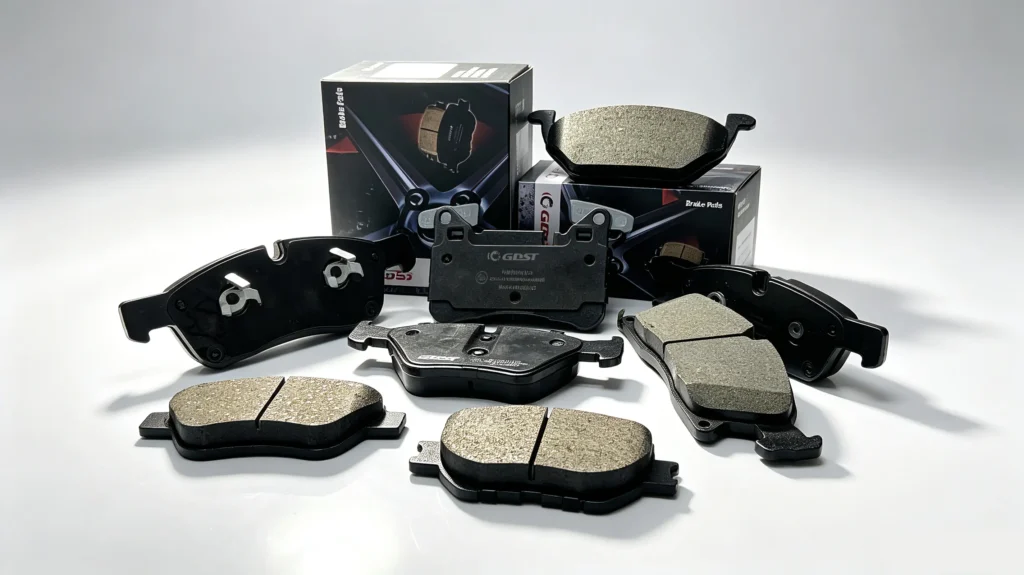
For automotive parts distributors, wholesalers, and importers, understanding brake pad wear is also important when selecting reliable replacement products. Correct vehicle fitment, consistent friction material performance, and manufacturing quality all contribute to dependable aftermarket brake pad supply.
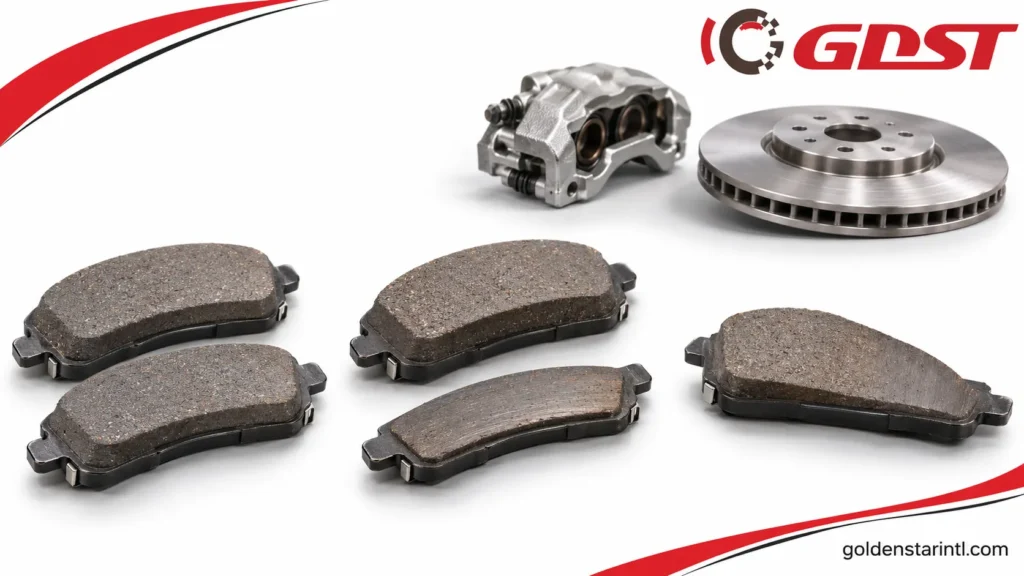
Explore available brake pad solutions or discuss your wholesale sourcing requirements with a professional manufacturer.
What Is Uneven Brake Pad Wear?
Uneven brake pad wear occurs when brake pads within the same axle, wheel assembly, or caliper wear at noticeably different rates or develop different friction surface patterns.
Under normal operating conditions, brake pads gradually lose friction material as they contact the rotating brake rotor. However, their wear should remain reasonably consistent according to the vehicle’s brake system design and operating conditions.
Uneven wear may appear in several ways:
- The inner brake pad wears faster than the outer pad.
- The outer brake pad wears faster than the inner pad.
- The left and right brake pads on the same axle have significantly different thicknesses.
- One end of a brake pad wears faster than the other, creating tapered wear.
- The friction material develops localized grooves, cracks, glazing, or irregular contact marks.
It is important to distinguish uneven brake pad wear from normal differences between the front and rear axles.
In many vehicles, front brake pads wear faster than rear brake pads because the front axle typically handles a greater share of braking force during deceleration. Electronic brake force distribution, vehicle weight transfer, regenerative braking, and vehicle-specific brake designs can also influence wear rates.
Therefore, front and rear brake pad thickness differences do not automatically indicate a fault.
The more important concern is an unexpected difference between pads that should experience comparable braking conditions, such as the inner and outer pads on one wheel or the corresponding pads on the same axle.
How Do Brake Pads Wear Unevenly? Understanding the Brake System
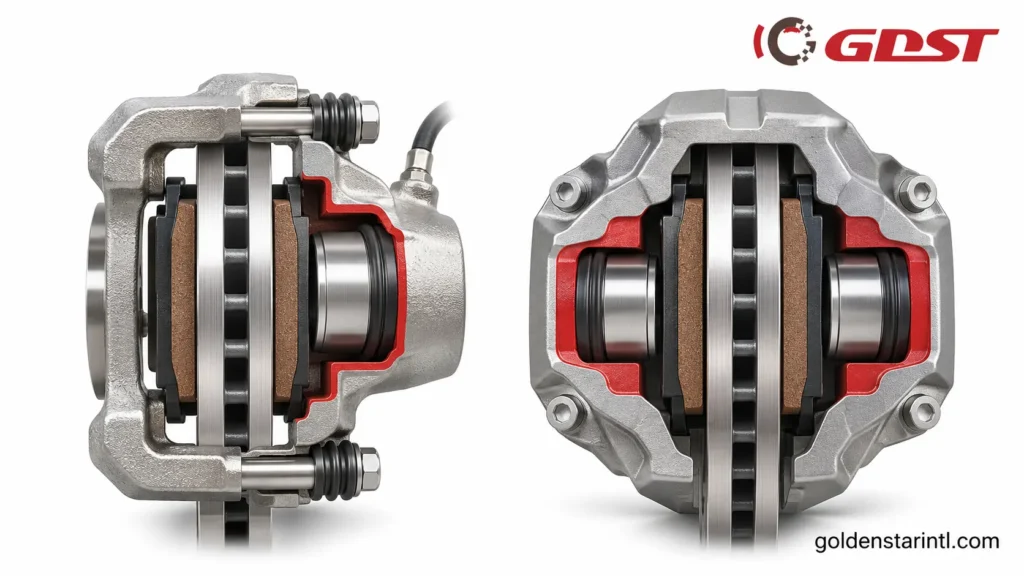
Before diagnosing uneven wear, it helps to understand how a conventional disc brake system works.
When the driver presses the brake pedal, hydraulic pressure is generated by the master cylinder and transmitted through the brake lines to the caliper.
The caliper piston pushes the inner brake pad against the rotating brake rotor. Depending on the caliper design, the outer pad is then brought into contact with the opposite rotor surface.
Friction between the pads and rotor converts the vehicle’s kinetic energy into heat, slowing the wheel.
There are two common caliper designs.
Floating or Sliding Calipers
A floating caliper usually has one or more pistons on the inboard side and moves laterally on guide pins or slide pins. This movement allows the outer pad to apply clamping force to the opposite side of the rotor.
If the guide pins corrode, seize, or become restricted, the caliper may not move freely. This can result in uneven pad contact and abnormal wear.
Fixed Calipers
A fixed caliper is mounted rigidly to the vehicle and does not slide laterally. It generally uses pistons on both sides of the rotor to apply clamping force.
Uneven wear in a fixed caliper requires a different diagnostic approach. Possible causes include sticking pistons, damaged seals, unequal hydraulic operation, or problems with pad movement and mounting hardware.
This distinction matters because a guide pin problem is relevant to sliding calipers, not to conventional fixed calipers.
A technician should identify the caliper design before selecting a diagnostic procedure.
What Are the Most Common Causes of Uneven Brake Pad Wear?
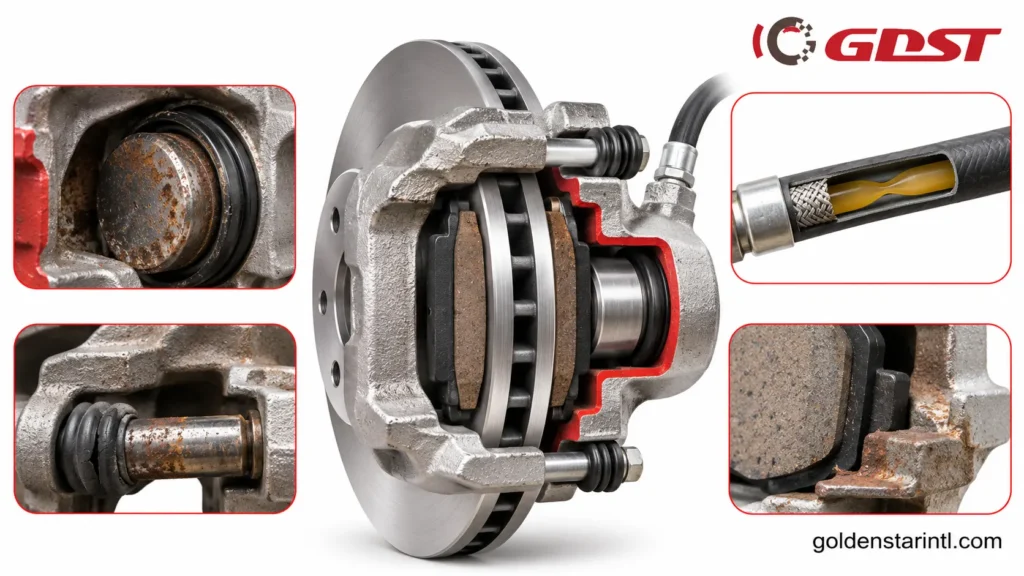
Uneven brake pad wear can result from mechanical restrictions, hydraulic problems, rotor conditions, installation errors, or unsuitable replacement parts.
The following are some of the most important causes to investigate.
1. Sticking or Seized Brake Caliper Pistons
A sticking caliper piston is one of the most common mechanical causes of uneven brake pad wear.
During normal braking, hydraulic pressure pushes the piston outward to apply the brake pads. When the brake pedal is released, the system pressure decreases and the caliper’s sealing arrangement allows a small amount of piston rollback.
If the piston becomes corroded, contaminated, or mechanically restricted, it may not retract or operate normally.
This can cause continuous or intermittent contact between the pad and rotor.
Common contributing factors include:
- Corrosion on the exposed piston surface.
- Damaged or deteriorated piston seals.
- Contamination in the brake fluid.
- Moisture entering the hydraulic system.
- Physical damage to the caliper piston or bore.
- Long periods without brake system maintenance.
A sticking piston can cause excessive pad wear, brake drag, overheating, burning odors, and reduced braking performance.
However, uneven wear alone does not prove that the piston is defective. The technician should inspect piston movement, seal condition, brake fluid condition, and the complete hydraulic circuit before deciding whether the caliper requires repair or replacement.
2. Seized or Restricted Caliper Slide Pins
Caliper slide pins allow a floating caliper to move laterally as the brake pads apply pressure.
When the pins operate correctly, the caliper can maintain appropriate contact between the inner and outer brake pads.
If one or both pins become corroded, contaminated, bent, or stuck, the caliper may fail to move freely.
Possible causes include:
- Rust and corrosion.
- Torn or missing rubber guide pin boots.
- Deteriorated guide pin bushings.
- Incorrect or incompatible lubricant.
- Dirt and moisture entering the guide pin bore.
- Improper installation or damaged guide pins.
A restricted slide pin can cause the inner and outer pads to wear at different rates. Depending on the specific failure, it may also contribute to tapered wear, uneven contact, or brake drag.
During inspection, technicians should check guide pin movement, boot condition, corrosion, and the condition of the guide pin bores.
Cleaning, relubrication, or replacement should follow the vehicle manufacturer’s service procedure. The selected lubricant must be compatible with the guide pin materials and rubber components.
3. Brake Pads Binding in the Caliper Bracket
A brake pad must move correctly within its mounting bracket to maintain consistent contact with the rotor.
Corrosion beneath abutment clips, rust buildup on bracket contact surfaces, damaged hardware, or incorrect pad dimensions can restrict this movement.
When the pad cannot move freely, it may remain in contact with the rotor after braking.
This can lead to:
- Excessive wear on one pad.
- Tapered friction material.
- Persistent brake drag.
- Uneven contact across the friction surface.
- Excessive heat generation.
This problem is particularly important in regions where road salt, moisture, and corrosion are common.
Replacing the brake pads without addressing corrosion or restricted pad movement may allow the same problem to return.
During brake service, the technician should inspect the caliper bracket, abutment surfaces, clips, and pad contact points.
4. Damaged or Internally Restricted Brake Hoses
Brake hoses transmit hydraulic pressure from the rigid brake lines to the calipers while accommodating suspension and steering movement.
A deteriorated brake hose may develop internal damage that restricts fluid flow.
In some cases, the hose can allow hydraulic pressure to reach the caliper during braking but restrict pressure from returning after the brake pedal is released.
The result may be residual hydraulic pressure and continued brake application.
This can cause:
- Excessive brake pad wear.
- Brake drag.
- Unusual heat around the affected wheel.
- Reduced free rotation of the wheel.
- Vehicle pulling under certain conditions.
An internally restricted brake hose can produce symptoms similar to a sticking caliper piston.
Therefore, replacing the caliper without checking the hydraulic hose may fail to solve the original problem.
Professional diagnosis may involve checking residual hydraulic pressure, inspecting hose condition, and following the manufacturer’s hydraulic testing procedure.
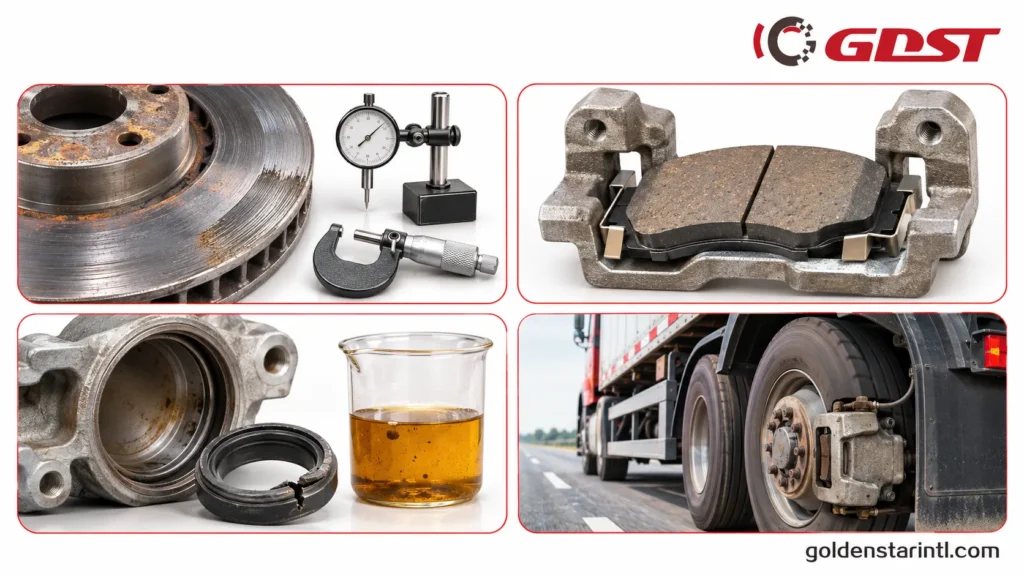
5. Uneven Brake Rotor Surface or Disc Thickness Variation
The brake rotor provides the friction surface against which the brake pads operate.
If the rotor has abnormal surface conditions, it may contribute to uneven contact and brake pad wear.
Potential issues include:
- Disc Thickness Variation (DTV).
- Excessive lateral runout.
- Deep grooves or scoring.
- Localized corrosion.
- Uneven friction material transfer.
- Heat-related surface damage.
DTV refers to measurable differences in rotor thickness around its circumference.
Lateral runout describes side-to-side movement of the rotor’s friction surface as it rotates.
These are different measurements and should not be treated as interchangeable terms.
Rotor runout may contribute to DTV development over time under certain operating conditions. Both conditions can also contribute to brake pedal pulsation or uneven friction contact.
Technicians should measure rotor thickness at multiple points using an appropriate micrometer and check lateral runout with a dial indicator according to the vehicle manufacturer’s specifications.
If the rotor is below its minimum service thickness, exceeds permitted runout, or has damage that cannot be corrected within the manufacturer’s limits, replacement may be necessary.
6. Incorrect Brake Pad Installation or Incompatible Replacement Parts
Brake pads must match the intended caliper, rotor, mounting hardware, and vehicle application.
Incorrectly selected or improperly installed pads can create abnormal contact and restricted movement.
Common installation-related problems include:
- Incorrect pad dimensions.
- Incorrect inner and outer pad positioning.
- Missing or incorrectly installed shims.
- Incorrect abutment clips.
- Damaged anti-rattle hardware.
- Improper pad seating.
- Incorrect caliper installation.
- Failure to clean mounting surfaces.
- Incorrect torque on mounting fasteners.
Some brake pad designs are directional and have specific inner and outer positions. Installing them incorrectly can affect braking performance, noise, and wear.
For this reason, technicians should verify the correct part number, application, pad orientation, and installation procedure before completing the repair.
7. Damaged Brake Caliper Seals or Contaminated Brake Fluid
Caliper seals help maintain hydraulic pressure and contribute to the normal operation of the piston.
Damaged seals may cause fluid leakage, allow contamination to enter the caliper, or affect piston movement.
Brake fluid also absorbs moisture over time. Contaminated fluid can contribute to internal corrosion and deterioration of hydraulic components.
Potential warning signs include:
- Visible brake fluid leakage.
- A soft or abnormal brake pedal.
- Corrosion around the caliper piston area.
- Irregular piston operation.
- Brake fluid contamination.
Brake fluid condition and service intervals should be evaluated according to the vehicle manufacturer’s recommendations.
A leaking caliper must not be treated as a minor pad wear issue. Hydraulic leaks can reduce braking performance and require immediate attention.
8. Driving Conditions, Brake Use, and Operating Environment
Driving habits and operating conditions affect brake pad wear, although they do not necessarily explain mechanical differences between two pads in the same caliper.
Factors that can increase brake pad consumption include:
- Frequent hard braking.
- Heavy vehicle loads.
- Repeated downhill driving.
- Stop-and-go urban traffic.
- Towing and commercial vehicle operation.
- High operating temperatures.
- Frequent exposure to water, mud, or road salt.
These conditions can accelerate friction material wear and increase the likelihood of heat-related problems.
However, normal driving conditions should not be used to dismiss a significant unexplained difference between inner and outer pads or between the left and right wheels on the same axle.
The entire brake system should still be inspected when an abnormal wear pattern is found.
How to Read Brake Pad Wear Patterns and Identify Possible Problems
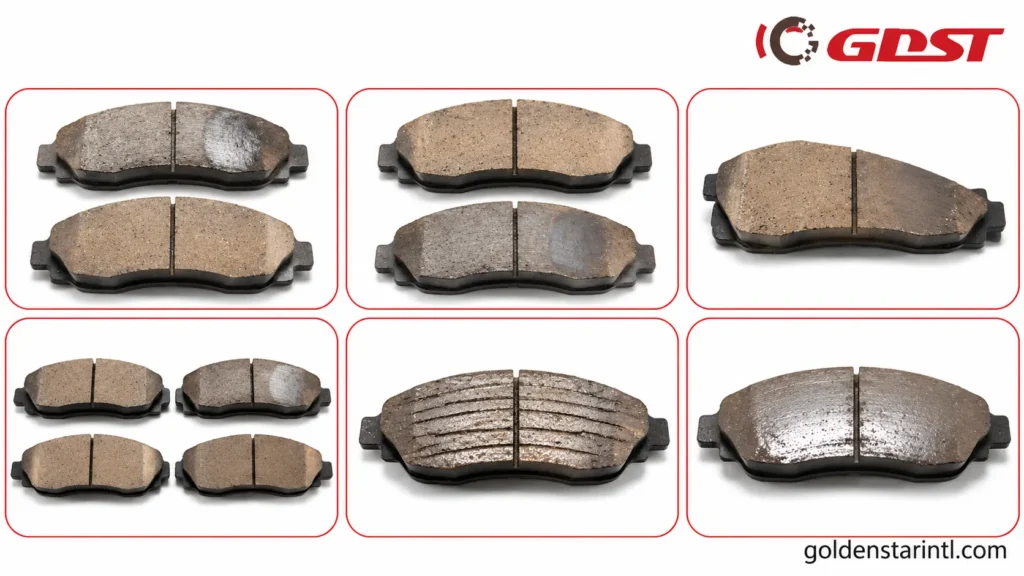
The shape and location of brake pad wear can provide valuable diagnostic clues.
However, a wear pattern is not a definitive diagnosis by itself. The caliper design, pad construction, mounting arrangement, rotor condition, and vehicle specifications must all be considered.
Inner Brake Pad Wears Faster Than Outer Brake Pad
If the inner pad has significantly less friction material than the outer pad, possible causes include:
- Restricted caliper slide pins.
- A sticking caliper piston.
- The outer pad binding in the bracket.
- Hydraulic pressure not releasing correctly.
- Incorrect pad installation.
On a floating caliper, the piston directly applies force to the inner pad, while the caliper slides to bring the outer pad into contact.
A restricted sliding mechanism can interfere with normal clamping and release.
The technician should check piston operation, guide pin movement, pad clearance, and hydraulic pressure.
Outer Brake Pad Wears Faster Than Inner Brake Pad
Excessive outer pad wear can also indicate a floating caliper movement problem.
Possible causes include:
- Restricted or seized guide pins.
- A sticking caliper housing.
- Incorrect pad seating.
- Corrosion around the outer pad abutment points.
- Mechanical damage to the caliper bracket.
The technician should verify that the caliper can move freely and that both pads are correctly seated.
Tapered Brake Pad Wear
Tapered wear occurs when one end of the friction material becomes thinner than the opposite end.
This can happen across the length or width of the pad, depending on its orientation and the mounting arrangement.
Possible causes include:
- Restricted guide pin movement.
- Uneven pad movement in the bracket.
- Misaligned or damaged mounting hardware.
- Caliper bracket problems.
- Uneven mechanical contact.
The direction of the taper should be recorded before the brake components are dismantled.
Comparing the inner and outer pads and checking their contact surfaces can help identify whether the issue is related to caliper movement, pad support, or installation.
One Wheel’s Brake Pads Wear Faster Than the Opposite Wheel
If the brake pads on one side of an axle wear significantly faster than those on the opposite side, investigate the complete brake assembly on both sides.
Potential causes include:
- A sticking caliper piston.
- Restricted brake hose.
- Corroded mounting hardware.
- Unequal caliper operation.
- Different rotor surface conditions.
- Parking brake problems on applicable rear brake designs.
The absence of vehicle pulling does not rule out a brake drag condition.
Some faults develop gradually or may not produce an obvious change in steering behavior.
Grooved, Scored, or Locally Damaged Friction Surfaces
Grooves or localized damage may indicate foreign material, abnormal rotor surface conditions, or contact problems.
Possible causes include:
- Debris trapped between the pad and rotor.
- Damaged rotor friction surfaces.
- Excessive corrosion.
- Improper pad installation.
- Abnormal friction material contact.
The technician should inspect both sides of the rotor and the full friction surface of each pad.
Glazed Brake Pad Surfaces
Glazing refers to a smooth, shiny, or hardened-looking friction surface.
It may develop under excessive heat or unsuitable operating conditions.
Possible contributing factors include:
- Prolonged brake drag.
- Repeated high-temperature braking.
- Incorrect bedding-in procedures.
- Inappropriate pad and rotor combinations.
- Severe operating conditions.
Glazing should be evaluated together with pad thickness, rotor condition, and the history of brake operation.
A shiny surface alone does not establish the cause of the problem.
Uneven Brake Pad Wear: Diagnostic Comparison Table
The following table provides a practical starting point for technicians and brake maintenance professionals.
| Observed wear pattern | Possible causes | Recommended inspection |
| Inner pad wears faster | Sticking piston, restricted slide pins, pad binding | Inspect piston, guide pins, bracket and hydraulic release |
| Outer pad wears faster | Restricted caliper movement, pad binding | Inspect caliper movement, outer pad seating and bracket |
| Tapered pad wear | Guide pin restriction, bracket corrosion, misalignment | Compare pad ends and inspect mounting surfaces |
| One wheel wears faster | Caliper drag, hose restriction, hydraulic imbalance | Inspect both axle assemblies and hydraulic circuit |
| Grooved friction surface | Debris, rotor damage, abnormal contact | Inspect rotor and pad friction surfaces |
| Glazed friction material | Excessive heat, brake drag, operating conditions | Check rotor, caliper release and operating history |
| Cracked or damaged friction material | Excessive thermal stress, unsuitable application or mechanical damage | Assess the complete pad and rotor assembly |
| Excessive wear on both pads at one wheel | Persistent brake drag or operating conditions | Check piston, caliper release, hose and parking brake where applicable |
These are diagnostic possibilities rather than one-to-one fault codes. The actual cause must be confirmed through inspection and measurement.
How to Diagnose Uneven Brake Pad Wear: A Step-by-Step Guide
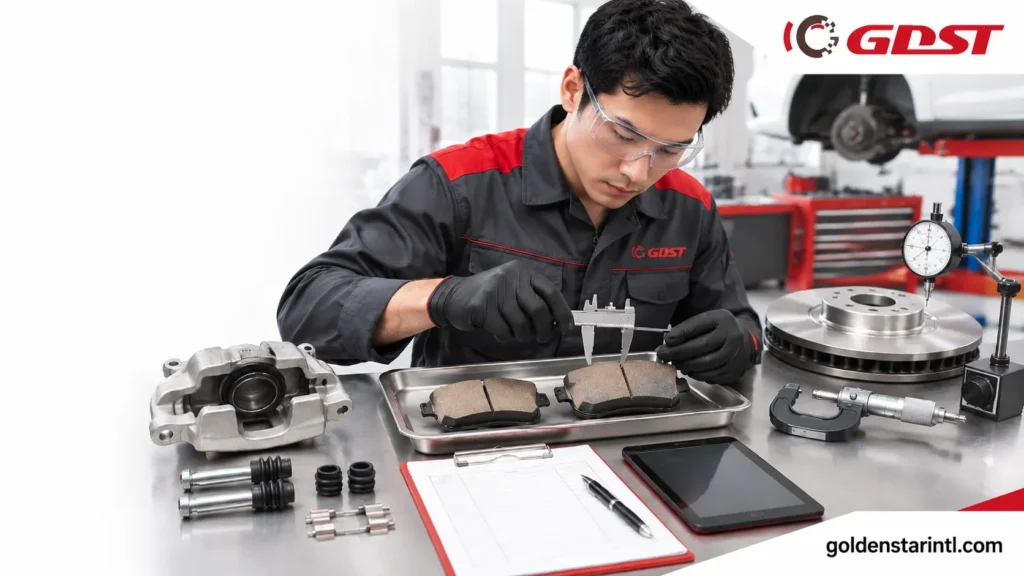
A systematic inspection helps prevent unnecessary parts replacement and reduces the chance of recurring brake problems.
Step 1: Record the Original Brake Pad Positions
Before removing the pads, record their original positions.
Identify:
- Front or rear axle.
- Left or right wheel.
- Inner or outer pad.
- Leading or trailing position where relevant.
Photograph the friction surfaces and record the remaining material thickness.
This information helps technicians compare wear patterns accurately.
Step 2: Measure All Brake Pad Thicknesses
Use a suitable measuring instrument to measure the remaining friction material.
Measure relevant areas across each pad, particularly when tapered or irregular wear is suspected.
Do not include the steel backing plate when recording friction material thickness.
Compare the measurements with the vehicle manufacturer’s minimum service limits.
Where applicable, use the manufacturer’s specified method for measuring inner-to-outer and left-to-right differences.
Step 3: Inspect the Caliper and Guide Pins
Identify whether the caliper is floating or fixed.
For floating calipers, check:
- Guide pin movement.
- Guide pin corrosion.
- Rubber boot condition.
- Guide pin bushings.
- Lubrication condition.
- Caliper bracket alignment and condition.
For fixed calipers, inspect piston movement, seals, hydraulic operation, and pad support.
Do not apply a floating-caliper slide pin diagnosis to a fixed caliper.
Step 4: Inspect Brake Pad Mounting Hardware
Check the pad abutment surfaces, clips, shims, and other mounting components.
Look for corrosion, deformation, incorrect installation, or excessive clearance.
Confirm that the replacement pads move correctly in their intended mounting positions according to the manufacturer’s service procedure.
Step 5: Inspect the Brake Rotor
Check the rotor for:
- Minimum thickness.
- Disc Thickness Variation.
- Lateral runout.
- Deep grooves.
- Heat spots.
- Uneven friction material transfer.
Use a micrometer and dial indicator when appropriate.
Measurements should follow the correct vehicle-specific procedures and tolerances.
Step 6: Check the Hydraulic System
If the brake appears to remain applied after pedal release, check the hydraulic system.
Inspect:
- Brake hoses.
- Rigid brake lines.
- Caliper seals.
- Brake fluid condition.
- Master cylinder operation.
- Relevant hydraulic control components.
A qualified technician may perform pressure-release or other hydraulic tests to determine whether residual pressure is preventing the brake from releasing.
Step 7: Check Parking Brake Components
For rear brakes incorporating a mechanical or electric parking brake, inspect the parking brake mechanism.
A parking brake that does not release fully can cause continued friction and abnormal rear brake wear.
Follow the manufacturer’s procedure for electronic parking brake service mode and adjustment where applicable.
Step 8: Identify and Correct the Root Cause Before Replacing Pads
Replacing brake pads without correcting the underlying problem may lead to repeated uneven wear.
Depending on the diagnosis, corrective work may involve:
- Servicing or replacing caliper guide pins.
- Cleaning or repairing pad mounting surfaces.
- Replacing damaged mounting hardware.
- Repairing or replacing a faulty caliper.
- Replacing a restricted brake hose.
- Correcting rotor-related problems.
- Installing correctly specified brake pads.
- Correcting installation errors.
The appropriate repair should be determined by inspection, measurement, and the vehicle manufacturer’s service requirements.
How to Fix Uneven Brake Pad Wear
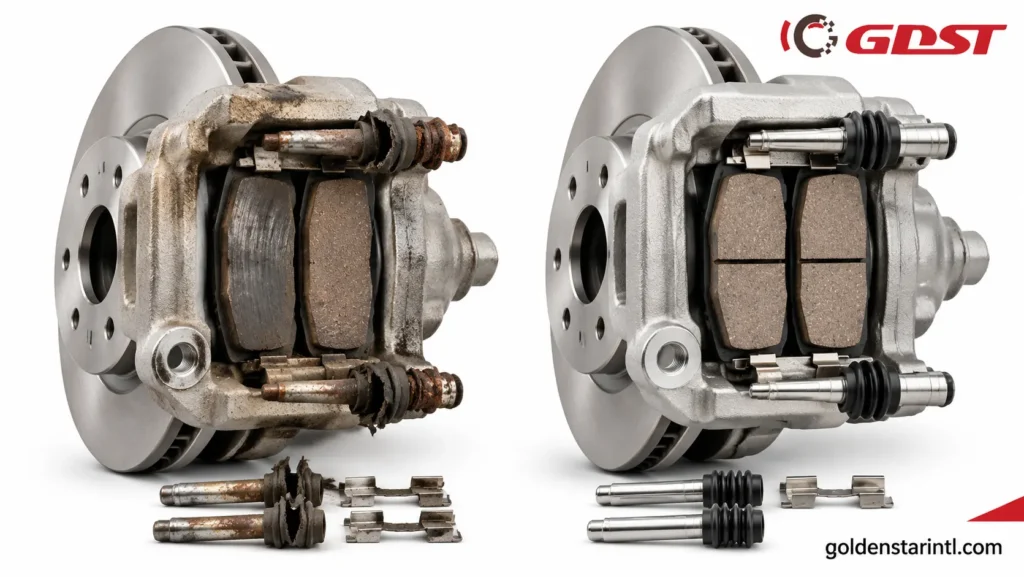
The repair depends on the cause, not simply the appearance of the worn brake pads.
When guide pins are restricted: Clean or replace the affected guide pins and service the boots and bushings as required. Use only compatible lubricant specified for the application.
When a caliper piston is sticking: Inspect the piston, bore, seals, and hydraulic condition. Repair or replace the caliper according to the manufacturer’s service requirements.
When pads bind in the bracket: Remove corrosion where permitted, inspect the bracket, and replace damaged clips or hardware. Ensure the replacement pads fit and move correctly.
When a brake hose is internally restricted: Replace the defective hose and follow the required brake bleeding and hydraulic inspection procedures.
When the rotor is damaged or outside service limits: Machine or replace the rotor only when permitted by the manufacturer’s specifications. Replace it if it is below minimum thickness or cannot meet the required tolerances.
When incorrect brake pads were installed: Verify the vehicle application and install the correct pad set with the appropriate hardware and orientation.
After completing the repair, the brake system should be inspected, bled if necessary, and tested according to the vehicle manufacturer’s procedures.
Brake repairs involve safety-critical components. Work should be performed by qualified technicians using the appropriate tools and service information.
Should You Replace Both Brake Pads If One Is Worn Unevenly?
In most conventional disc brake applications, brake pads should be replaced as an axle set rather than replacing only one individual pad.
For example, if one front brake pad is worn excessively, technicians generally replace the front pads on both the left and right sides, provided the vehicle manufacturer’s service procedure does not specify otherwise.
Replacing pads on only one side can create differences in friction characteristics and braking response.
However, replacing both sides does not eliminate the need to diagnose the original fault.
Before installing new pads, inspect the calipers, mounting hardware, rotors, and hydraulic components on both sides of the axle.
The rotor condition and suitability for continued service should also be assessed.
If the original problem remains, the replacement pads may develop the same abnormal wear.
Can You Drive With Uneven Brake Pad Wear?
Uneven brake pad wear should not be ignored because it may indicate that the braking system is not operating correctly.
The level of risk depends on the severity of the wear and the underlying cause.
Possible warning signs include:
- A vehicle pulling to one side during braking.
- Grinding or persistent abnormal brake noise.
- Excessive heat around one wheel.
- A burning smell after driving.
- Reduced braking performance.
- A soft or abnormal brake pedal.
- Visible brake fluid leakage.
If braking performance is reduced, brake fluid is leaking, or a wheel is severely overheating, stop driving when it is safe to do so and arrange professional inspection or vehicle recovery.
Even when the vehicle appears to brake normally, significant uneven wear should be investigated promptly.
A lack of obvious symptoms does not guarantee that the brake system is functioning correctly.
How to Prevent Uneven Brake Pad Wear
Preventing uneven brake pad wear requires proper component selection, correct installation, and regular brake system inspection.
Choose Brake Pads That Match the Vehicle Application
Brake pads should match the vehicle’s brake system, caliper design, rotor specifications, and intended operating conditions.
Incorrect friction material or pad dimensions may lead to poor fitment, noise, irregular contact, or unsuitable braking characteristics.
Inspect Calipers and Mounting Hardware During Brake Service
Do not inspect only the friction material.
Guide pins, boots, mounting clips, brackets, piston seals, and pad contact points should also be checked according to the manufacturer’s service procedure.
Maintain the Brake Hydraulic System
Use the correct brake fluid specification and follow the recommended replacement interval.
Inspect hoses, seals, and hydraulic components for leakage, damage, and abnormal operation.
Check Rotor Condition Before Installing New Pads
A new set of brake pads should not be installed without checking whether the existing rotor is suitable for continued service.
Rotor thickness, surface condition, runout, and other applicable measurements should be within the specified limits.
Follow Proper Installation and Bedding-In Procedures
Correct pad positioning, hardware installation, fastener torque, and bedding-in procedures are important for consistent braking performance.
Follow the instructions supplied with the brake pads and the applicable vehicle service information.
Use Quality Replacement Components
Consistent manufacturing quality, correct friction material selection, accurate backing plate dimensions, and reliable hardware compatibility all contribute to a properly functioning brake assembly.
Selecting suitable replacement brake pads is important, but even a high-quality pad cannot compensate for a sticking caliper, restricted hydraulic hose, or incorrectly installed mounting hardware.
How Brake Pad Manufacturing Quality Influences Wear Performance
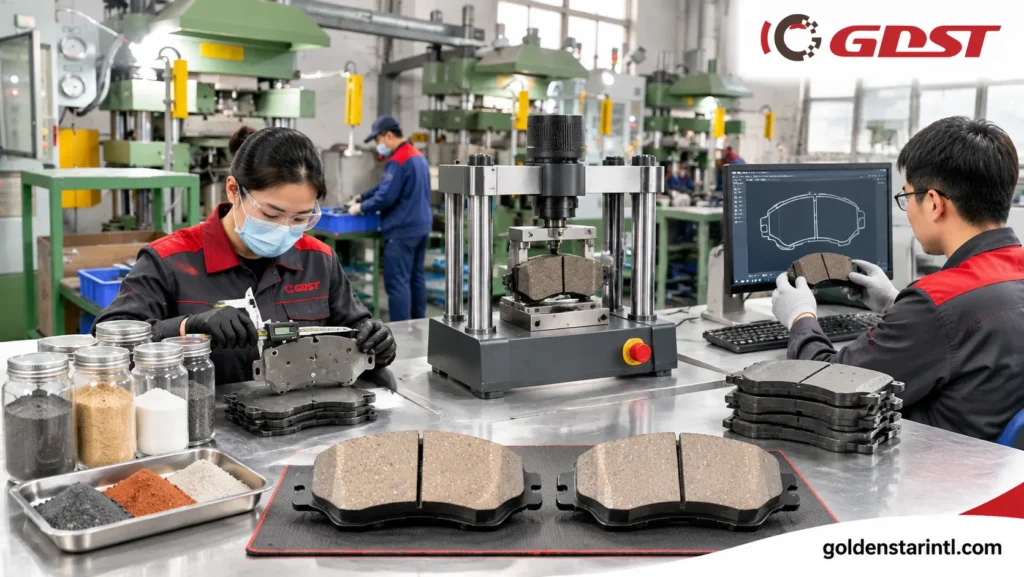
Uneven brake pad wear is not always caused by the replacement pad itself. However, manufacturing consistency and correct application are important factors in achieving predictable braking performance.
From a brake pad manufacturer’s perspective, several product characteristics deserve attention.
Friction Material Formulation
The friction compound influences friction characteristics, heat resistance, wear behavior, and noise performance.
Different vehicle applications require different formulations according to their operating conditions and braking requirements.
Backing Plate Dimensional Accuracy
The backing plate must meet the specified dimensions and mounting requirements.
Incorrect dimensions or poor manufacturing consistency may affect pad fitment and movement within the caliper bracket.
Friction Material Bonding
The bonding process between the friction material and backing plate is important for product integrity.
Manufacturing quality control should verify that the friction material remains securely attached under the applicable test conditions.
Surface and Structural Consistency
Consistent friction material distribution, appropriate chamfers and slots where specified, and controlled manufacturing processes help maintain product conformity.
These design features should be evaluated according to the intended vehicle application rather than assumed to be universal solutions for uneven wear.
Product Fitment and Application Verification
Even a well-manufactured brake pad can perform incorrectly if it is selected for an incompatible caliper or rotor configuration.
Accurate application data, dimensional inspection, and correct product identification are therefore essential.
At GDST, brake pad development and manufacturing focus on supplying automotive aftermarket customers with application-oriented friction products for different vehicle requirements.
For distributors and importers, working with a supplier that understands both friction material performance and product fitment can support more consistent sourcing and aftermarket product quality.
How to Select a Reliable Brake Pad Manufacturer for Wholesale Supply
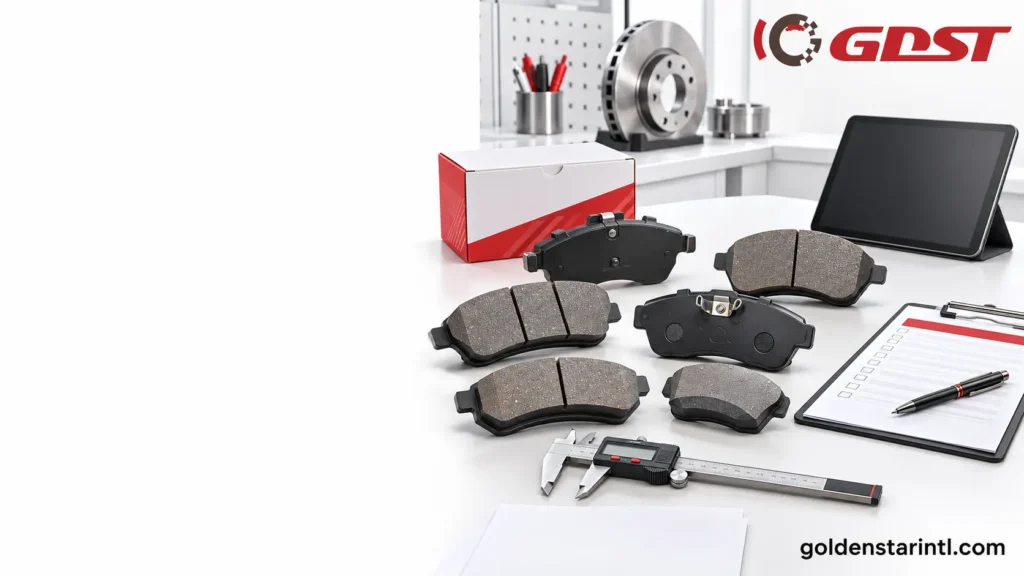
For automotive parts distributors, wholesalers, and importers, choosing a brake pad manufacturer involves more than comparing unit prices.
Important factors include:
| Evaluation factor | What buyers should verify |
| Product coverage | Vehicle applications, available models, and catalog accuracy |
| Friction material | Product specifications and application suitability |
| Dimensional consistency | Backing plate dimensions and fitment verification |
| Quality management | Manufacturing inspection and traceability procedures |
| Testing capability | Applicable product and performance testing |
| Packaging | Private-label, branding, and export packaging options |
| Supply capacity | Production planning and order fulfillment |
| Technical support | Product identification and application assistance |
Buyers should also request relevant technical documentation and verify that test results apply to the actual products being purchased.
A reliable supplier should be able to explain product specifications, application coverage, quality inspection procedures, and available customization options.
Choosing the right brake pad manufacturer involves more than comparing prices. Product application coverage, friction material specifications, dimensional consistency, and quality inspection procedures are important considerations for aftermarket buyers.
If you are evaluating suppliers for your distribution business or private-label program, GDST can help you discuss product applications and sourcing requirements.
Frequently Asked Questions About Uneven Brake Pad Wear
Why are my inner brake pads wearing faster than my outer brake pads?
Possible causes include a sticking caliper piston, restricted slide pins, an outer pad binding in the bracket, or hydraulic pressure that does not release correctly. The actual cause depends on the caliper design and should be confirmed through inspection.
Why does one brake pad wear faster than the other?
One pad may experience excessive contact with the rotor because of a restricted piston, seized guide pins, corroded mounting hardware, or a hydraulic problem. Incorrect installation or unsuitable replacement parts may also contribute.
Can bad caliper slide pins cause uneven brake pad wear?
Yes. Restricted or seized slide pins can prevent a floating caliper from moving correctly, affecting how the inner and outer pads contact the rotor. This may produce uneven or tapered wear.
Can a brake hose cause uneven brake pad wear?
Yes. An internally damaged brake hose may restrict the return flow of brake fluid, allowing residual hydraulic pressure to keep the caliper partially applied. This can cause brake drag and accelerated wear.
Can uneven brake rotors cause uneven brake pad wear?
Rotor problems such as DTV, excessive runout, corrosion, or abnormal surface conditions can affect friction contact and braking performance. However, these conditions must be measured and distinguished rather than treated as one single fault.
Is it normal for front brake pads to wear faster than rear brake pads?
In many vehicles, yes. The front brakes typically handle a larger share of braking force. However, the actual wear rate depends on vehicle design, brake force distribution, driving conditions, and brake system technology.
Can uneven brake pad wear happen without the vehicle pulling to one side?
Yes. Some mechanical or hydraulic problems may cause uneven pad wear without noticeable steering pull. The absence of pulling does not rule out brake drag or abnormal caliper operation.
Should I replace the caliper when I replace unevenly worn brake pads?
Not necessarily. The caliper should be replaced only when inspection confirms that it is defective or cannot be properly serviced. Restricted guide pins, damaged mounting hardware, or an internally restricted brake hose may require different repairs.
Should both sides of an axle have new brake pads?
Generally, brake pads should be replaced as an axle set to maintain consistent braking characteristics. Follow the vehicle manufacturer’s replacement requirements and inspect the rotors and related hardware on both sides.
How can I prevent uneven brake pad wear after replacement?
Inspect the calipers, slide pins, brackets, mounting hardware, brake hoses, and rotors before installing new pads. Select the correct application, follow the manufacturer’s installation instructions, and perform the required post-repair checks.
Final Thoughts: Diagnose the Cause Before Replacing Brake Pads
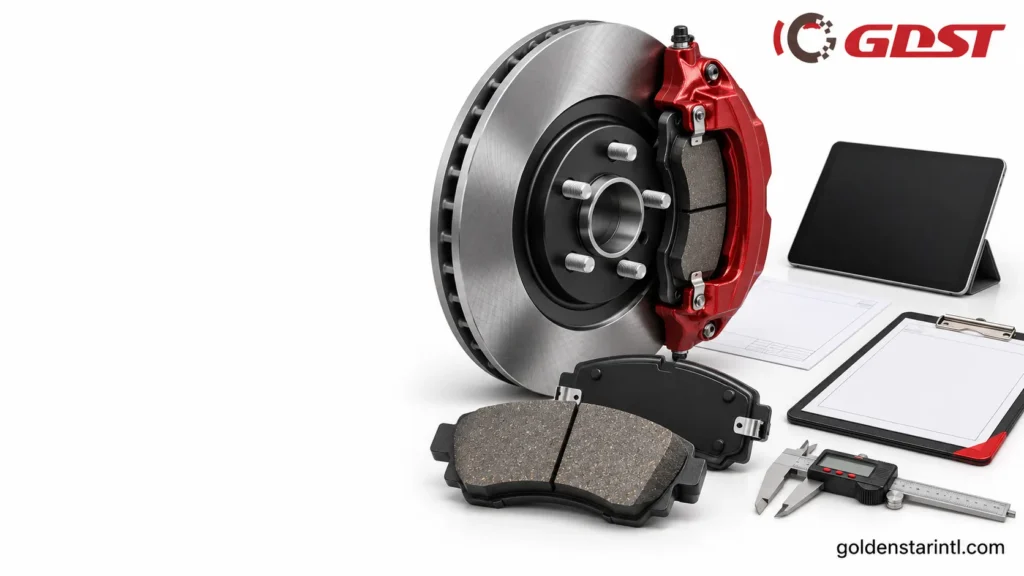
Uneven brake pad wear is a warning sign that deserves more attention than simply replacing worn friction material.
The most effective troubleshooting process starts by identifying the wear pattern, comparing the inner and outer pads, inspecting the caliper and mounting hardware, checking the hydraulic system, and measuring rotor condition.
Sticking pistons and seized slide pins are important causes, but they are not the only possibilities.
For vehicle owners and repair professionals, identifying the root cause before replacing components can help prevent recurring wear and maintain reliable braking performance.
For automotive aftermarket distributors and importers, choosing brake pads from a manufacturer with consistent production quality, accurate fitment information, and technical product support is equally important.
Looking for a brake pad supplier for your automotive aftermarket business? Whether you are sourcing existing brake pad models, developing a private-label range, or evaluating OEM manufacturing options, selecting a supplier with reliable product specifications and consistent quality control is essential.
Contact GDST to discuss your brake pad sourcing requirements.