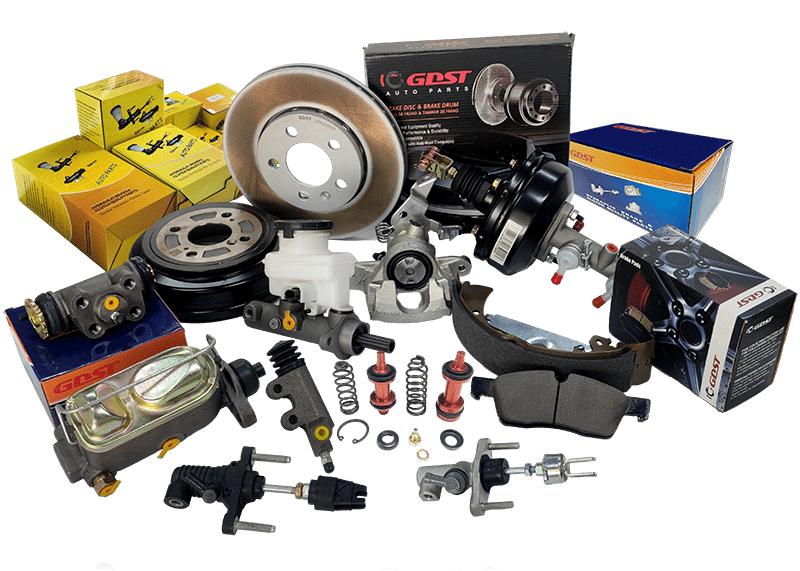
When sourcing brake pads, many buyers focus on price and appearance. However, what truly determines performance, durability, and noise control lies in how the brake pads manufactured.
Brake pads are manufactured through a detailed process: high-quality friction materials are blended and formed onto steel backing plates, then hot-pressed and cured to achieve optimal density and durability. Grooving, chamfering, and finishing improve performance and reduce noise. Finally, each pad undergoes strict quality control, including friction performance, wear testing, and safety inspections, ensuring consistent reliability and compliance with international standards.
In this article, we take you through the professional brake pad manufacturing process, step by step.
Raw Material Mixing – Precision Determines Performance
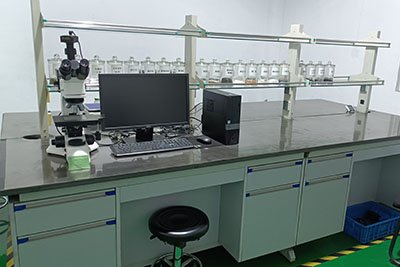
The manufacturing process begins with the preparation of the friction material, which is a complex blend of multiple components.
Materials involved:
- Reinforcement materials (steel fibers, mineral fibers)
- Lubricants (graphite, friction modifiers)
- Abrasives (to enhance braking force)
- Binders (phenolic resin)
- Functional fillers (to improve wear resistance and thermal stability)
Process details:
- Each raw material is accurately weighed based on formulation ratios
- Materials are fed into an industrial mixer
- Mixing is carried out under controlled time and temperature conditions
Key control points:
- Uniform distribution of fibers and powders
- Avoiding material segregation
- Stability of batch-to-batch formulation
Even small deviations at this stage can lead to noise, uneven wear, or unstable friction.
Back Plate Surface Treatment – The Foundation of Bond Strength
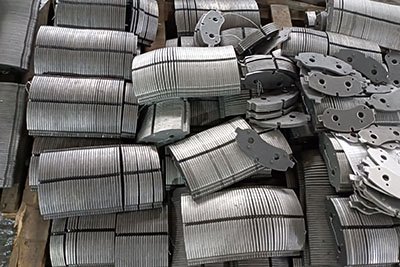
The steel back plate acts as the structural support of the brake pad. Its surface condition directly affects bonding strength.
Step-by-step process:
1. Degreasing and Cleaning
- Removal of oil, rust inhibitors, and contaminants
- Ensures a clean metal surface for adhesion
2. Shot Blasting
- Steel shots are projected onto the surface
- Creates controlled roughness to improve mechanical bonding
3. Adhesive Coating
- Application of high-temperature resistant adhesive
- Requires precise control of:
- Coating thickness
- Coverage uniformity
- Drying conditions
Key control points:
- No residual oil or dust
- Even roughness across the surface
- Consistent adhesive layer
Poor treatment can result in friction material detachment, one of the most critical failures.
Hot Press Molding – Forming the Brake Pad Structure
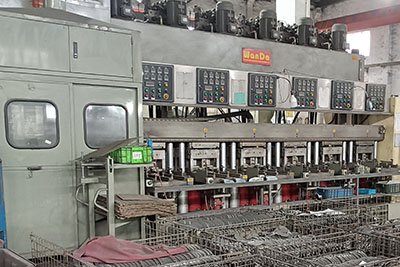
This is the stage where the brake pad takes shape.
Process details:
- The mixed friction material is placed into molds
- The prepared back plate is positioned in the mold
- The assembly is subjected to:
- High pressure
- High temperature
What happens during this stage:
- Initial bonding between the friction material and the back plate
- Compression of material to achieve the required density
- Formation of the brake pad shape
Production notes:
- One mold can produce multiple pads per cycle
- Mold changeovers require careful adjustment to maintain consistency
Key control points:
- Pressure consistency
- Temperature control
- Mold precision
Heat Treatment (Curing) – Stabilizing the Material
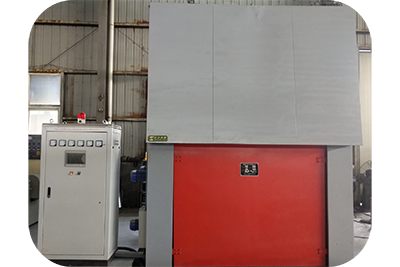
After molding, brake pads undergo a long-duration heat treatment process.
Process details:
- Brake pads are placed in industrial ovens
- Heated at controlled temperatures for several hours (typically 6+ hours)
Purpose:
- Fully cure the resin binder
- Eliminate internal stresses
- Stabilize the friction material structure
Results:
- Improved heat resistance
- Enhanced mechanical strength
- Stable friction performance under braking
Insufficient curing may cause brake fade, cracking, or inconsistent braking behavior.
Grinding and Thickness Control – Achieving Precision
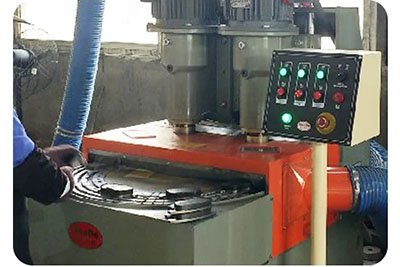
After curing, the brake pad surface is still rough and uneven.
Process details:
- Use Surface grinding machines
- Process brake pads to achieve:
- Precise thickness
- Smooth surface finish
- Parallelism between surfaces
Key control points:
- Thickness tolerance
- Surface flatness
- Removal of burrs and excess material
Proper flatness ensures full contact with the brake disc, which is critical for braking efficiency.
Slotting and Chamfering – Enhancing Performance and Comfort
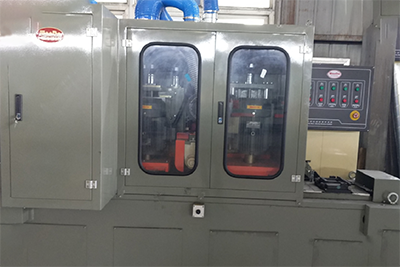
Brake pads are then machined to add functional features.
Slotting:
- Grooves are cut into the friction surface
- Functions:
- Release heat and gases
- Remove dust and debris
- Maintain braking consistency
Chamfering:
- Edges of the pad are beveled
- Functions:
- Reduce noise and vibration
- Improve initial brake contact
Key control points:
- Slot depth and positioning
- Chamfer angle and symmetry
- Surface integrity after machining
Coating – Corrosion Protection and Visual Consistency
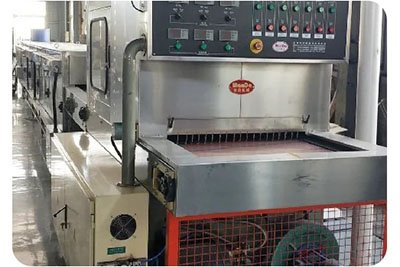
To protect the steel components and improve appearance, brake pads are coated.
Process used:
Electrostatic powder coating
Process details:
- Powder is applied using an electrostatic charge
- Pads are transferred into the curing ovens
- Coating melts and forms a uniform protective layer
Key control points:
- Coating thickness
- Uniform coverage
- Oven temperature and curing duration
A consistent coating not only prevents rust but also reflects overall manufacturing quality.
Printing and Accessories Assembly – Completing the Product
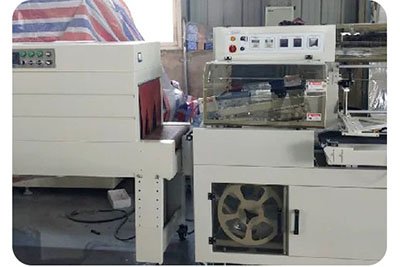
At this stage, brake pads are finalized.
Printing / Marking:
- Product codes, batch numbers, and branding are applied
- Must ensure:
- Clear visibility
- Strong adhesion
- Accurate positioning
Accessories assembly:
- Installation of:
- Shims (noise reduction)
- Wear indicators
- Clips and springs
- Methods include:
- Riveting
- Bonding
Key control points:
- Correct configuration of components
- Secure attachment
- Functional accuracy (e.g., wear indicator length)
Testing and Quality Control – Ensuring Reliability
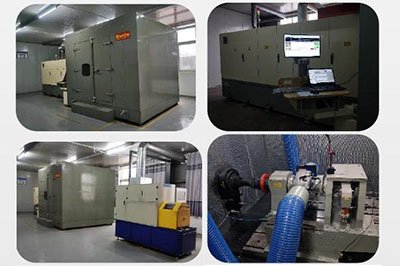
Before packaging, brake pads undergo strict inspection and testing.
Common tests include:
Shear Strength Test
- Measures the bonding strength between the friction material and the back plate
Hardness Test
- Ensures material consistency
Performance Testing
- Simulates braking conditions
- Verifies friction stability and durability
Final inspection:
- Visual check
- Dimensional check
- Packaging verification
Only fully qualified products proceed to shipment.
FAQ
Semi-Metallic Brake Pads: Contain steel fibers and iron powder exceeding 20%, some formulations include copper fibers.
Low-Metallic Brake Pads: Steel fiber content ranges between 5%-20%, with a density of 2.0–2.5 g/cm³.
Ceramic Brake Pads: Contain no steel fibers, and metal content is less than 3%, composed of soft metals like copper, zinc, and aluminum. With a density of 1.8–2.3 g/cm³
GDST Auto Parts is an IATF 16949 and E-Mark certified manufacturer, supplying stable and reliable brake pads for the global aftermarket.
Brake pads are typically made from friction materials such as ceramic, semi-metallic, or organic compounds, combined with resins and reinforcement fibers.
High-quality Chinese manufacturers with certifications like IATF 16949 and E-Mark can deliver reliable and consistent products.
Conclusion
The production of brake pads is a precise and highly controlled process. From selecting raw materials to surface finishing and quality testing, each step ensures safety, reliability, and consistent braking performance. By understanding the professional brake pad manufacturing process, vehicle owners and distributors alike can appreciate the expertise and care that goes into these critical automotive components.
High-quality brake pads are not just a product—they are a result of engineering, testing, and rigorous quality control aimed at keeping drivers safe on the road.