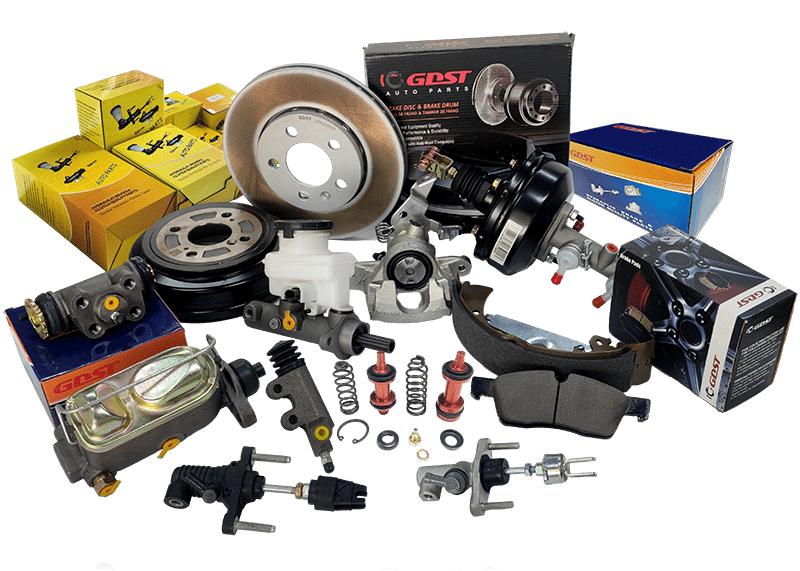
When it comes to braking systems, the brake caliper plays a critical role in ensuring vehicle safety and performance. However, for many buyers—especially wholesalers and importers—the difference between floating brake calipers and fixed brake calipers is often unclear.
Choosing the wrong type can lead to higher costs, mismatched market demand, or even customer complaints.
So, which one should you choose?
In this guide, we’ll break down the structure, performance, cost differences, and real-world applications of floating vs fixed brake calipers—helping you make smarter purchasing decisions.
What Is a Floating Brake Caliper?
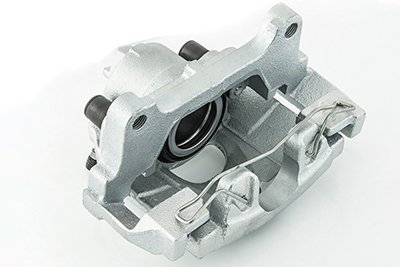
Floating brake calipers, also called sliding calipers, have become the go-to choice for most vehicles, especially in the aftermarket
How It Works
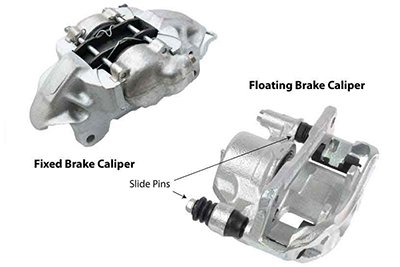
Floating calipers are installed on guide pins or sliding rails, which allow them to shift side to side during braking. In most designs, only a single piston is positioned on one side of the brake disc.
When the brake pedal is pressed:
- The piston first pushes the inner pad toward the brake disc
- Then the caliper slides, drawing the outer pad in to meet the disc
In this way, both sides apply pressure, even though there is only one piston.
Key Features
- Simple and compact design
- Lower production cost
- Lightweight structure
- Easy maintenance and replacement
Common Applications
Floating calipers are widely used in:
- Passenger cars
- Economy vehicles
- Compact SUVs
- Most aftermarket brake systems
Advantages
- Cost-effective for mass production
- Easier to service and repair
- Ideal for high-volume markets
Limitations
- Uneven pressure distribution
- Lower braking performance under extreme conditions
- Less efficient heat dissipation
What Is a Fixed Brake Caliper?
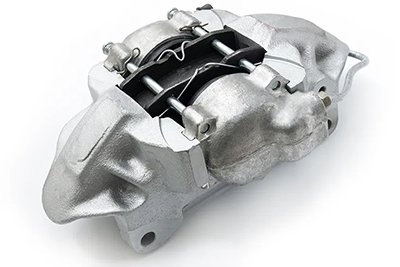
A fixed brake caliper is a more advanced design, typically found in high-performance or premium vehicles.
How It Works
Unlike floating calipers, fixed calipers are mounted rigidly and do not move. Instead, the caliper relies on pistons located on either side of the disc to apply pressure.
When braking:
- Pistons on both sides push brake pads inward simultaneously
- The force is applied more evenly across the surface of the rotor
This results in more consistent braking force.
Key Features
- Multi-piston design (2, 4, 6, or more pistons)
- Rigid construction
- High-performance capability
Common Applications
Fixed calipers are commonly used in:
- Performance cars
- Sports vehicles
- Luxury SUVs
- Racing and modified vehicles
Advantages
- Strong and consistent braking force
- Better heat dissipation
- Improved pedal response
Limitations
- Higher manufacturing cost
- More complex structure
- Requires higher precision and quality control
Floating vs Fixed Brake Calipers: Key Differences
| Feature | Floating Caliper | Fixed Caliper |
|---|---|---|
| Structure | Sliding design | Rigid design |
| Pistons | Usually 1 | Multiple pistons |
| Cost | Low | High |
| Performance | Moderate | High |
| Heat Dissipation | Average | Excellent |
| Maintenance | Easy | More complex |
| Application | Daily vehicles | High-performance vehicles |
Pros and Cons Breakdown
Floating Calipers
Pros:
- Lower cost → better for wholesale markets
- Simpler manufacturing process
- High compatibility with various vehicle models
Cons:
- Less braking precision
- Potential uneven brake pad wear
- Reduced performance under heavy load
Fixed Calipers
Pros:
- Superior braking performance
- Even pressure distribution
- Better durability in extreme conditions
Cons:
- Higher price → limits market size
- More demanding manufacturing requirements
- Not always necessary for standard vehicles
Application: Which Market Needs Which?
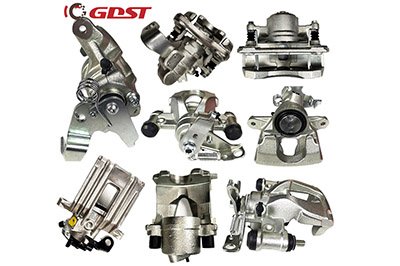
Understanding your target market is key.
Floating Calipers Are Best For:
- Mass-market distribution
- Emerging markets (South America, Southeast Asia, Africa)
- Standard passenger vehicles
- High-volume aftermarket sales
If your business focuses on volume and price competitiveness, floating calipers are the better choice.
Fixed Calipers Are Best For:
- Performance parts distributors
- High-end automotive markets
- Modification and tuning businesses
- Premium vehicle segments
If your customers prioritize performance and branding, fixed calipers offer higher margins.
Cost & Price Differences Explained
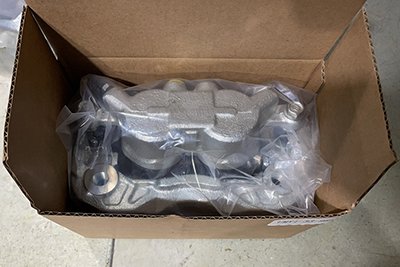
The price gap between floating and fixed calipers is not just about design—it’s influenced by multiple factors:
Key Cost Drivers
- Material
- Cast iron (lower cost)
- Aluminum alloy (lighter, more expensive)
- Number of Pistons
- More pistons = higher cost
- Manufacturing Complexity
- Fixed calipers require tighter tolerances
- Surface Treatment
- Anti-corrosion coatings
- Powder coating or anodizing
- Brand vs Aftermarket
- OEM products are significantly more expensive
For wholesalers, understanding these factors helps explain price differences to customers and improves negotiation power.
Which One Should You Choose?
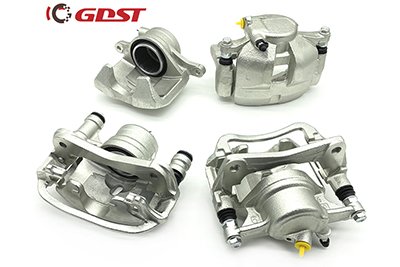
Here’s a simple decision framework:
Choose Floating Calipers If:
- You want stable, high-volume sales
- Your customers are price-sensitive
- You focus on aftermarket replacement parts
Choose Fixed Calipers If:
- You target premium or performance segments
- Your customers value braking performance
- You aim for higher profit margins per unit
Smart Strategy (Recommended)
Many experienced buyers choose to:
Offer both types
- Floating → volume driver
- Fixed → profit booster
This allows you to cover a wider customer base and increase total order value.
Buying Tips for Wholesalers and Importers
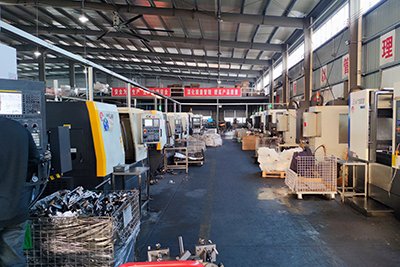
When sourcing brake calipers, structure is only part of the equation.
What You Should Really Check:
- Seal quality (prevents leakage)
- Piston material and finish
- Machining precision
- Coating durability (anti-rust performance)
- Supplier production experience
A lower price doesn’t always mean better value—quality directly affects return rates and reputation.
Conclusion
Both floating and fixed brake calipers have their place in the market.
- Floating calipers dominate the aftermarket and mass production sector
- Fixed calipers lead in performance and premium applications
For wholesalers and distributors, the key is not choosing one over the other—but aligning your product selection with your target market.
If you’re planning to expand your brake system product line, understanding these differences will help you make smarter, more profitable decisions.