A buyer once told me:
“I changed three brake caliper suppliers in one year—and still couldn’t solve the same problem.”
Unstable quality, delayed shipments, and endless customer complaints.
If this sounds familiar, you’re not alone.
Choosing a brake caliper supplier is not just about finding a factory—it’s about finding a partner who won’t create problems for your business.
How to Choose a Reliable Brake Caliper Supplier?
In the brake caliper business, supplier choice is closely tied to quality control, return rates, and long-term margins.
To avoid costly mistakes, here are the key factors you should evaluate before making a decision:
1. Check Manufacturing Experience
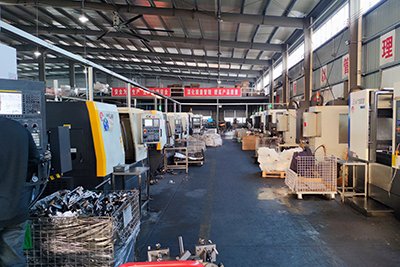
Not every “supplier” is an actual manufacturer. Many are trading companies with limited control over production quality.
Start by confirming how long the supplier has been producing brake calipers and whether they own their factory. Experienced manufacturers usually have more stable production processes and better quality consistency.
You can ask for:
- Factory photos or videos
- Production line details
- Product catalogs covering multiple vehicle models
A supplier with a wide product range often indicates stronger technical capability.
Tip: Suppliers with 5–10+ years of manufacturing experience are generally more reliable for long-term cooperation.
2. Evaluate Product Quality (Critical Step)
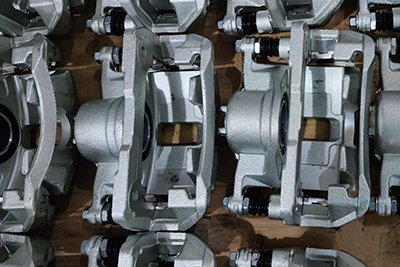
Quality is the most important factor—especially for safety-related parts like brake calipers.
Instead of relying on descriptions, focus on verifiable details:
Material:
Check whether the caliper is made from high-grade cast iron or aluminum alloy. Poor materials can lead to cracks or deformation under stress.
Piston Performance:
Ask about piston material and surface treatment. A smooth, corrosion-resistant piston ensures stable braking performance.
Sealing System:
High-quality seals prevent brake fluid leakage and extend service life.
Surface Treatment:
Look for anti-rust coatings or powder coating, especially if your market has humid or coastal conditions.
Tip: Don’t just compare appearance—focus on durability and internal components.
3. Confirm Production Capacity and Lead Time
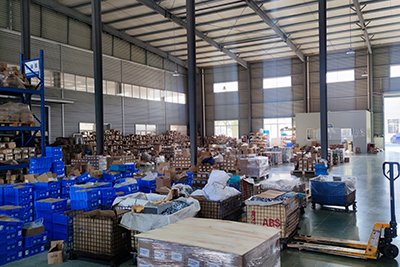
Even a good supplier can become a problem if they cannot deliver on time.
Ask clear questions:
- What is your monthly production capacity?
- What is the standard lead time for bulk orders?
- Can you handle urgent or repeat orders?
Reliable suppliers will give clear and consistent answers, not vague promises.
Stable delivery is especially important if you are supplying distributors or running promotions.
Tip: Test the supplier with a small trial order to evaluate real delivery performance.
4. Review Quality Control and Testing Process
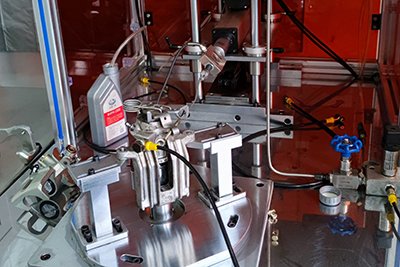
A professional supplier should have a clear quality control system, not just “we check before shipment.”
Ask about:
- Incoming material inspection
- Production process control
- Final product testing
Some manufacturers also have:
- Pressure testing equipment
- Leakage testing systems
These processes directly affect defect rates and return risks.
Tip: Ask for testing reports or videos—it’s a simple way to verify real capabilities.
5. Understand Pricing Structure (Not Just Low Price)
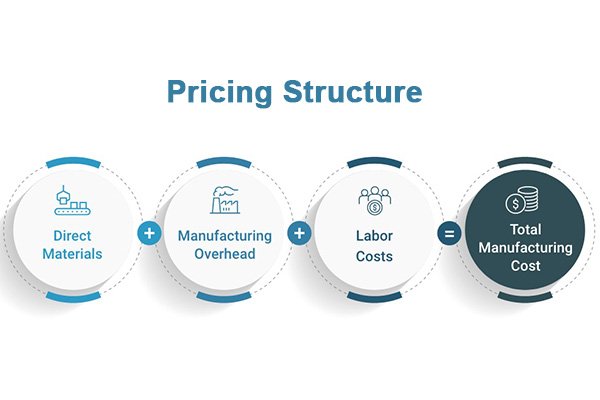
Many buyers focus too much on unit price, but experienced importers look at the total cost.
A cheaper product may result in:
- Higher defect rates
- More returns
- Increased after-sales costs
In the long run, this can reduce your overall profit.
Instead, compare:
- Price vs quality
- Price vs warranty support
- Price vs supplier reliability
Tip: If a price is significantly lower than the market average, there is usually a hidden trade-off.
6. Check Communication and Responsiveness

Communication is often overlooked—but it directly affects your daily operations.
A good supplier should:
- Respond quickly
- Provide clear and detailed answers
- Understand export processes
Poor communication can lead to:
- Order mistakes
- Delays
- Misunderstandings
This becomes more serious in international trade.
Tip: Pay attention to response time during the inquiry stage—it usually reflects future cooperation.
7. Evaluate Customization and Branding Support
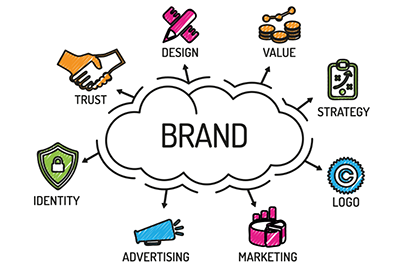
If you plan to build your own brand, this is a key factor.
Check whether the supplier can provide:
- Custom packaging
- Logo printing
- Label design support
This helps you:
- Stand out in your market
- Increase perceived product value
Tip: Even simple branding can significantly improve your competitiveness.
8. Review MOQ and Flexibility
Minimum Order Quantity (MOQ) affects your inventory and cash flow.
A good supplier should offer:
- Flexible MOQ for new customers
- Scalable production for large orders
This is especially important if you are testing new markets or new product lines.
Tip: Start with a manageable order size before scaling up.
9. Check After-Sales Support

No matter how good the product is, issues can still happen.
What matters is how the supplier handles them.
Ask about:
- Warranty policy
- Return process
- Technical support
Strong after-sales service reduces your business risk.
Tip: A responsible supplier will not avoid problems—they will solve them.
Red Flags to Avoid
Even if a supplier looks professional at first glance, there are certain warning signs you should never ignore.
These red flags often indicate deeper issues that may lead to quality problems, delays, or long-term business risks.
Unrealistically Low Prices
If a quotation is significantly lower than the market average, it usually means compromises in material, production process, or quality control. What looks like a good deal upfront can result in higher costs later due to defects or returns.
Lack of Transparency
Suppliers who cannot clearly explain their production process, materials, or testing methods should be approached with caution. Reliable manufacturers are usually open and willing to provide details.
Inconsistent Communication
Slow responses, vague answers, or frequent changes in quotation are often early signs of poor management or unstable operations.
No Verifiable Factory Information
If a supplier cannot provide factory photos, videos, or basic production details, they may not be a real manufacturer.
These issues may seem minor during the inquiry stage, but they often become major problems after you place an order.
Tip: If you notice two or more of these red flags, it’s usually safer to look for alternative suppliers rather than take the risk.
Pro Tip: Don’t Rely on One Supplier
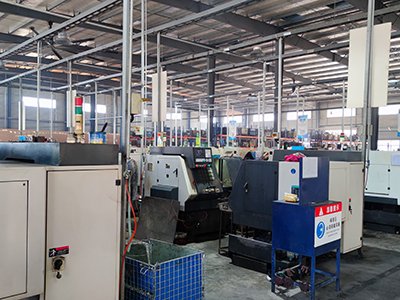
One common mistake many buyers make is relying entirely on a single supplier.
While it may seem convenient, it also creates significant risks for your business.
If your only supplier faces production delays, quality issues, or unexpected disruptions, your entire supply chain can be affected.
That’s why experienced importers and wholesalers usually work with at least 2–3 suppliers.
This approach allows you to:
- Compare product quality and consistency
- Maintain stable supply even during peak seasons
- Reduce dependency on a single source
However, managing multiple suppliers also requires balance. Too many suppliers can increase complexity and reduce order efficiency.
The key is to build a small, reliable supplier network—not just one option, but not too many either.
Tip: Start with one main supplier and one backup supplier, then evaluate performance before expanding further.
Conclusion
Choosing a brake caliper supplier is not just about placing an order—it’s about building a reliable supply chain for your business.
A good supplier helps you maintain consistent quality, reduce after-sales issues, and improve customer satisfaction. On the other hand, the wrong choice can lead to delays, complaints, and hidden costs that affect your long-term profitability.
Instead of focusing only on price, take a structured approach:
- Evaluate manufacturing capability
- Verify product quality
- Assess communication and service
- Identify potential risks early
The goal is not to find the cheapest supplier, but to find one that supports your business growth.
If you take the time to apply these steps, you’ll not only avoid common sourcing mistakes—but also build stronger, more sustainable partnerships in the long run.