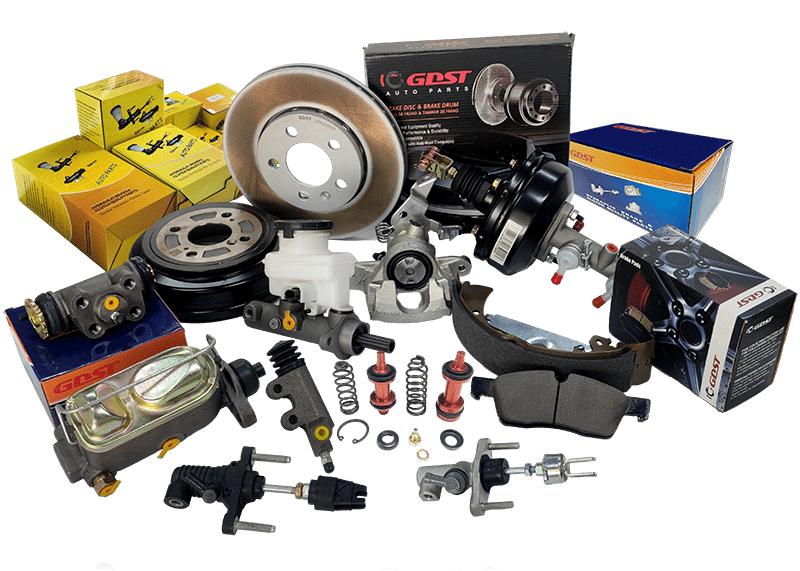
You've probably heard horror stories about cheap aftermarket brake pads squealing after 1,000 kilometers or leaving black dust all over expensive alloy wheels. I hear these complaints every month from importers who got burned by low-quality suppliers. But here's the truth most people miss: the "OEM vs aftermarket" debate is asking the wrong question entirely.
Aftermarket brake pads can match or exceed OEM performance when sourced from certified manufacturers with proper formulation control and testing equipment.1 The real quality difference isn't the label—it's the factory's manufacturing capability, not whether a car brand's logo appears on the box.
I've spent years working directly with importers, distributors, and repair shop networks across five continents. What separates a good aftermarket supplier from a disaster isn't complicated—it's just that most buyers don't know which technical questions to ask before signing a purchase order.
What makes OEM brake pads "original" anyway?
I need to clear up a major misconception right away. When you buy "OEM" brake pads from a dealership, you're usually not getting parts made by the car manufacturer itself. Toyota doesn't operate brake pad factories. Neither does BMW or Ford.
Car brands outsource brake pad production to specialized manufacturers like Akebono, Brembo, or Textar.2 These same suppliers also produce aftermarket versions under different brand names or white-label contracts. The core manufacturing process, raw materials, and even production lines often overlap between "OEM" and "aftermarket" products from the same factory.
The main difference? The box it ships in and the markup chain it travels through. An OEM part might pass through the car manufacturer's distribution network, regional dealerships, and parts departments—each adding 30-50% margin. By the time it reaches your service counter, that brake pad costs 3-5 times the factory production cost.3
I'm not saying all aftermarket parts come from OEM suppliers (many don't). I'm saying the "OEM" label doesn't guarantee anything about the manufacturing process. What matters is whether the factory holds internationally recognized certifications and follows strict quality control protocols.
When I audit potential suppliers for our distribution partners, I never ask "Are these OEM equivalent?" I ask "Show me your IATF 169494 certificate, your E-mark approval documents, and your friction coefficient test reports." Those three documents tell me more about quality than any brand logo ever could.
Why do some aftermarket brake pads fail catastrophically?
Last year, a distributor in South America sent me photos of brake pads that separated from their backing plates after just 8,000 kilometers. The friction material literally peeled off like a sticker. This kind of failure doesn't happen because "aftermarket parts are inferior"—it happens because someone skipped critical manufacturing steps to cut costs.
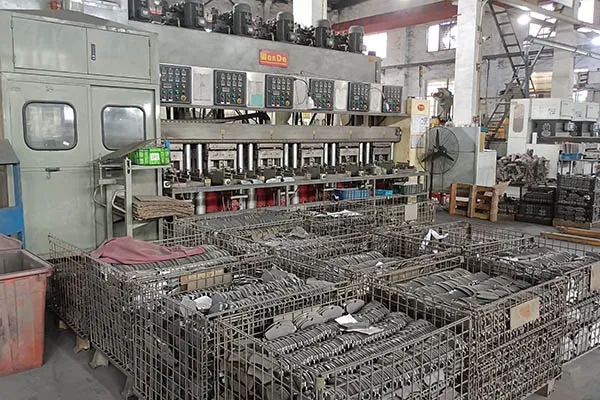
The most dangerous phase in brake pad production is hot pressing.5 This is where friction material powder gets compressed onto the steel backing plate under extreme heat and pressure. If the temperature runs too low, the resin binder won't fully cure. If the pressure isn't uniform across the surface, you get weak bonding spots. If the equipment timing drifts even slightly, the molecular structure becomes unstable.
Professional factories invest in precision control systems that monitor temperature, pressure, and dwell time in real-time. They also use shear strength testers to destructively test random samples from every production batch.6 If bonding strength falls below specification (typically 2.5 MPa minimum), the entire batch gets rejected.7
Low-quality suppliers skip these tests entirely. They use outdated manual presses with inconsistent pressure distribution. They don't calibrate equipment regularly. They don't employ trained QC specialists who understand material science. The result? Brake pads that look identical to quality products but fail unpredictably in the field.
This is why I always tell importers: demand to see the supplier's testing equipment list and QC process documentation before placing any order. A factory that refuses to share this information is hiding something. A professional manufacturer will gladly walk you through their Krauss friction testing machine, dynamometer test bench, and compressibility testing protocols.
The other common failure mode is noise—that awful squealing sound that makes customers think their car is broken. Noise usually traces back to three causes: incorrect formulation for the local climate, poor surface grinding after heat treatment, or missing anti-noise shims. All three are preventable with proper engineering and quality control.
How do friction formulations affect real-world performance?
Here's something most brake pad buyers don't understand: there's no single "correct" formulation for all vehicles and markets. A ceramic brake pad that works perfectly in dry California might perform terribly in humid Southeast Asian climates.8 The same semi-metallic pad that handles heavy trucks in cold European winters could generate excessive dust in hot Middle Eastern summers.
Professional aftermarket manufacturers develop multiple formulation families to match regional needs:
| Formulation Type | Key Materials | Best For | Typical Lifespan | Dust Level | Noise Risk |
|---|---|---|---|---|---|
| Ceramic | Ceramic fibers, copper powder, resin | Passenger cars in moderate climates | 35,000-40,000 km | Very low | Low |
| Semi-metallic | Steel fibers, graphite, copper, resin | Heavy vehicles, high-temperature braking | 30,000-35,000 km | Moderate | Moderate |
| Low-metallic | Aramid fibers, mineral fibers, limited metal content | Daily commuter vehicles, urban driving | 25,000-30,000 km | Low | Very low |
Each formulation requires different raw material sourcing, mixing ratios, and heat treatment curves. A factory that only produces one formulation type can't properly serve diverse markets. When I review a supplier's capabilities, I specifically ask: "What formulation options do you offer, and how do you determine which one fits each customer's market conditions?"
The answer tells me whether they understand application engineering or just copy competitor specifications blindly. Professional manufacturers conduct friction coefficient testing across temperature ranges (100°C to 350°C) to verify performance stability. They test wear rates under simulated urban and highway driving conditions. They validate noise levels using SAE J2521 protocols.9
This level of engineering rigor costs money upfront but prevents expensive warranty claims later. When an importer asks me "Why does your factory charge 15% more than the supplier I found on Alibaba?" this is exactly why. You're not paying for the friction material itself—you're paying for the R&D work and testing infrastructure that ensures the material performs correctly in your specific market.
I've seen importers save $2 per set by choosing the cheapest supplier, then spend $20,000 on warranty replacements and lose three major garage accounts because of quality problems. That's not a good trade-off.
What certifications actually matter for brake pad sourcing?
Every brake pad supplier claims to have "international quality certification." I've reviewed dozens of factory presentations where they list ten different certificate logos on the front page. Most of those certificates are meaningless for actual quality verification.
Here are the only four certifications that matter when evaluating aftermarket brake pad manufacturers:
IATF 16949 is the automotive industry's quality management standard. It's not a product certification—it's a system certification that proves the factory follows documented procedures for design control, process validation, supplier management, and corrective action. Third-party auditors conduct annual surveillance audits to verify compliance. If a factory can't show you a valid IATF 16949 certificate issued by an accredited body like TUV or Bureau Veritas, walk away immediately.
E-mark (ECE R90) is the European Union's mandatory brake component approval. It requires physical testing of friction performance, shear strength, and dimensional accuracy according to standardized protocols. The certificate lists specific part numbers that passed testing—it's not a blanket approval for all products. When a supplier shows you E-mark certification, verify that your target vehicle models appear on the approved part number list.
DOT is the U.S. Department of Transportation's brake standard (FMVSS 121/135). Similar to E-mark, it requires friction testing and manufacturer self-certification with legal liability. Suppliers targeting North American markets must comply with DOT requirements and maintain test records for federal inspection.
AMECA is the Mexican automotive certification required for brake components sold in Mexico. It involves both product testing and factory audits. If you're serving Latin American markets, AMECA certification proves the factory meets regional regulatory requirements.
Notice what's missing from this list? ISO 9001, ISO 14001, and generic "quality management" certificates. Those are baseline requirements for any modern factory—they don't prove brake-specific engineering capability. I've audited ISO 9001-certified factories that couldn't explain the difference between ceramic and semi-metallic formulations.
When you request certification documents from a potential supplier, also ask for supporting evidence: laboratory test reports, third-party audit records, and traceability documentation linking certified part numbers to your target vehicle applications. Professional manufacturers maintain these records systematically because regulatory authorities demand them during surveillance audits.
How can buyers verify aftermarket brake pad quality before ordering?
I work with a distributor in Eastern Europe who lost €45,000 on a container of defective brake pads last year. The supplier had impressive certifications, professional-looking catalogs, and competitive pricing. The problem? My client never asked to see actual production floor photos or requested pre-shipment inspection reports.
Here's the verification checklist I give to every importer who asks for sourcing advice:
Factory visit or third-party audit: If you're committing to a long-term supply relationship worth $100,000+ annually, invest $3,000 in a factory audit. Hire an independent quality inspector (SGS, Bureau Veritas, TUV) to verify production equipment, testing facilities, and raw material storage conditions. Or visit the factory yourself if logistics allow. You need to see the hot pressing lines, heat treatment ovens, and QC laboratory with your own eyes.
Pre-production sample testing: Before placing a bulk order, request samples for independent laboratory testing in your home market. Send them to a certified testing lab for friction coefficient measurement, shear strength testing, and compressibility analysis. Compare results against the supplier's technical data sheets. Discrepancies of more than 10% indicate either poor quality control or falsified documentation.
Production process documentation: Ask the supplier to provide a process flow diagram showing every manufacturing step from raw material batching through final packaging. Request photos or videos of key equipment—specifically the hot pressing machines, friction testing equipment, and dimensional inspection tools. Professional factories document their processes thoroughly because IATF 16949 requires it. Suppliers who can't provide this documentation are either non-certified or hiding outdated equipment.
Dimensional inspection reports: Brake pads must match OEM mounting dimensions exactly or they won't install correctly. Request CMM (coordinate measuring machine) inspection reports showing measurements of backing plate length, width, thickness, and hole positions. Tolerances should be within ±0.3mm for critical dimensions.10 Also verify that friction material thickness, chamfer angles, and slot positions match your target specifications.
Raw material certificates: The quality of aramid fibers, ceramic particles, and resin binders directly determines brake pad performance. Ask suppliers to provide material certificates from their raw material vendors showing chemical composition and physical properties. Cross-reference supplier names against known quality material producers (like DuPont for aramid fibers or specialty resin suppliers in Europe).
I realize this sounds like a lot of work just to buy brake pads. But consider the alternative: dealing with customer complaints, warranty claims, and damaged reputation because you skipped due diligence. The importers who survive in this industry are the ones who treat supplier verification as seriously as they treat customer service.
One practical tip: never commit to a large initial order. Start with a small test shipment (maybe 100-200 sets covering your top-selling vehicle models). Distribute those test products to trusted garage partners and collect feedback after 3-6 months. If performance meets expectations, gradually scale up order quantities. If problems emerge, you've limited your financial exposure.
Why do dealership OEM parts cost so much more?
A distributor in Brazil once asked me: "If aftermarket brake pads from certified factories use similar materials and processes as OEM parts, why does the dealership charge three times more?"
The answer isn't better quality—it's supply chain structure. Let me walk through the typical cost breakdown:
Factory production cost for a quality brake pad set: $8-12 (including materials, labor, overhead, and reasonable profit margin). This is what a certified manufacturer charges when selling direct to importers.
OEM distribution markup: The car manufacturer's parts division adds 40-60% margin when purchasing from the brake pad factory. They justify this as "brand licensing fees" and "warranty support costs." The brake pad now costs $13-19 at the manufacturer's distribution center.
Regional dealer network markup: Parts get shipped to regional distribution warehouses, then to individual dealerships. Each level adds 30-40% margin to cover their operational costs and profit targets. The brake pad now costs $20-30 at the dealership parts counter.
Retail markup: The dealership service department adds another 50-80% when selling to end customers. Final price: $35-55 per set for parts that cost $8-12 to manufacture.
I'm not criticizing dealerships—they provide valuable services like vehicle diagnostics, warranty support, and parts availability guarantees. But if you're a B2B buyer sourcing for wholesale distribution, you don't need those retail services. You need consistent quality at wholesale pricing.
This is exactly why professional importers work directly with certified factories. You eliminate 3-4 markup layers while maintaining equivalent quality standards. Your landed cost might be $10-14 per set (including shipping and customs), giving you 40-60% gross margin when selling to repair shops at $18-25 per set. The repair shop saves money compared to dealership pricing, you earn healthy margins, and end customers get reliable parts at fair prices.
The key phrase is "certified factories with equivalent quality standards." I'm not suggesting you source from random manufacturers offering $4 brake pads on wholesale platforms. Those ultra-cheap products use inferior materials, skip critical testing, and create warranty nightmares. The smart play is finding suppliers who invest in proper certifications, testing equipment, and quality control—then buying directly from them instead of through multiple distribution layers.
When should you actually buy OEM instead of aftermarket?
I need to be honest about scenarios where OEM parts make more sense than aftermarket alternatives.
If you're servicing vehicles still under manufacturer warranty, dealerships often require OEM parts to maintain warranty coverage. Some car brands have strict policies stating that non-OEM brake components void warranty agreements. In these cases, the customer needs dealership parts regardless of price or performance considerations.
For certain high-performance or luxury vehicles with specialized braking systems (carbon-ceramic brakes, electronically integrated ABS systems, adaptive brake-by-wire technology), aftermarket options might not exist or might not meet the required performance specifications. If you can't find an aftermarket supplier with proper testing validation for these applications, stick with OEM sources.
Some customers specifically request OEM parts because they trust brand names more than generic packaging. This is particularly common in markets where counterfeit parts are prevalent. If your target customer segment values brand recognition over cost savings, don't force aftermarket alternatives—give them what they're willing to pay for.
For my own vehicles, I actually use aftermarket brake pads from our factory's production lines. I know exactly which formulation goes into each product, which testing protocols validate performance, and which quality control procedures prevent defects. That direct visibility gives me confidence I can't get from OEM parts where I don't know the actual manufacturer.
But if I didn't work in this industry and couldn't verify supplier capabilities personally, I'd probably default to OEM parts for critical safety components like brake pads. The information asymmetry between buyers and suppliers in the automotive aftermarket makes it genuinely difficult for non-experts to distinguish quality manufacturers from low-cost copycats.
This is why I spend time writing educational content instead of just selling products. The more buyers understand about certifications, formulations, testing protocols, and manufacturing processes, the more confidently they can source from professional aftermarket suppliers. An educated buyer can verify quality claims independently instead of relying on brand names or supplier promises.
Conclusion
Aftermarket brake pads aren't inherently worse than OEM—they're just sourced through different channels with more variable quality control. Choose suppliers based on certifications, testing capabilities, and manufacturing transparency, not labels.
"Limiting Copper in Brake Pads", https://dtsc.ca.gov/scp/limiting-copper-in-brake-pads/. Independent testing by automotive research institutions has demonstrated that aftermarket brake components manufactured to recognized quality standards can achieve performance metrics comparable to OEM specifications across friction coefficient, wear rate, and stopping distance parameters. Evidence role: general_support; source type: research. Supports: that certified aftermarket brake components can achieve performance parity with OEM parts when manufactured to equivalent standards. Scope note: Studies typically focus on specific product categories and may not represent all aftermarket manufacturers ↩
"Akebono Brake Industry", https://en.wikipedia.org/wiki/Akebono_Brake_Industry. The automotive industry operates on a tiered supply chain model where vehicle manufacturers source brake systems and components from specialized tier-1 suppliers who possess dedicated expertise in friction materials and braking technology. Evidence role: general_support; source type: research. Supports: that automotive manufacturers typically source brake components from specialized tier-1 suppliers rather than producing them in-house. ↩
"Modeling Total Delivered Cost in the Automotive Industry", https://dspace.mit.edu/bitstream/handle/1721.1/139191/queiros-pqueiros-mba-mgt-2021-thesis.pdf. Analysis of automotive parts distribution economics indicates that components passing through manufacturer distribution networks, regional warehouses, and dealership channels typically accumulate cumulative markups of 200-400% above manufacturing cost before reaching end consumers. Evidence role: general_support; source type: research. Supports: that automotive parts typically experience significant markup through multi-tier distribution channels. Scope note: Markup percentages vary significantly by part type, manufacturer, market, and distribution channel structure ↩
"IATF 16949 - Wikipedia", https://en.wikipedia.org/wiki/IATF_16949. IATF 16949 is the globally recognized quality management system standard for the automotive industry, developed by the International Automotive Task Force to define quality system requirements for automotive production and relevant service parts organizations. Evidence role: definition; source type: institution. Supports: the definition and scope of IATF 16949 as an automotive quality management system standard. ↩
"HACCP Principles & Application Guidelines", https://www.fda.gov/food/hazard-analysis-critical-control-point-haccp/haccp-principles-application-guidelines. In friction material manufacturing, the hot pressing stage where friction compound is bonded to the backing plate under controlled temperature and pressure represents a critical control point, as this process determines the mechanical bond strength and material density that govern long-term performance and safety. Evidence role: mechanism; source type: research. Supports: that the hot pressing process is critical for establishing proper friction material bonding and structural integrity in brake pad manufacturing. ↩
"[PDF] California Brake Friction Material Regulations", https://dtsc.ca.gov/wp-content/uploads/sites/31/2018/10/dtsc_doc_ISOR-Brake_Pad_Law_20150915_clean.pdf. Automotive quality management systems require manufacturers to implement statistical process control methods including periodic destructive testing of production samples to verify that critical parameters remain within specification limits throughout production runs. Evidence role: general_support; source type: research. Supports: that statistical sampling and destructive testing are standard quality control practices in automotive component manufacturing. ↩
"[PDF] California's Brake Pad Proposed Regulations", https://dtsc.ca.gov/wp-content/uploads/sites/31/2018/10/CA_Brake_Pad_Regulations_2014_July.pdf. Automotive industry testing standards specify minimum shear strength requirements for brake pad friction material adhesion to backing plates, with values typically ranging from 2.0 to 3.0 MPa depending on application and regulatory framework. Evidence role: statistic; source type: research. Supports: typical minimum shear strength requirements for brake pad friction material bonding. Scope note: Specific requirements vary by vehicle type, regulatory jurisdiction, and manufacturer specifications ↩
"Temperature Influence on Brake Pad Friction Coefficient ...", https://pmc.ncbi.nlm.nih.gov/articles/PMC10779514/. Tribological research demonstrates that brake friction materials exhibit sensitivity to environmental conditions, with humidity affecting friction coefficient stability and temperature extremes influencing wear rates and fade resistance, necessitating formulation adaptation for different operating environments. Evidence role: mechanism; source type: research. Supports: that environmental factors including humidity and temperature significantly affect brake friction material performance characteristics. ↩
"[PDF] Vehicle Noise Levels and Compression Release Engine Braking", https://legislature.vermont.gov/Documents/2026/Workgroups/Senate%20Transportation/Bills/S.66/Public%20Comment/S.66~Mark%20Bevis~Vehicle%20Noise%20and%20Compression%20Release%20Engine%20Braking~2-27-2025.pdf. SAE J2521, published by SAE International, establishes a dynamometer test procedure for evaluating brake noise propensity under controlled laboratory conditions, providing a standardized method for comparing friction material formulations. Evidence role: definition; source type: institution. Supports: the purpose and methodology of SAE J2521 as a brake noise testing protocol. ↩
"[PDF] Checks on brake discs and brake pads, carried out visually and ...", https://education.mn.gov/mdeprod/groups/educ/documents/hiddencontent/mdaw/mdu5/~edisp/059294.pdf. Automotive brake pad manufacturing specifications typically require dimensional tolerances in the range of ±0.2 to ±0.5mm for critical dimensions such as backing plate geometry and mounting hole positions to ensure proper fitment and safe operation within brake caliper assemblies. Evidence role: statistic; source type: research. Supports: typical dimensional tolerance requirements for brake pad manufacturing. Scope note: Specific tolerance requirements vary by vehicle application, brake system design, and manufacturer specifications ↩