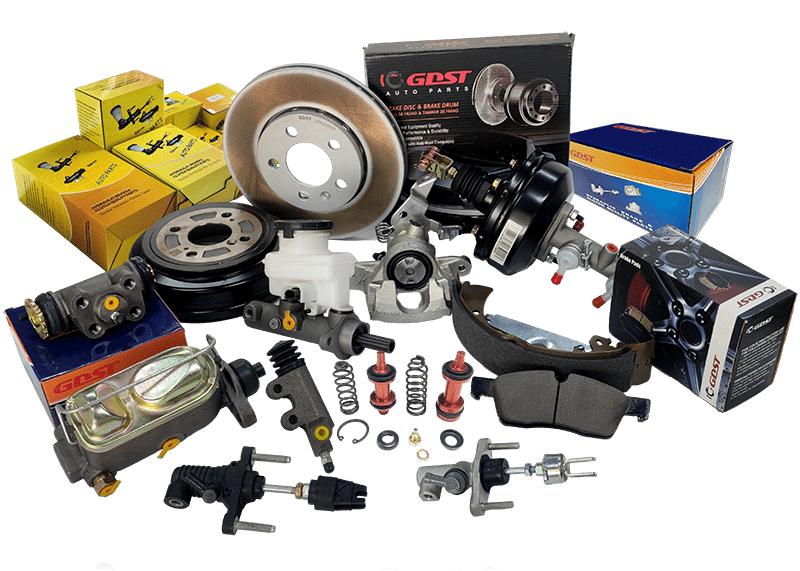
Better brake calipers can make a meaningful difference, but buyers often struggle to separate measurable quality from appearance and marketing claims. That confusion can lead to fitment problems, inconsistent batches, warranty costs, and damaged customer relationships. I recommend evaluating calipers through application suitability, manufacturing controls, performance checks, and supplier traceability rather than price alone.
Better brake calipers can improve sealing reliability, piston movement, brake release, corrosion resistance, fitment, and long-term consistency. However, they do not necessarily shorten vehicle stopping distance because pads, rotors, tires, brake fluid, road conditions, and the wider braking system also affect performance1. Buyers should define “better” through verified fitment and manufacturing quality.
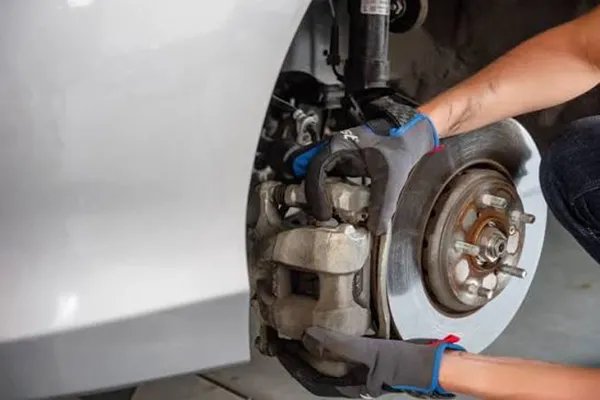
For aftermarket importers and distributors, the most important question is not whether one caliper looks more advanced. The real question is whether the product performs consistently across production batches, fits the specified applications, and helps control total procurement risk over time.
What Difference Do Better Brake Calipers Actually Make?
A replacement caliper may appear to be a simple mechanical component, but small manufacturing variations can create major commercial problems. Poor bore dimensions, inconsistent seals, restricted piston movement, or incorrect mounting geometry can lead to installation difficulties and premature returns.2 Better controls can reduce these risks before products reach the market.
Better brake calipers provide correct fitment, reliable hydraulic sealing, controlled piston movement, consistent release, and suitable durability for the intended vehicle application. These qualities support dependable brake operation, but the caliper remains one component in a complete system. Vehicle-level braking performance still depends on the condition and compatibility of all related parts.
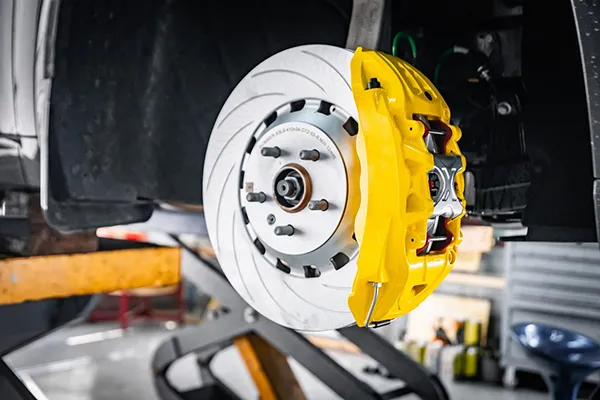
Component Quality Is Not the Same as Stopping Distance
In my experience with replacement caliper production and inspection, buyers sometimes ask whether a better caliper will reduce stopping distance. I avoid making that direct claim because stopping distance is a whole-vehicle outcome.
Several factors influence how quickly a vehicle stops:
- Brake pad material and condition
- Rotor dimensions, surface condition, and temperature
- Tire type, tread depth, pressure, and road grip
- Brake fluid condition
- Hydraulic system integrity
- ABS and electronic brake control operation
- Vehicle weight and load distribution
- Road surface and weather
- Driver reaction and pedal input
- Installation quality and system bleeding
A properly manufactured caliper helps the braking system operate as intended. It can support consistent clamping, maintain sealing, and allow the piston and sliding components to move correctly.3 However, it cannot compensate for worn tires, contaminated pads, damaged rotors, old fluid, or faults elsewhere in the system.
Where Caliper Quality Makes a Practical Difference
For an OE-replacement product, meaningful quality usually appears in several areas.
- Hydraulic sealing: Properly machined sealing surfaces and controlled assembly help reduce leakage risk.
- Piston movement: Correct bore and piston dimensions support smooth, controlled movement.
- Brake release: Suitable component clearances and sliding performance help the brake release after pedal pressure falls.
- Fitment: Correct mounting points, port locations, threads, and overall dimensions reduce installation problems.
- Corrosion resistance: An appropriate surface treatment helps protect exposed metal under normal service conditions.
- Batch consistency: Stable manufacturing and inspection processes help one shipment perform like the next.
I have seen how a caliper can look acceptable from the outside while still requiring closer dimensional or functional review. Paint finish, product weight, and packaging can influence first impressions, but they do not verify internal geometry, seal installation, or operating consistency.
A buyer should treat appearance as one inspection point, not as proof of performance.
If a vehicle shows pulling, brake drag, noise, overheating, or unusual pedal behavior, I recommend a system-level diagnosis by a qualified technician. The caliper may be involved, but those symptoms can also originate from hoses, pads, rotors, wheel bearings, fluid, mounting hardware, suspension components, or installation errors4.
How Can Buyers Verify Better Brake Calipers?
The term “high quality” has little procurement value unless a supplier can connect it to documented controls. Without inspection methods, testing records, traceability, and nonconformance procedures, buyers may not know whether a good sample represents normal production. Verification helps turn a marketing statement into evidence that a purchasing team can review.
Buyers can verify better brake calipers by examining fitment records, dimensional controls, machining accuracy, assembly procedures, leakage checks, piston-movement checks, surface-treatment inspection, pressure or durability testing, batch records, and traceability systems. Buyers should also audit whether these controls are consistently applied to normal production rather than only to approval samples.
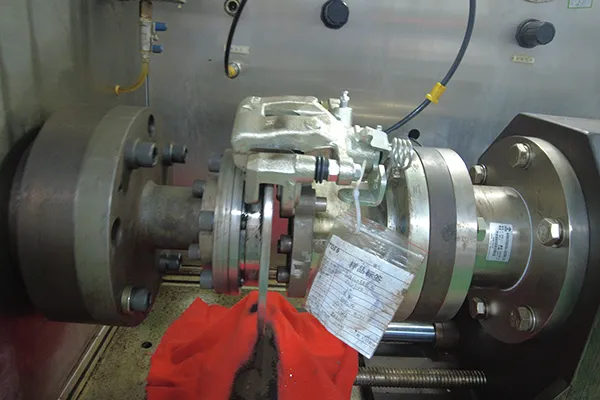
Start With Dimensional and Machining Control
Critical dimensions affect both installation and function. The relevant checks depend on the caliper design, but a buyer’s technical review may include:
- Mounting-hole position and spacing
- Piston and cylinder bore dimensions
- Seal-groove geometry
- Bracket and guide-pin dimensions
- Brake-hose or fluid-port position
- Thread size, depth, and condition
- Bleeder-screw location and thread
- Pad abutment and installation dimensions
- Clearance between assembled components
I consider the measurement method as important as the value shown on a report.5 Buyers should ask which measuring equipment is used, how it is calibrated, how frequently checks occur, and what happens when a result falls outside the drawing requirement.
A single dimensional report does not prove long-term consistency. Buyers need to understand whether the factory checks production start-up, performs in-process inspection, samples completed batches, and retains relevant records.
Review Assembly and Functional Checks
A caliper can contain dimensionally acceptable parts but still develop problems through incorrect assembly. Seal damage, contamination, unsuitable lubrication, reversed components, or uncontrolled fastening can affect operation.6
Useful assembly and functional controls can include:
- Component cleanliness checks
- Seal and boot condition verification
- Correct part orientation
- Controlled assembly instructions
- Fastener or component retention checks where applicable
- Piston movement checks
- Sliding-component movement checks
- Leakage checks
- Pressure testing under defined procedures
- Final visual and identification inspection
Buyers should request the applicable procedure, acceptance criteria, sampling plan, and record format. Test conditions should come from controlled specifications or verifiable factory records. I would not accept an unsupported statement such as “every part is fully tested” without reviewing what the test covers and how results are recorded.
Examine Surface Protection
Surface treatment can help protect a caliper during storage, transport, and service. However, color and gloss do not establish corrosion resistance.7
The evaluation should consider:
- Surface preparation
- Coating type and process
- Coverage in required areas
- Coating thickness criteria where specified
- Adhesion checks where applicable
- Handling after coating
- Packaging protection
- Defined corrosion-testing procedures when required
Different markets and applications may require different specifications. Buyers should compare test methods and acceptance requirements rather than comparing promotional phrases such as “premium coating.”
Verify Traceability and Nonconformance Handling
Traceability becomes especially important when a distributor receives a complaint.8 The supplier should be able to connect the affected product to relevant production information, which may include the part number, batch, date, inspection status, and material or component records.
A practical review should ask:
- How does the supplier identify each batch?
- Which production and inspection records can the supplier retrieve?
- How long does the supplier retain records?
- How does the supplier isolate nonconforming products?
- How does the supplier investigate repeat defects?
- How are corrective actions documented and verified?
At GDST, our manufacturing context includes more than 20 years of caliper production experience and an IATF 16949:2016 quality management system9. However, I still recommend that buyers verify the current certificate, issuing body, validity, scope, and covered manufacturing site. A certificate is an important procurement document, but it does not replace product-specific review, testing, or supplier auditing.
Are Larger or More Expensive Brake Calipers Better?
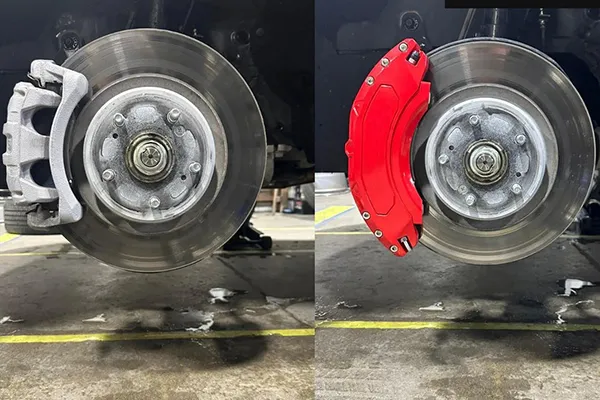
Buyers can easily compare visible features such as size, piston count, finish, branding, and price. Those comparisons are simple, but they can be misleading for replacement-part sourcing. A caliper that appears more substantial may be unsuitable for the original hydraulic system, wheel clearance, mounting arrangement, or intended vehicle duty.
Larger size, more pistons, and a higher price do not automatically indicate better brake calipers. For an OE-replacement application, the best product is normally the one that matches the correct OE reference, dimensions, mounting geometry, hydraulic requirements, and intended duty while meeting verified manufacturing and testing requirements.
Suitability Comes Before Specifications
Multi-piston and larger-caliper designs can be appropriate in systems engineered for them. However, an aftermarket buyer should not treat those features as universal quality upgrades.
Brake calipers operate within an integrated system. A change in piston area or configuration can affect hydraulic behavior, pedal response, brake balance, pad selection, wheel clearance, and compatibility with other components.10 Application-specific modifications require qualified engineering and vehicle-level evaluation.
For standard replacement sourcing, I advise buyers to begin with:
- OE number and cross-reference verification
- Vehicle make, model, platform, and production year
- Engine, axle, or brake-system variation where relevant
- Front or rear axle position
- Left-hand or right-hand position
- Mounting-hole spacing and bracket configuration
- Piston diameter and quantity
- Fluid-port and bleeder position
- Electronic parking-brake compatibility where applicable
- Pad, rotor, and wheel-clearance requirements
- New, remanufactured, loaded, semi-loaded, or bare configuration
A supplier with broad catalog coverage still needs accurate application data. GDST’s supplied business information includes more than 5,000 OE references across American, European, Japanese, and Korean vehicles. Buyers should nevertheless validate each required reference against their own market catalog, vehicle application data, samples, drawings, and technical requirements.
How Common Comparison Signals Can Mislead Buyers
| Comparison signal | Why it can be misleading | Better procurement question |
|---|---|---|
| Higher price | Price can reflect branding, logistics, packaging, or distribution margins | Which verified controls and specifications justify the cost? |
| Larger body | Size may reflect the original system design rather than better quality | Does the caliper match the intended OE application? |
| More pistons | Piston count alone does not establish fitment, durability, or consistency | Is the piston configuration correct for the vehicle system? |
| Heavier product | Weight does not prove machining accuracy or material suitability | Does the product meet the required drawing and material specifications? |
| Attractive coating | Appearance does not verify preparation, adhesion, or corrosion performance | Which coating process and inspection criteria are documented? |
| One perfect sample | A selected sample may not represent repeat production | How does the supplier control and trace complete batches? |
| Quality certificate | A certificate shows a management-system claim, not automatic product conformity11 | Is it valid, relevant in scope, and supported by product controls? |
Compare Like With Like
I recommend creating a controlled comparison sheet before requesting quotations. Each supplier should quote the same part references, configuration, packaging requirement, labeling format, testing requirement, and commercial terms.
Without that control, one supplier may quote a bare caliper while another includes a bracket, hardware, or accessories. One supplier may offer new production while another quotes remanufactured units. The lowest price may simply reflect a different product definition.
Better brake calipers are therefore not the products with the most impressive isolated specification. They are the products that meet the intended application and agreed requirements consistently.
How Do Better Brake Calipers Reduce Procurement Risk?
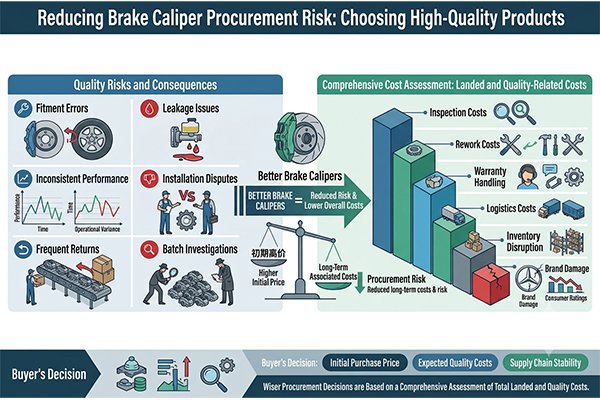
A low purchase price can create an immediate saving, but inconsistent quality can transfer cost into receiving inspection, warehouse handling, technical support, returns, warranties, and customer retention.12 Purchasing teams need a broader cost model because the invoice price captures only one part of the commercial exposure.
Better brake calipers can reduce procurement risk by lowering the likelihood of fitment errors, leakage concerns, inconsistent operation, installation disputes, repeat returns, and batch investigations. Buyers should compare total landed and quality-related costs, including inspection, rework, warranty handling, logistics, inventory disruption, and potential damage to their aftermarket brand.
Evaluate Total Cost, Not Only Unit Cost
A basic total-cost review can include the following categories:
| Cost category | Questions for the buyer |
|---|---|
| Unit purchase cost | Is the quotation based on the same configuration and specification? |
| Freight and duties | Does packaging efficiently protect the product without increasing damage or cost? |
| Incoming inspection | How much inspection is required before stock can be released? |
| Fitment errors | Can incorrect references or labeling create installation problems? |
| Rework | Will the buyer need to sort, relabel, repackage, or replace components? |
| Returns | Who investigates and handles suspected defects? |
| Warranty | What evidence, process, and response time apply to claims? |
| Inventory | Can the supplier maintain stable coverage and replenishment? |
| Reputation | How could repeated complaints affect distributors, workshops, and private-label customers? |
A small unit-price difference may not remain a saving if the buyer must conduct extensive sorting or respond to repeated application complaints. Buyers should use their own verified return, labor, logistics, and warranty records when calculating these costs. They should not rely on generic failure-rate estimates.
Audit Batch Consistency
Approval samples matter, but repeat production matters more. I recommend reviewing how the supplier controls variation between:
- Machines
- Operators
- Shifts
- Component lots
- Production dates
- Product references
- Packaging batches
The buyer should also define a pre-shipment or incoming inspection plan based on product risk. That plan may include visual checks, identification verification, dimensional sampling, packaging review, and agreed functional evidence.
Sampling alone cannot guarantee that every product conforms. However, a risk-based plan can help buyers monitor trends and detect unusual variation. A qualified quality professional should establish appropriate sample sizes and acceptance criteria for the buyer’s application, volume, market, and risk tolerance.
Assess the Supplier’s Response to Problems
Every manufacturing operation can encounter nonconformance. The stronger differentiator is how quickly and transparently the supplier controls it.
I look for a process that can:
- Identify and contain the affected stock.
- Trace the relevant batch and production records.
- Review retained samples or inspection evidence where available.
- Distinguish product defects from fitment, installation, and system-level issues.
- Determine a supported root cause.
- Implement corrective and preventive actions.
- Verify whether those actions were effective.
- Communicate clearly with the buyer.
A supplier should not automatically reject every claim as an installation problem. At the same time, a distributor should not automatically attribute brake drag, pulling, noise, leakage, or pedal concerns to the caliper without diagnosis. Both parties need product data, installation details, photographs, vehicle information, and technical inspection results.
Use a Practical Supplier Scorecard
I suggest scoring potential suppliers across weighted categories rather than awarding business to the lowest quotation automatically.
A scorecard can cover:
- Application accuracy: OE cross-references and catalog capability
- Product conformity: Drawings, dimensions, and agreed specifications
- Process control: Machining, assembly, and in-process inspection
- Functional verification: Leakage, movement, pressure, or durability procedures as applicable
- Traceability: Batch identification and record retrieval
- Quality response: Containment, root-cause analysis, and corrective action
- Supply performance: Capacity, lead time, and delivery consistency
- Commercial support: Packaging, labeling, private label, and documentation
- Certification review: Validity, scope, site, and issuing body
- Technical communication: Speed and clarity of application support
I would combine document review with samples, supplier audits, and independent or qualified testing when the application risk justifies it. A purchasing team should also consult qualified brake-system professionals for vehicle-specific suitability and performance decisions.
Frequently Asked Questions
Do better brake calipers reduce stopping distance?
Better brake calipers do not necessarily reduce vehicle stopping distance. A well-made caliper can support reliable clamping, release, sealing, and durability, but stopping distance also depends on pads, rotors, tires, fluid, road conditions, vehicle load, electronic controls, and the condition of the complete braking system.
Are new brake calipers always better than remanufactured calipers?
New calipers are not automatically better in every comparison. Buyers should evaluate both options through fitment, component condition, manufacturing or remanufacturing controls, replacement criteria, functional testing, traceability, warranty support, and batch consistency. The correct choice depends on market requirements, specifications, and verified supplier capability.
What documents should a brake caliper supplier provide?
A supplier should provide relevant application data, product specifications, inspection or test documentation, batch identification, traceability information, packaging details, and quality-system documents when requested. Buyers should verify each certificate’s validity and scope. Product-specific evidence remains necessary because a management-system certificate does not prove that every shipment conforms.
How can buyers check brake caliper fitment before placing a large order?
Buyers should confirm OE cross-references, vehicle applications, axle position, side, mounting dimensions, piston configuration, hose-port position, bracket type, parking-brake features, and product configuration. I also recommend sample approval and catalog validation before volume purchasing. Qualified technical evaluation may be necessary for uncertain or modified applications.
What symptoms indicate a poor-quality brake caliper?
Leakage, restricted movement, poor release, or incorrect fitment can involve the caliper, but symptoms alone do not establish root cause. Brake drag, pulling, noise, overheating, and pedal changes can also come from pads, rotors, hoses, fluid, hardware, wheel bearings, installation, or other system conditions. A qualified technician should diagnose the complete system.
Conclusion
Better brake calipers make a difference when “better” means correct application, controlled machining, consistent assembly, reliable sealing, suitable surface protection, documented testing, and batch traceability. Buyers should not assume that higher price, larger size, or more pistons guarantee superior quality or shorter stopping distance. Instead, I recommend comparing suppliers through a documented fitment, quality, traceability, and total-cost framework.
If you are evaluating OE-replacement calipers for distribution or a private-label program, contact GDST Auto Parts to discuss application coverage, samples, quality documentation, packaging, and supplier-assessment requirements.
"Air Brake Systems", https://www.nhtsa.gov/sites/nhtsa.dot.gov/files/121_stopping_distance_fr.pdf. Vehicle-safety guidance identifies braking-system condition, tire-road adhesion, vehicle speed and load, and road conditions as interacting determinants of stopping distance; it therefore supports treating caliper quality as only one contributor rather than as independent proof of shorter stops. Evidence role: general_support; source type: government. Supports: Government vehicle-safety material should confirm that stopping distance is determined by tire-road adhesion, vehicle condition, brake operation, speed, load, and environmental conditions rather than by a caliper alone.. Scope note: General stopping-distance guidance does not quantify the effect of changing calipers on a specific vehicle. ↩
"(PDF) Sealing Systems for Hydraulic Cylinders", https://www.academia.edu/94639809/Sealing_Systems_for_Hydraulic_Cylinders. Engineering studies of hydraulic seals and brake-caliper assemblies show that bore geometry, seal configuration, surface condition, and piston clearance affect sealing friction and piston motion, while mounting dimensions govern mechanical compatibility. Evidence role: mechanism; source type: paper. Supports: Engineering research should explain how bore geometry, seal-groove dimensions, piston clearances, and mounting geometry influence leakage, friction, movement, and assembly compatibility.. Scope note: Laboratory findings on individual dimensions or seals may not establish actual return rates across aftermarket production batches. ↩
"(PDF) Design and Analysis of a Brake Caliper", https://www.academia.edu/130258071/Design_and_Analysis_of_a_Brake_Caliper. Disc-brake engineering references describe the caliper as converting hydraulic pressure into piston force that clamps the pads against the rotor, with seals and sliding components contributing to controlled movement and release. Evidence role: mechanism; source type: education. Supports: An engineering or university source should describe how hydraulic pressure moves caliper pistons, generates pad clamping force, and relies on seals and sliding elements for controlled operation.. ↩
"Introduction", https://static.nhtsa.gov/odi/tsbs/2017/MC-10108967-9999.pdf. Brake-diagnostic guidance treats pulling, drag, noise, overheating, and pedal abnormalities as nonspecific symptoms that may arise from friction components, hydraulic restrictions, bearings, hardware, adjustment, or installation as well as from the caliper. Evidence role: general_support; source type: government. Supports: Vehicle inspection or brake-diagnostic guidance should show that pulling, drag, noise, heat, and pedal abnormalities may arise from multiple hydraulic, friction, mechanical, or installation faults.. Scope note: General diagnostic guidance cannot identify the cause of a symptom on an individual vehicle without inspection and testing. ↩
"Metrological Traceability: Frequently Asked Questions and ...", https://www.nist.gov/metrology/metrological-traceability. Metrology guidance states that a reported value must be interpreted in relation to the measurement procedure, equipment calibration, metrological traceability, and measurement uncertainty; the numerical result alone is not sufficient evidence of conformity. Evidence role: expert_consensus; source type: government. Supports: Metrology guidance should establish that measurement results depend on suitable methods, calibrated equipment, traceability, and an understood level of uncertainty.. ↩
"Mark R. Babyak", https://oaktrust.library.tamu.edu/bitstream/handle/1969.1/163519/T2251-64.pdf?isAllowed=y&sequence=1. Hydraulic-seal and brake-assembly research identifies contamination, seal damage, lubricant compatibility, component orientation, and assembly control as factors that can alter friction, sealing performance, retention, and component movement. Evidence role: mechanism; source type: paper. Supports: Research on hydraulic seals and brake assemblies should document how contamination, seal damage, lubricant incompatibility, orientation errors, and assembly-force variation affect leakage, friction, or component movement.. Scope note: Evidence from general hydraulic-seal research may be mechanistically relevant without measuring failure rates for the specific caliper designs discussed here. ↩
"Accelerated tests of nickel and chromium plating on steel", https://nvlpubs.nist.gov/nistpubs/jres/13/jresv13n4p519_a2b.pdf. Protective-coating guidance evaluates corrosion resistance through substrate preparation, coating integrity and thickness, adhesion, environmental exposure, and defined test methods; visual color and gloss alone do not demonstrate protective performance. Evidence role: general_support; source type: institution. Supports: Coating standards or corrosion-science guidance should show that corrosion performance is evaluated through factors such as preparation, thickness, adhesion, defects, exposure, and standardized testing rather than color or gloss alone.. Scope note: Accelerated corrosion tests and coating measurements do not perfectly predict service life in every climate or operating environment. ↩
"NIST IR 8536 Second Public Draft, Supply Chain Traceability", https://nvlpubs.nist.gov/nistpubs/ir/2025/NIST.IR.8536.2pd.pdf. Quality-management standards treat identification and traceability as controls that connect products with relevant production status and records, thereby supporting the containment, investigation, and correction of reported nonconformities. Evidence role: general_support; source type: institution. Supports: Quality-management guidance should establish that traceability links products to relevant production and inspection information and supports containment and investigation when nonconformities are reported.. Scope note: Traceability facilitates an investigation but does not by itself establish defect causation or prevent nonconforming production. ↩
"GDST Brand Package for Brake Cylinder - GDST Auto Parts", https://goldenstarintl.com/gdst-brake-cylinder-package/. The applicable IATF-recognized certificate identifies the certified legal entity and manufacturing site, defines the approved scope, and records the issuing certification body and validity period. Evidence role: case_reference; source type: institution. Supports: An official IATF-recognized certification record or certificate should verify the certified entity, site, scope, certification body, certificate number, and validity period.. Scope note: A certificate can substantiate the management-system claim only for the entity, site, scope, and period shown; it does not independently verify the separate claim of more than 20 years of production experience. ↩
"Cal Poly Supermileage Vehicle Braking System", https://digitalcommons.calpoly.edu/cgi/viewcontent.cgi?article=1589&context=mesp. Brake-system design references show that caliper piston area determines hydraulic force and fluid-volume demand, so changing piston area or configuration can alter clamping force, pedal travel, and axle brake-force distribution while also creating packaging and component-compatibility constraints. Evidence role: mechanism; source type: education. Supports: Vehicle-braking engineering references should explain the relationship among hydraulic pressure, piston area, clamping force, fluid displacement, pedal travel, and axle brake-force distribution.. Scope note: The magnitude and safety significance of these effects depend on the complete vehicle design, including the master cylinder, booster, rotor, pads, tires, and electronic controls. ↩
"ISO - Certification", https://www.iso.org/certification.html. Accreditation and standards guidance distinguishes management-system certification from product certification: the former assesses an organization's management processes within a defined scope and does not constitute proof that every product or shipment conforms. Evidence role: definition; source type: institution. Supports: ISO, accreditation-body, or certification guidance should distinguish certification of a management system from certification or inspection of individual products.. ↩
"Potential Cost Savings as US Manufacturers Spend ...", https://www.nist.gov/news-events/news/2021/06/potential-cost-savings-us-manufacturers-spend-billions-machinery. Total-cost-of-ownership and cost-of-quality frameworks recognize that acquisition price is only one cost component and that inspection, rework, disruption, returns, warranty handling, and external failures can materially affect the economic result of a purchasing decision. Evidence role: general_support; source type: research. Supports: Research on total cost of ownership and cost of quality should support including inspection, rework, returns, warranty, logistics, and external-failure costs in sourcing decisions rather than comparing unit price alone.. Scope note: These frameworks support the categories of cost but do not establish that a particular higher-priced caliper will produce a lower total cost; that conclusion requires the buyer's own performance and cost data. ↩