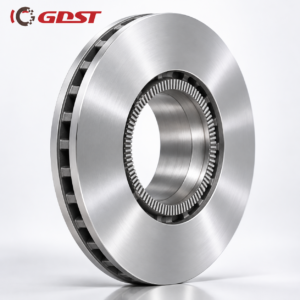

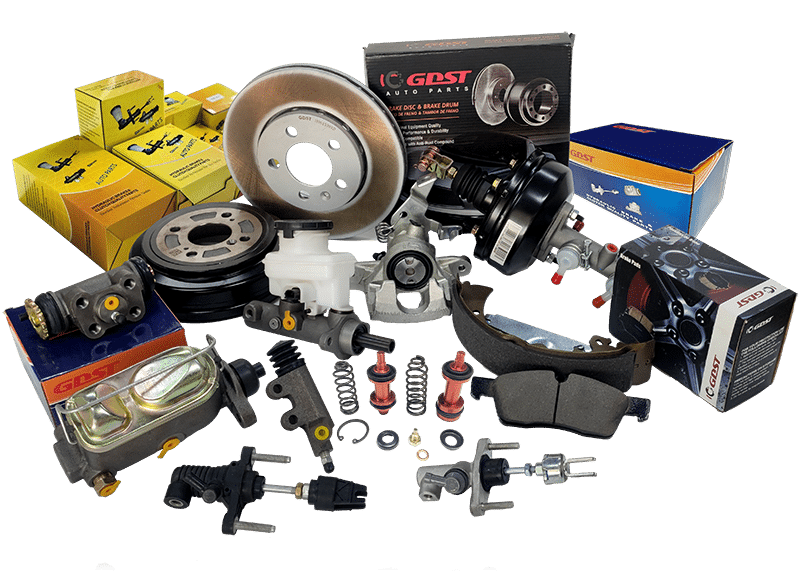


GDST Auto Parts is a China-based supplier of C/SiC carbon ceramic brake discs for high-performance vehicles, including sports cars, supercars, and selected premium models. We offer two-piece floating designs with customized center hats and mounting interfaces, providing tailored solutions for global customers.
Looking for a reliable carbon ceramic brake disc supplier for your automotive parts business?
Wuhu GDST Auto Parts Co.,Ltd supplies C/SiC carbon ceramic brake discs designed for high-performance automotive braking applications. Our product range includes two-piece floating brake disc configurations, with customization options for center hats and mounting interfaces to meet different vehicle and braking system requirements.
Combining carbon fiber-reinforced silicon carbide composite technology with application-specific mounting designs, our carbon ceramic brake discs offer a lightweight braking solution with excellent thermal stability, corrosion resistance, and durability under demanding operating conditions.
Whether you are an automotive parts distributor, performance brake brand, importer, or wholesale buyer, GDST provides product sourcing, technical specification support, and customized brake disc solutions.
Key Supply Information
| Car Brand | Vehicle | Position | OE No. | Size |
| BMW | M3 / M4 (G80/G82), M5 (F90) | Front Left | 34 10 8 093 717 | 400 x 38 mm |
| BMW | M3 / M4 (G80/G82), M5 (F90) | Front Right | 34 10 8 093 718 | 400 x 38 mm |
| Porsche | 911 (991.1 / 991.2) GT3 / Turbo S | Front Left | 991.351.407.06 | 410 x 36 mm (PCCB) |
| Porsche | 911 (991.1 / 991.2) GT3 / Turbo S | Front Right | 991.351.408.06 | 410 x 36 mm (PCCB) |
| Porsche | 911 (992) Turbo / Turbo S / GT3 | Rear Left | 992.615.601.P | 390 x 32 mm (PCCB) |
| Porsche | Cayenne (9Y0) / Panamera (971) | Rear | 9Y0.615.601.R | 410 x 32 mm (PCCB) |
| Audi | R8 / RS6 / RS7 (C7) | Front Left | 420.615.301.K | 380 x 38 mm |
| Audi | R8 / RS6 / RS7 (C7) | Front Right | 420.615.302.K | 380 x 38 mm |
| Mercedes-AMG | GT R / GT S / C63 S (W205) / E63 S (W213) | Front | A 231 421 15 12 | 402 x 39 mm |
| Ferrari | 458 Italia / 488 GTB / F8 Tributo | Front | 274337 or 316879 | 398 x 38 mm |
Carbon ceramic brake discs are high-performance braking components made from carbon fiber-reinforced ceramic matrix composites, commonly based on carbon and silicon carbide (C/SiC).
Unlike conventional cast iron brake discs, which rely on metallic materials, carbon ceramic rotors use a composite structure engineered to withstand demanding thermal and mechanical conditions.
During braking, friction between the brake pads and rotor converts vehicle kinetic energy into heat. C/SiC materials are designed to maintain structural stability under high thermal loads while offering lower rotor mass than comparable cast iron designs.
Carbon ceramic brake discs are commonly used in high-performance sports cars, supercars, and selected premium vehicle braking systems.
Their lightweight construction, thermal characteristics, and corrosion resistance make them suitable for applications where reduced unsprung mass and consistent braking performance are important.
It is important to distinguish carbon ceramic brake discs from ceramic-coated iron rotors. A carbon ceramic disc uses a ceramic composite as its primary friction material, while a coated iron rotor retains a metal base with a surface treatment.
GDST supplies C/SiC carbon ceramic brake discs using carbon fiber-reinforced silicon carbide ceramic composite technology.
The performance of a carbon ceramic brake disc depends on its fiber reinforcement, ceramic matrix, manufacturing process, and final friction surface.
Carbon Fiber Reinforcement
Carbon fibers provide the reinforcing structure within the composite. Their arrangement, length, and distribution influence the material’s mechanical properties and thermal behavior.
Different manufacturing technologies may use chopped carbon fibers or continuous fiber architectures. These structures have different characteristics and should be evaluated according to the specific product design.
Silicon Carbide Ceramic Matrix
Silicon carbide (SiC) provides the ceramic matrix responsible for many of the composite’s hardness, thermal stability, and wear characteristics.
In common C/SiC manufacturing processes, silicon infiltration reacts with carbon to form silicon carbide within the carbon-based structure.
Friction Surface
The friction surface is designed to work with a compatible brake pad compound. Its surface characteristics, thermal behavior, and wear properties directly affect braking performance.
The friction material and brake pad combination should be selected according to the intended vehicle and operating conditions.
Two-Piece Rotor Construction
GDST supplies two-piece carbon ceramic brake disc configurations consisting of a ceramic friction ring and a separate center hat.
This construction allows the friction component and mounting component to be designed according to different mechanical and thermal requirements.
Depending on the application, the rotor can use a floating connection to accommodate thermal expansion and maintain the required mounting arrangement.
C/SiC carbon ceramic brake discs offer several advantages for high-performance automotive applications.
Carbon ceramic rotors can be significantly lighter than comparable cast iron brake discs.
Reducing rotor mass helps lower unsprung and rotating mass, which can contribute to improved suspension response, steering behavior, and vehicle dynamics.
The actual weight reduction depends on rotor dimensions and construction.
High-performance vehicles generate considerable heat during repeated or aggressive braking.
C/SiC composite materials are designed to withstand demanding thermal conditions while maintaining structural stability.
This makes carbon ceramic brake discs suitable for braking systems exposed to repeated high-energy braking cycles.
Brake fade can occur when excessive heat affects the friction characteristics of braking components.
Carbon ceramic discs offer strong thermal stability and can help maintain more consistent braking behavior under demanding conditions when paired with compatible brake pads and a properly designed braking system.
Unlike conventional cast iron friction rings, carbon ceramic friction surfaces are highly resistant to corrosion associated with moisture exposure.
This helps avoid the surface rust commonly seen on conventional iron rotors after a vehicle has been parked in wet conditions.
Metallic center hats and mounting hardware still require appropriate corrosion protection.
Under suitable operating conditions, carbon ceramic brake discs can offer a longer service life than conventional cast iron alternatives.
Actual wear depends on driving style, vehicle weight, brake pad compound, temperature cycles, and maintenance practices.
Carbon ceramic braking systems can produce less visible brake dust than some conventional braking systems.
However, brake dust levels depend heavily on the selected brake pad compound. Compatible friction materials remain important.
Carbon ceramic and cast iron brake discs serve different performance and cost requirements.
Cast iron remains widely used for standard passenger vehicles because of its cost efficiency, predictable friction characteristics, and established manufacturing processes.
C/SiC carbon ceramic technology is designed for applications where lower rotor mass, thermal stability, and corrosion resistance are important.
| Comparison Factor | C/SiC Carbon Ceramic | Cast Iron |
| Main Material | Carbon fiber-reinforced silicon carbide composite | Cast iron |
| Rotor Weight | Generally lower | Generally higher |
| Thermal Stability | Excellent under designed operating conditions | Good, depending on design |
| Corrosion Resistance | High for ceramic friction ring | Susceptible to surface rust |
| Brake Fade Resistance | Strong under demanding thermal conditions | Depends on rotor and system design |
| Service Life | Potentially extended | Depends on operating conditions |
| Brake Dust | Depends on pad compound | Depends on pad compound |
| Initial Cost | Higher | Generally lower |
| Typical Applications | High-performance vehicles and premium braking systems | Passenger cars, SUVs, and commercial vehicles |
Carbon ceramic discs are not automatically the better choice for every vehicle. Cast iron remains a practical and economical solution for many standard applications.
For high-performance applications where weight reduction and thermal stability are priorities, C/SiC carbon ceramic technology provides important advantages.
Different vehicle applications require different brake disc structures, mounting arrangements, and material specifications.
GDST supplies carbon ceramic brake discs with two-piece floating configurations and customized mounting solutions.
Two-Piece Carbon Ceramic Brake Discs
Two-piece brake discs consist of a carbon ceramic friction ring and a separate center hat.
The design separates the friction component from the mounting component, allowing each part to meet its specific functional requirements.
Key characteristics include:
Floating Carbon Ceramic Brake Discs
Floating brake discs use a connection arrangement between the friction ring and center hat that allows controlled relative movement.
This design accommodates thermal expansion during braking and helps manage thermal stress in the rotor assembly.
The exact floating connection and mounting hardware should be determined by the intended application.
Custom Center Hat Designs
The center hat connects the brake disc assembly to the vehicle’s hub.
GDST supports center hat customization according to customer drawings, existing samples, or vehicle-specific mounting requirements.
Custom Mounting Interfaces
Different braking systems use different mounting geometries.
GDST can customize mounting interfaces according to the required dimensions and application specifications, helping buyers develop brake disc solutions for specific vehicle platforms.
Selecting the correct carbon ceramic brake disc requires more than checking its outside diameter.
The mounting interface, rotor thickness, center bore, offset, ventilation structure, and brake pad compatibility must all be considered.
The following table lists the main technical information required for product identification and customization.
| Technical Parameter | Description | Application Consideration |
| Outer Diameter | Overall rotor diameter (mm) | Must match the braking system |
| Overall Thickness | Total rotor thickness (mm) | Must meet brake assembly requirements |
| Friction Ring Thickness | Working friction surface thickness (mm) | Relevant to pad compatibility and wear limits |
| Center Bore | Central mounting opening (mm) | Must match the hub or center assembly |
| PCD | Pitch Circle Diameter (mm) | Determines mounting bolt positioning |
| Bolt Hole Quantity | Number of mounting holes | Must match the vehicle interface |
| Offset | Distance between mounting reference surfaces (mm) | Affects rotor and caliper positioning |
| Rotor Construction | Two-piece floating or other specified configuration | Depends on application |
| Center Hat | Customized design available | According to customer drawings and requirements |
| Mounting Interface | Customized mounting geometry available | According to vehicle specifications |
| Rotor Position | Front or rear | Must match vehicle application |
| Weight | Complete rotor or friction ring weight (kg) | Important for weight comparison |
| Material | C/SiC carbon ceramic composite | Confirmed product material |
Actual dimensions, material properties, tolerances, and allowable wear limits must be confirmed against the corresponding product drawing and technical documentation.
Different automotive applications require different brake disc dimensions, mounting arrangements, and center hat designs.
GDST provides customization support for automotive parts distributors, brake system brands, and performance parts businesses.
Custom Center Hat
The center hat can be customized according to customer drawings, reference samples, and vehicle-specific requirements.
Customization considerations include:
Custom Mounting Interface
GDST supports customized mounting interfaces for different braking system requirements.
Customers can provide original rotor samples, technical drawings, or mounting specifications for evaluation.
Two-Piece Floating Construction
Two-piece floating carbon ceramic brake disc configurations are available.
The friction ring, center hat, and connecting arrangement can be evaluated according to the intended vehicle application and technical requirements.
Vehicle-Specific Product Development
For new product development or replacement applications, GDST can review the following information:
Private Label and Packaging Requirements
For qualified wholesale projects, buyers can also discuss product identification, packaging, labeling, and other commercial requirements with our sales team.
Carbon ceramic brake discs are primarily used in vehicles where braking performance, weight reduction, and thermal management are important considerations.
Typical application categories include:
| Vehicle Application | Typical Requirements | Product Identification Considerations |
| High-Performance Sports Cars | Thermal stability and reduced rotor mass | OE number, rotor dimensions, and caliper compatibility |
| Supercars | High-energy braking performance and lightweight construction | Vehicle model, year, and original brake system |
| Premium Performance Sedans | Consistent braking under demanding conditions | Front/rear position and rotor configuration |
| Performance SUVs | High braking energy capacity | Vehicle weight, rotor dimensions, and brake system specifications |
| Track-Oriented Vehicles | Repeated high-load braking and thermal management | Approved operating range and compatible brake pads |
Vehicle fitment should never be determined by vehicle brand or model name alone.
Different model years, trim levels, engine configurations, and optional brake packages may use different rotor specifications.
For accurate product identification, provide the OE number, vehicle details, original rotor dimensions, or technical drawing.
Carbon ceramic brake discs require different material verification and inspection considerations from conventional cast iron rotors.
For buyers evaluating a supplier, the product’s material composition, structural consistency, dimensional accuracy, and application compatibility should all be considered.
Material Composition
Confirm the specified C/SiC composite material and relevant material documentation.
Dimensional Accuracy
Check rotor diameter, thickness, mounting geometry, center bore, offset, and other drawing-controlled dimensions.
Structural Integrity
Review available inspection records for cracks, internal defects, surface irregularities, and other conditions that may affect product reliability.
Thermal and Friction Performance
Where applicable, review test results relating to thermal behavior, friction characteristics, and compatibility with the designated brake pad compound.
Wear and Service Limits
Confirm the manufacturer’s specified wear limits, inspection procedures, and minimum service requirements for the exact product.
Product-specific technical documents and test records should always be used to support quality claims.
Choosing a carbon ceramic brake disc supplier involves more than comparing product prices.
Automotive parts importers, distributors, and performance brake brands need clear product specifications, flexible customization, manageable order quantities, and dependable delivery arrangements.
GDST supplies C/SiC carbon ceramic brake discs and supports customized product requirements for international automotive parts buyers.
C/SiC Carbon Ceramic Product Supply
Our carbon ceramic brake disc supply focuses on C/SiC composite technology for high-performance automotive braking applications.
Two-Piece Floating Designs
We offer two-piece floating carbon ceramic brake disc configurations to meet specific braking system requirements.
Custom Center Hat and Mounting Interfaces
Customers can request customized center hat designs and mounting interfaces based on technical drawings, reference samples, or application specifications.
Flexible Wholesale Order Quantity
Our standard minimum order quantity is 50 pieces per model, making our supply arrangements suitable for automotive parts distributors and specialized aftermarket businesses.
Order Lead Time
The standard production lead time is approximately 50 days, subject to final specification and order confirmation.
One-Year Warranty
GDST provides a one-year warranty for supplied carbon ceramic brake discs. Specific warranty coverage and claim procedures are confirmed according to the agreed commercial terms.
| Item | Supply Details |
| Product | C/SiC Carbon Ceramic Brake Discs |
| Construction | Two-Piece Floating Designs Available |
| Center Hat Customization | Available |
| Mounting Interface Customization | Available |
| MOQ | 50 Pieces per Model |
| Standard Lead Time | Approximately 50 Days |
| Warranty | 1 Year |
| Customer Type | Importers, Distributors, Wholesalers, Brake Brands |
Whether you are developing a new performance brake product line or sourcing carbon ceramic brake discs for existing vehicle applications, GDST welcomes your inquiries.
GDST supplies C/SiC carbon ceramic brake discs made from carbon fiber-reinforced silicon carbide composite materials.
Yes. GDST supplies two-piece floating carbon ceramic brake disc configurations with separate friction rings and center hats.
Yes. Center hat designs can be customized according to customer drawings, reference samples, and vehicle-specific requirements.
Yes. GDST supports customized mounting interfaces based on the required dimensions, mounting geometry, and application specifications.
The standard MOQ is 50 pieces per model.
The standard lead time is approximately 50 days, subject to specification and order confirmation.
GDST provides a one-year warranty for supplied carbon ceramic brake discs. Specific coverage is subject to the agreed warranty terms.
Provide the OE number, vehicle information, rotor dimensions, mounting specifications, technical drawings, and estimated order quantity. Reference photographs or existing samples are also helpful.
Carbon ceramic discs offer lower weight, strong thermal stability, and high corrosion resistance. Cast iron discs are more economical for many everyday vehicles. The right choice depends on the vehicle and intended application.
Yes. They should be paired with brake pads approved for the specific rotor material and application to maintain braking performance and control wear.
Looking for a dependable supplier of C/SiC carbon ceramic brake discs?
GDST provides two-piece floating brake disc configurations, customized center hats, and application-specific mounting interface solutions for international automotive parts buyers.
With an MOQ of 50 pieces per model, an approximately 50-day lead time, and a one-year warranty, we welcome inquiries from automotive parts importers, distributors, wholesalers, and performance brake brands.
Send us your OE references, technical drawings, dimensions, or existing product samples to discuss your requirements.