
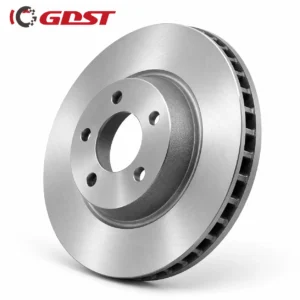
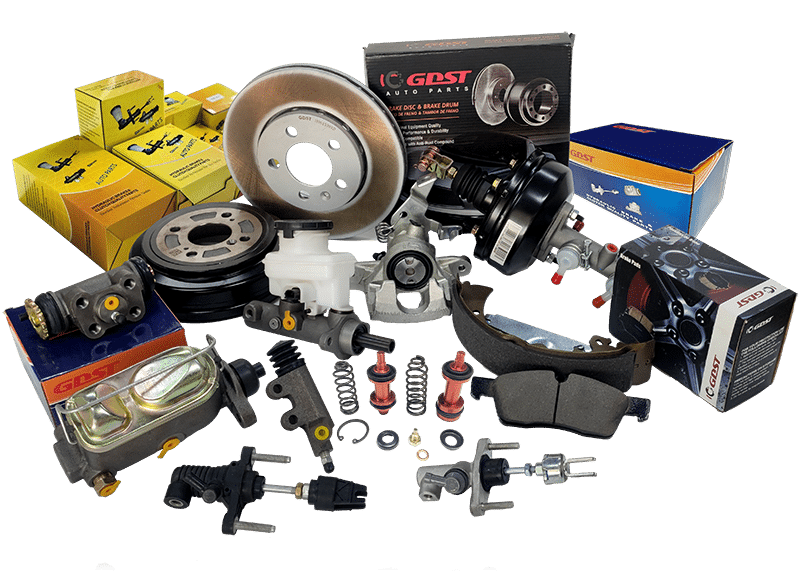


GDST supplies coated cast iron brake discs for automotive aftermarket replacement applications. Featuring protective surface coatings to help reduce corrosion on exposed metal areas, these brake discs are available in solid and ventilated designs with OE-compatible dimensions. GDST supports customized coating configurations and private-label packaging.
Coated Cast Iron Brake Discs for Automotive Aftermarket Applications
Wuhu GDST Auto Parts Co.,Ltd supplies coated brake discs designed for corrosion protection, reliable braking performance, and OE-compatible replacement applications. We support automotive parts importers, wholesalers, distributors, and private-label brands with a broad range of brake disc configurations, vehicle fitment options, and customized supply solutions.
From product identification and OE reference matching to packaging customization and bulk orders, GDST provides professional support for international automotive aftermarket buyers.
| OE No. | Vehicle | Position | Height | Outer Diameter | Center Bore Diameter | Pitch Circle Diameter (PCD) | Thickness | Number of Holes | Rotor Type | Weight |
| 6694210612 | MERCEDES-BENZ VARIO | Front | 91 mm | 304 mm | 118 mm | 140 mm | 30 mm | 6 | Vented | 10.5 kg |
| 81508030010 | MAN L2000 | Front | 102 mm | 324 mm | 135 mm | 158 mm | 30 mm | 10 | Vented | 13.8 kg |
| 1907568 | IVECO EUROCARGO | Front | 150 mm | 370 mm | 215 mm | 275 mm | 45 mm | 8 | Vented | 32.9 kg |
| 81508030015 | MAN F2000 | Front | 135 mm | 438 mm | 200 mm | 235 mm | 45 mm | 10 | Vented | 35.5 kg |
| MAK2487 | DAF F1000 | Front | 137 mm | 312 mm | 133 mm | 155 mm | 30 mm | 12 | Vented | 14 kg |
| 6774687 | VOLVO FL6 | Front | 90 mm | 322 mm | 132 mm | 154 mm | 30 mm | 8 | Vented | 13 kg |
| 5000450158 | RENAULT MIDLINER | Front | 82 mm | 354 mm | 128 mm | 151 mm | 30 mm | 10/10 | Vented | 14 kg |
| 1852817 | SCANIA 4 – SERIES | Front/Rear | 131 mm | 430 mm | 208 mm | 237 mm | 45 mm | 10/10 | Vented | 31.94 kg |
| 4079000502 | MERCEDES-BENZ ACTROS | Front | 130 mm | 430 mm | 131 mm | 168 mm | 45 mm | 12/15 | Vented | 33.28 kg |
| 308834030 | BPW | Front | 159mm | 377mm | 230mm | 275mm | 45 mm | 8 | Vented | 28kg |
Coated brake discs are designed to provide additional protection against corrosion on exposed metal surfaces. Compared with conventional uncoated cast iron rotors, coated versions feature a protective surface treatment that helps reduce rust formation on non-friction areas, including the disc hat, outer edges, and other exposed sections.
For automotive aftermarket distributors and wholesalers, coated brake discs offer a practical product option for customers who want better corrosion resistance and a cleaner appearance behind their wheels.
GDST supplies coated cast iron brake discs for automotive aftermarket replacement applications, with product configurations selected according to OE dimensions, vehicle fitment requirements, and customer specifications.
Key product considerations include:
A coated brake disc is a cast iron brake rotor treated with a protective surface coating to help prevent corrosion on exposed metal areas.
Standard cast iron brake discs can develop surface rust when exposed to moisture, road salt, humidity, and other environmental conditions. Although light surface oxidation on the braking area can normally be removed through regular braking, rust on the disc hat, outer edge, and ventilation channels may remain visible.
A protective coating creates a barrier between the metal surface and the surrounding environment, helping reduce corrosion on designated areas.
Depending on the coating technology and product design, the protective treatment may cover:
The friction surface must be designed and processed according to the specific coating system. Some products have machined, uncoated friction faces, while certain specialized systems apply a functional coating directly to the braking surface.
For this reason, coating coverage and installation requirements should always be confirmed according to the individual brake disc specification.
The primary purpose of conventional brake disc coating is to reduce direct exposure of the underlying metal to moisture, oxygen, and corrosive road contaminants.
When an uncoated cast iron rotor is exposed to rain, humidity, or road salt, oxidation can occur on its exposed surfaces. Protective coatings help limit this contact by forming a barrier over designated areas.
How the protection works:
The brake disc surface is cleaned and prepared to support coating application.
The selected protective coating is applied to the specified areas using the corresponding manufacturing process.
The coating is dried, cured, or otherwise processed according to the coating system.
Where required, the friction surfaces are machined to achieve the specified dimensions and surface finish.
The finished rotor is checked against applicable dimensional, visual, and functional requirements.
A properly selected coating helps reduce corrosion on exposed non-friction surfaces. Its actual protection level depends on coating chemistry, thickness, surface preparation, application quality, and environmental exposure.
Why does coating coverage matter?
A rotor with coating only on its center hat may still have exposed rust-prone edges or ventilation channels. A more comprehensive coating configuration can provide protection to additional exposed areas, depending on the manufacturing process.
For wholesale buyers, it is important to confirm not only whether a brake disc is coated, but also which surfaces are protected.
Not all coated brake discs use the same surface treatment. Different coating technologies offer different application characteristics, coverage capabilities, and corrosion protection properties.
The following table summarizes common coating technologies used in the automotive brake disc industry.
| Coating Type | Main Characteristics | Typical Application | Key Considerations |
| Electrophoretic Coating (E-Coating) | Uses an electrical process to deposit a protective coating onto conductive surfaces | Disc hats, outer edges, and potentially internal ventilation areas | Uniform coverage depends on component geometry and process control |
| Zinc-Flake Coating | Uses a zinc-based protective coating system, sometimes incorporating aluminum | Corrosion protection on designated rotor surfaces | Coating chemistry and application method determine coverage and protection |
| UV-Cured Coating | Uses a polymer-based coating cured by ultraviolet light | Selected brake disc surfaces, depending on product design | Requires compatible coating materials and controlled curing |
| Epoxy Coating | Forms a protective polymer layer over designated metal surfaces | Disc hats, outer edges, and ventilation areas | Coverage and durability depend on formulation and application |
| Conventional Paint Coating | Applies a protective paint layer to selected areas | Primarily non-friction surfaces | Performance varies considerably with paint formulation and preparation |
Important: These are general industry coating technologies, not a statement that every process is available in every GDST product configuration. Specific coating materials, colors, coverage areas, and processing requirements should be confirmed during product development and quotation.
Choosing the right coating configuration
For aftermarket replacement applications, the appropriate coating depends on:
GDST can discuss product configurations and coating requirements with buyers based on their target OE references and purchasing specifications.
GDST coated brake discs are positioned for automotive aftermarket replacement applications where corrosion protection, fitment compatibility, and consistent product quality are important purchasing considerations.
Protective coating helps reduce rust formation on designated exposed cast iron surfaces, including the disc hat and outer edges. Depending on the coating configuration, additional areas such as internal ventilation channels may also receive protection.
Brake disc friction surfaces require controlled machining and surface finish to ensure appropriate contact with the brake pads. The final friction surface configuration must comply with the specified product design and coating system.
Brake discs need to match the original equipment specifications for mounting dimensions, disc thickness, overall height, center bore, and other critical features.
GDST supports OE reference matching to help aftermarket buyers identify suitable replacement products.
Different vehicles require different brake disc structures. Product configurations can include solid and ventilated designs, as well as different rotor diameters, thicknesses, and mounting arrangements.
Coated brake discs provide distributors and wholesalers with an additional replacement product option for customers who value corrosion protection and appearance.
GDST supports product identification, specification communication, and customized packaging requirements for international aftermarket buyers, subject to order confirmation.
Coated and uncoated brake discs can share the same basic cast iron construction and braking design. The main difference is whether a protective surface treatment is applied to designated areas of the rotor.
For many aftermarket replacement applications, coating is primarily an additional corrosion protection feature rather than a direct braking performance upgrade.
| Comparison | Coated Brake Discs | Uncoated Brake Discs |
| Base Material | Commonly cast iron | Commonly cast iron |
| Surface Treatment | Protective coating on specified areas | No additional protective coating |
| Corrosion Protection | Helps reduce corrosion on coated surfaces | Exposed cast iron is more susceptible to oxidation |
| Disc Hat Appearance | Can maintain a cleaner appearance for longer | Surface rust may develop |
| Outer Edge Protection | Available depending on coating coverage | No additional coating protection |
| Ventilation Channel Protection | Available with suitable coating processes | No additional coating protection |
| Friction Surface | Depends on the specific coating system and machining design | Typically machined cast iron |
| Maintenance | Normal brake inspection and maintenance required | Normal brake inspection and maintenance required |
| Typical Application | Replacement applications prioritizing corrosion protection | Standard replacement applications |
Are coated brake discs better?
The answer depends on the application and buyer’s requirements.
Coated brake discs are particularly useful for vehicles frequently exposed to moisture, road salt, and humid environments. They can also provide a cleaner appearance behind alloy wheels.
Uncoated brake discs may be suitable for applications where initial purchase cost is the primary consideration and additional corrosion protection is not required.
However, coating alone does not guarantee longer overall brake disc service life. Actual service life depends on rotor material, thickness, driving conditions, braking frequency, vehicle weight, and maintenance.
Brake disc specifications vary significantly between vehicle applications. For this reason, OE reference matching and dimensional verification are essential when selecting coated replacement rotors.
GDST supports product identification and customization discussions based on customer requirements, drawings, samples, and OE references.
Typical Brake Disc Technical Specifications
| Specification | Description | Customization / Matching |
| Product Type | Coated Brake Disc / Brake Rotor | Available configurations subject to product range |
| Base Material | Cast Iron | According to OE and product requirements |
| Rotor Design | Solid / Ventilated | Application dependent |
| Disc Diameter | Overall outside diameter (D) | OE reference matching |
| Disc Thickness | Nominal thickness (T) | OE specification |
| Overall Height | Total rotor height (H) | OE specification |
| Center Bore | Hub mounting center diameter | OE specification |
| Bolt Pattern | Number and spacing of mounting holes | OE specification |
| Friction Surface | Machined braking surface | According to design requirements |
| Surface Treatment | Protective coating | Subject to selected coating process |
| Coating Coverage | Hat / Outer Edge / Ventilation Areas | According to product configuration |
| Coating Color | Black / Silver / Other available finishes | Subject to coating availability |
| Packaging | Standard / Customized Packaging | According to order requirements |
Brake Disc Dimension Reference
| Dimension | Technical Meaning | Why It Matters |
| D – Outer Diameter | Total diameter of the rotor | Determines compatibility with the brake caliper and braking system |
| T – Disc Thickness | Nominal rotor thickness | Must match OE specifications |
| H – Overall Height | Distance between the mounting reference surface and rotor geometry | Affects installation position and brake system clearance |
| C – Center Bore | Diameter of the central mounting opening | Ensures correct hub compatibility |
| PCD – Bolt Pattern | Diameter of the circle passing through the wheel mounting holes | Ensures correct mounting compatibility |
| V – Ventilation Structure | Internal cooling channel configuration | Affects rotor construction and airflow |
What information should buyers provide?
To identify the correct coated brake disc, please provide as much of the following information as possible:
Providing an OE number or an existing product sample can help GDST identify the correct replacement configuration more efficiently.
Coated brake disc quality depends on more than the appearance of the protective coating. The rotor must also meet the required material, dimensional, machining, and balance specifications.
For international aftermarket buyers, consistent product quality is essential to maintaining stable inventory and reducing fitment-related complaints.
Key Manufacturing and Inspection Processes
| Manufacturing / Inspection Process | Main Purpose | Quality Considerations |
| Raw Material Inspection | Check incoming cast iron material | Material consistency and applicable material requirements |
| Casting Process | Form the brake disc body | Casting integrity and structural consistency |
| CNC Machining | Process mounting and friction surfaces | Dimensional accuracy and surface finish |
| Coating Application | Apply the specified protective treatment | Coverage, appearance, and process consistency |
| Coating Curing | Complete the coating process where required | Curing conditions and coating integrity |
| Dimensional Inspection | Verify critical rotor dimensions | Diameter, thickness, height, center bore, and mounting dimensions |
| Runout Inspection | Check rotor surface deviation | Compliance with specified runout requirements |
| Balance Inspection | Verify rotor balance | Compliance with applicable product requirements |
| Final Visual Inspection | Identify visible defects | Surface condition, coating uniformity, and machining appearance |
| Packaging Inspection | Protect finished products during transportation | Product identification and packaging integrity |
Quality Factors Buyers Should Evaluate
The actual inspection items and acceptance limits should be established according to the product specification, OE requirements, and applicable testing standards.
GDST can discuss inspection requirements with customers during product development and order confirmation.
Coated brake discs are suitable for many passenger car and light- and heavy- commercial vehicle replacement applications, provided the selected rotor matches the original braking system specifications.
For automotive parts distributors and importers, accurate fitment information is particularly important because even small dimensional differences can affect installation compatibility.
Typical Application Categories
| Vehicle Category | Typical Brake Disc Requirements | Product Matching Considerations |
| Passenger Cars | Solid or ventilated brake discs | OE dimensions and axle position |
| SUVs | Larger or heavier-duty brake disc configurations | Vehicle weight and brake system design |
| Light Commercial Vehicles | Application-specific cast iron rotors | Load requirements and OE specifications |
| European Vehicles | Model-specific rotor dimensions and mounting structures | OE reference and vehicle configuration |
| Japanese and Korean Vehicles | Different front and rear rotor specifications | Model year, engine, and brake package |
| American Vehicles | Vehicle-specific rotor dimensions and configurations | Trim level, axle and brake system |
OE Number Matching Support
GDST supports brake disc identification using OE references, vehicle information, technical drawings, and product samples.
When requesting a quotation, buyers can provide their existing OE numbers or target vehicle applications to help confirm the required specifications.
This approach helps reduce incorrect product selection and improves the efficiency of aftermarket sourcing.
GDST works with international automotive parts buyers looking for coated brake discs for aftermarket distribution, replacement programs, and private-label product ranges.
Whether you are expanding an existing brake disc catalog or developing a new coated rotor product line, GDST can discuss product configurations and supply requirements according to your business needs.
Provide your OE part numbers, vehicle applications, technical drawings, or product samples. Our team can assist with product identification and specification confirmation.
Discuss your requirements for coating type, coating color, coverage areas, and surface finish. The final configuration depends on the applicable product and available manufacturing process.
Build a coated brake disc product range covering different vehicle applications, rotor diameters, thicknesses, and mounting configurations.
Customized packaging and product identification can be discussed for distributors, importers, and automotive aftermarket brands.
GDST supports bulk purchasing inquiries and product sourcing for international automotive parts businesses. Order quantities, production schedules, and shipping arrangements are confirmed according to the selected products and order requirements.
Information to Include in Your Inquiry
| Inquiry Information | Example |
| Product | Coated Brake Disc |
| OE Reference | Your target OE part number |
| Vehicle Application | Make / Model / Year |
| Axle Position | Front / Rear |
| Rotor Type | Solid / Ventilated |
| Coating Requirement | E-Coating / Zinc-Flake / Other specified finish |
| Coating Coverage | Hat / Outer Edge / Ventilation Channels |
| Order Quantity | Required quantity per model |
| Packaging | Standard / Private Label |
| Destination Market | Country or region |
Note: The coating process, availability, MOQ, production lead time, and final pricing are confirmed individually according to the product specification and order quantity.
A coated brake disc is a cast iron brake rotor treated with a protective surface coating to help reduce corrosion on exposed metal areas. Depending on the coating design, protected areas may include the disc hat, outer edge, and internal ventilation channels.
Coated brake discs offer additional corrosion protection on designated surfaces and generally maintain a cleaner appearance behind alloy wheels. Uncoated rotors can still provide normal braking performance when correctly manufactured and installed. The best choice depends on the operating environment, product requirements, and purchasing budget.
Conventional anti-corrosion coatings are primarily designed to protect exposed metal surfaces. They do not automatically increase braking torque, friction coefficient, or stopping power. Braking performance depends on the rotor design, friction material, caliper system, vehicle configuration, and overall brake system compatibility.
Not necessarily. Some products coat only the disc hat and outer edges, while others also protect ventilation channels and additional surfaces. Certain specialized coating systems may cover the friction surface as well. Coverage depends on the coating technology and product design.
Installation requirements depend on the specific coating system. Some products have friction surfaces that are ready for installation, while others may require specific preparation according to the manufacturer’s instructions. Buyers and installers should follow the product’s installation guidance rather than automatically removing all coatings.
For conventional rotors with coated non-friction areas, the friction surface is typically machined and designed for direct brake pad contact. For specialized systems with functional friction-surface coatings, the coating is designed to work according to the manufacturer’s specifications. Its behavior depends on the selected technology.
Yes. Coated brake discs can be a suitable option for vehicles operating in humid regions, coastal environments, or areas where roads are treated with salt. However, corrosion resistance varies according to the coating material, coverage, application quality, and exposure conditions.
Yes, provided the brake disc is specifically designed for the vehicle’s braking system and OE specifications. Electric vehicles can experience reduced friction brake usage due to regenerative braking, which may allow corrosion to develop on exposed rotor surfaces. A suitable corrosion-resistant coating can therefore be a useful consideration for EV replacement applications.
E-Coating uses an electrically assisted deposition process to apply a protective coating to conductive metal surfaces. Zinc-flake coating uses a zinc-based protective coating system to provide corrosion resistance. Their application methods, coating chemistry, coverage, and performance characteristics are different.
GDST can discuss customized coated brake disc requirements based on OE references, technical drawings, product samples, and customer specifications. Coating type, coverage, dimensions, and packaging options are subject to product and manufacturing confirmation.
Please provide OE part numbers, vehicle make and model, front or rear axle position, required quantities, and coating preferences. Drawings or product samples are also helpful when available.
Yes. GDST supports international automotive aftermarket sourcing and can discuss bulk orders, customized packaging, and private-label requirements according to the selected products and order specifications.
Looking for a reliable coated brake disc supplier for your automotive aftermarket business?
GDST supports international importers, wholesalers, distributors, and automotive parts brands with OE-compatible brake disc sourcing and customized product solutions.
Send us your OE numbers, vehicle applications, product drawings, or target specifications. Our team will help you identify suitable coated brake disc options and discuss your wholesale requirements.
Contact GDST Today