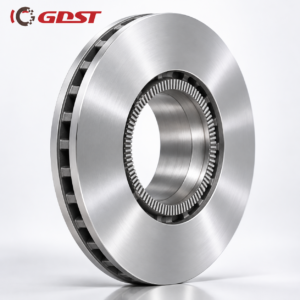

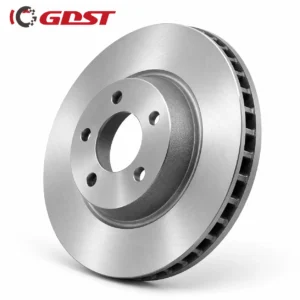
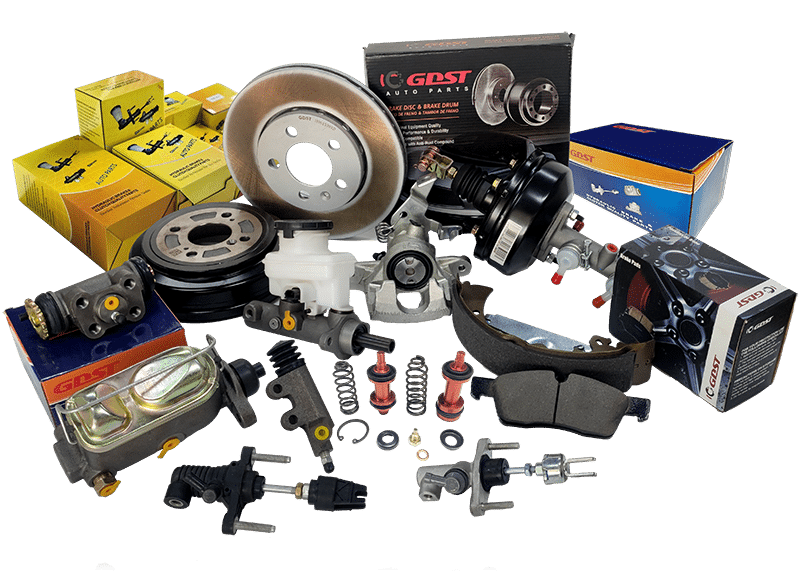


GDST Auto Parts supplies drilled and slotted disc brake rotors for performance-oriented automotive aftermarket applications. Featuring cross-drilled holes and machined slots, these rotors help evacuate moisture and debris while cleaning the brake pad contact surface. We provide OE number matching, wholesale supply, and customized brand packaging for global importers, wholesalers, distributors, and automotive aftermarket brands.
Wuhu GDST Auto Parts Co.,Ltd supplies aftermarket brake discs and rotors for international automotive parts importers, wholesalers, distributors, and private-label brands. Our broader brake disc product range covers more than 2,000 models for Japanese, Korean, European, and American vehicles, including passenger cars, trucks, and commercial vehicles.
Drilled and slotted disc brake rotors combine cross-drilled holes with machined surface slots to provide a distinctive friction surface design. They are commonly selected for performance-oriented street applications and aftermarket product ranges where surface cleaning, moisture evacuation, and braking consistency are important considerations.
As a China-based automotive parts supplier established in 2002, GDST supports OE reference matching, wholesale supply, product sourcing, and customized brand packaging to meet different aftermarket requirements.
Key Supply Information:
Looking for a reliable drilled and slotted brake rotor supplier?
Send us your OE numbers, vehicle applications, or product specifications to discuss product availability and wholesale quotations.
| OE No. | Vehicle | Position | Height | Outer Diameter | Center Bore Diameter | Pitch Circle Diameter (PCD) | Thickness | Number of Holes | Weight |
| 6694210612 | MERCEDES-BENZ VARIO | Front | 91 mm | 304 mm | 118 mm | 140 mm | 30 mm | 6 | 10.5 kg |
| 81508030015 | MAN F2000 | Front | 135 mm | 438 mm | 200 mm | 235 mm | 45 mm | 10 | 35.5 kg |
| 5000450158 | RENAULT MIDLINER | Front | 82 mm | 354 mm | 128 mm | 151 mm | 30 mm | 10/10 | 14 kg |
| 81508030010 | MAN L2000 | Front | 102 mm | 324 mm | 135 mm | 158 mm | 30 mm | 10 | 13.8 kg |
| 6774687 | VOLVO FL6 | Front | 90 mm | 322 mm | 132 mm | 154 mm | 30 mm | 8 | 13 kg |
| 43512BZ230 | Toyota Agya/Wigo A350 | Front | 42.1mm | 234mm | 55mm | 100mm | 18mm | 6 | 3.64kg |
| 6172906 | FORD Cargo | Front | 126mm | 322mm | 148mm | 205mm | 30mm | 6 | 15.9kg |
| 1402272 | SCANIA 4 | Front/Rear | 131mm | 430mm | 208mm | 237mm | 45mm | 10 | 31.94 kg |
| 308834030 | BPW | Front | 159mm | 377mm | 230mm | 275mm | 45 mm | 8 | 28kg |
| 1904531 | IVECO DAILY | Front | 142mm | 280mm | 58.3mm | 170mm | 16mm | 6 | 13.3kg |
Drilled and slotted disc brake rotors are automotive braking components featuring two types of surface machining: drilled holes and machined slots on the friction faces.
They combine the structural characteristics of drilled brake rotors and slotted brake rotors in one product design.
Drilled Holes
Drilled holes are formed through the rotor friction surface. They provide pathways for moisture, debris, and gases generated at the pad-to-disc interface to escape during braking.
Depending on the rotor design and operating conditions, drilled holes can also contribute to surface heat management.
Machined Slots
Slots are grooves machined into the rotor friction surface. As the brake pads contact the rotating disc, these grooves help remove accumulated dust, debris, and friction-generated gases while refreshing the pad contact surface.
Combined Drilled and Slotted Design
By integrating both features, drilled and slotted brake rotors combine surface evacuation and pad-cleaning functions in one design.
They are frequently used in aftermarket performance-oriented applications where buyers seek a combination of functional surface features and a distinctive sporty appearance.
Unlike plain brake rotors, which have a smooth friction surface, drilled and slotted rotors feature additional machining that influences their surface characteristics and operating behavior.
The braking process converts vehicle kinetic energy into heat through friction between the brake pads and rotor surfaces.
During repeated braking, heat, friction material, dust, moisture, and other contaminants can accumulate around the contact interface.
Drilled and slotted brake rotors incorporate additional surface features to help manage these conditions.
Drilled holes and machined slots provide pathways for water on the friction surface to escape during rotor rotation.
This design can help maintain more consistent pad-to-disc contact under certain wet-weather conditions.
The machined slots continuously pass beneath the brake pads during braking.
Their wiping action helps remove accumulated friction material, dust, and surface contaminants, supporting consistent contact between the pads and rotor.
At elevated operating temperatures, certain brake pad materials can release gases.
The holes and slots provide additional escape paths for gases generated at the friction interface, potentially helping maintain braking consistency under demanding conditions.
Drilled and slotted surfaces are part of the overall rotor design, but they do not independently determine cooling performance.
Rotor thickness, material, thermal mass, internal ventilation vanes, airflow, brake pad compound, and vehicle operating conditions all influence heat management.
For this reason, the complete rotor design should be evaluated rather than judging thermal performance by the number of holes or slots alone.
Combined Surface Design
The combination of cross-drilled holes and machined slots creates a functional friction surface for aftermarket performance-oriented brake applications.
Improved Surface Evacuation
The holes and slots provide additional pathways for moisture, dust, and friction-generated gases to leave the pad-to-disc contact area.
Pad Surface Cleaning
The machined slots help remove accumulated friction material and surface contaminants during braking, supporting consistent pad contact.
Distinctive Performance Appearance
The cross-drilled and slotted friction surface gives the rotor a recognizable performance-oriented appearance, making it popular in aftermarket replacement and upgrade product ranges.
Application-Specific Configurations
Rotor diameter, thickness, hole arrangement, slot pattern, internal vane design, and mounting dimensions should be selected according to the intended vehicle application and technical requirements.
Important Design Consideration
Drilled holes can create localized stress concentrations. Under repeated high-temperature braking or extreme operating conditions, cracking may develop around drilled holes.
Hole positioning, edge finishing, material quality, rotor construction, and manufacturing accuracy are therefore important considerations when selecting drilled and slotted brake rotors.
Different brake rotor surface designs serve different requirements. Understanding their structural differences helps automotive parts buyers select appropriate products for their target vehicle applications.
| Comparison | Plain Brake Rotors | Drilled Brake Rotors | Slotted Brake Rotors | Drilled & Slotted Rotors |
| Surface Design | Smooth surface | Drilled holes | Machined slots | Holes and slots |
| Moisture Evacuation | Limited surface channels | Additional pathways | Surface evacuation channels | Combined pathways |
| Pad Cleaning | No additional slot cleaning | Limited surface wiping | Continuous wiping action | Combined surface features |
| Structural Consideration | No drilled-hole stress concentrations | Hole-related stress concentrations | No drilled-hole stress concentrations | Hole-related stress concentrations |
| Appearance | Conventional | Sporty | Performance-oriented | Aggressive performance styling |
| Common Applications | Standard replacement | Performance-oriented street use | Performance street and selected demanding applications | Performance-oriented aftermarket applications |
The most suitable rotor depends on the complete braking system, vehicle specifications, brake pad compatibility, and operating conditions.
Drilled and slotted rotors should not automatically be considered superior to plain or slotted-only designs for every application.
Accurate dimensional matching is essential when sourcing aftermarket brake rotors.
GDST supports brake disc product matching according to OE reference numbers, vehicle applications, samples, and technical drawings.
The following specifications are commonly used to identify and evaluate drilled and slotted disc brake rotors.
| Specification | Description |
| Product Type | Drilled and Slotted Disc Brake Rotor |
| Rotor Material | Cast iron for applicable conventional rotor models; exact grade confirmed by specification |
| Rotor Position | Front / Rear |
| Outer Diameter | According to OE specification |
| Nominal Thickness | According to OE specification |
| Minimum Thickness | According to OE specification |
| Overall Height | According to OE specification |
| Center Bore | According to OE specification |
| Bolt Pattern (PCD) | According to vehicle application |
| Number of Mounting Holes | According to vehicle application |
| Drilled Hole Configuration | Hole quantity, diameter, spacing, and positioning |
| Slot Configuration | Slot quantity, shape, direction, and arrangement |
| Internal Construction | Solid / Internally Vented, depending on application |
| Surface Finish | As specified for the product |
| Installation Direction | Directional / Non-directional, depending on design |
Key Dimensional Considerations
Need a specific rotor specification?
Send GDST your OE reference number, sample, or technical drawing. Our team can review the required dimensions and product configuration before quotation.
Drilled and slotted disc brake rotors are available across different automotive aftermarket application categories, depending on the vehicle’s original brake configuration and replacement requirements.
GDST’s broader brake disc range covers more than 2,000 models for Japanese, Korean, European, and American vehicles.
| Vehicle Category | Application Coverage | Matching Information |
| Passenger Cars | Japanese, Korean, European, and American vehicles | Vehicle make, model, year, and OE number |
| Trucks | Applicable aftermarket truck brake systems | Vehicle model, axle, dimensions, and OE reference |
| Commercial Vehicles | Compatible commercial vehicle brake applications | Vehicle specifications and brake disc dimensions |
Information Required for Accurate Product Matching
To help identify the correct drilled and slotted brake rotor, buyers are encouraged to provide:
For directional rotors, left-hand and right-hand configurations should also be confirmed.
GDST can review the supplied information and help identify suitable products from the available brake disc range.
Brake rotor quality depends on more than the visible drilled holes and surface slots.
Material consistency, casting integrity, machining accuracy, dimensional control, and surface finishing all contribute to the final product’s quality and service performance.
For drilled and slotted brake rotors, particular attention should be given to the following areas.
Material and Casting Quality
The rotor’s base material and casting quality provide the foundation for its mechanical and thermal properties.
Material grade should be confirmed according to the applicable product specification and vehicle requirements.
Machining Accuracy
Accurate machining is important for rotor thickness, overall dimensions, mounting surfaces, and friction surface quality.
Drilled hole positions and slot arrangements should follow the approved product design.
Hole and Slot Edge Finishing
Machined edges should be properly finished according to the product design to avoid unnecessary sharp edges and localized stress concentrations.
Dimensional Inspection
Important inspection items may include:
Final Product Inspection
Visual appearance, surface condition, dimensional conformity, and packaging should be checked against the agreed product requirements.
Specific inspection items and acceptance tolerances should be confirmed according to the applicable product drawing and quality requirements.
GDST emphasizes product specification matching and quality control throughout its automotive parts supply operations.
Established in 2002, Wuhu GDST Auto Parts Co., Ltd. is a China-based automotive parts manufacturer and supplier serving the international automotive aftermarket.
We work with wholesalers, importers, distributors, and aftermarket brands seeking dependable product sourcing and long-term supply partnerships.
Extensive Brake Disc Product Range
GDST offers more than 2,000 brake disc and rotor models covering Japanese, Korean, European, and American vehicles, including passenger cars, trucks, and commercial vehicles.
Established Automotive Parts Supply Network
With more than 20 years of industry experience and a network of over 300 partner factories, GDST combines manufacturing resources and integrated sourcing capabilities to support different customer requirements.
OE Reference Matching
Buyers can provide OE numbers, vehicle information, product samples, or technical drawings to help identify suitable brake disc models.
Wholesale and Bulk Supply
GDST supports bulk purchasing requirements for international automotive parts importers, distributors, and aftermarket brands.
Customized Brand Packaging
Private-label and customized brand packaging options are available to support customers developing or expanding their own aftermarket product lines.
International Market Experience
GDST products have reached more than 100 countries and regions, serving over 500 customers worldwide.
GDST supports wholesale brake disc supply with clearly defined purchasing terms.
| Item | GDST Supply Terms |
| Minimum Order Quantity | 50 pcs per model |
| Standard Lead Time | 50 days |
| Warranty Period | 1 year from the date the customer receives the goods |
| Brand Packaging | Customized brand packaging available |
| Product Matching | OE number, vehicle application, sample, or technical drawing |
| Customer Type | Importers, wholesalers, distributors, and aftermarket brands |
Customized Brand Packaging
For aftermarket brands and distributors, GDST supports customized packaging solutions to help maintain consistent brand presentation across their product ranges.
Packaging requirements, including brand information and packaging specifications, can be discussed during the quotation process.
Request a Wholesale Quotation
Whether you are sourcing a new brake disc product line or expanding an existing aftermarket catalog, GDST can help review your requirements and provide suitable product sourcing support.
Send your OE numbers, required quantities, and packaging requirements to discuss your project.
Drilled and slotted disc brake rotors are brake discs featuring both drilled holes and machined slots on their friction surfaces. The combined design provides additional pathways for moisture, dust, and friction-generated gases while helping clean the brake pad contact surface.
Not necessarily for every vehicle or driving condition. Drilled and slotted rotors offer additional surface features, but plain rotors generally retain more uninterrupted friction material and avoid drilled-hole stress concentrations. The correct choice depends on vehicle specifications, brake pad compatibility, and operating conditions.
They can help manage moisture and debris at the pad-to-disc interface and support consistent braking under suitable conditions. However, they do not automatically guarantee shorter stopping distances. Overall braking performance also depends on brake pads, tires, rotor dimensions, calipers, and the complete braking system.
Yes. Drilled holes can create localized stress concentrations, and repeated high-temperature braking may cause cracks to develop around the holes. Material quality, hole positioning, edge finishing, rotor design, and operating conditions all influence durability.
Not necessarily. Drilled and slotted describe the friction surface design, while vented describes the internal rotor construction.
A rotor can feature drilled holes and slots while also having internal ventilation vanes. The exact construction depends on the vehicle application.
They may increase brake pad wear compared with smooth rotors, particularly when aggressive slot designs are combined with certain friction materials. Actual wear depends on slot geometry, pad compound, braking temperature, and driving conditions.
Some drilled and slotted rotors are directional because of their curved slots or internal ventilation vane design. Others are non-directional. Always verify the manufacturer’s installation instructions and left-hand/right-hand identification before fitting.
GDST’s broader brake disc range covers more than 2,000 models for Japanese, Korean, European, and American vehicles, including passenger cars, trucks, and commercial vehicles. Specific drilled and slotted model availability should be confirmed using OE numbers, vehicle details, or product specifications.
The standard minimum order quantity is 50 pieces per model.
The standard lead time is 50 days.
Yes. GDST supports customized brand packaging for distributors, importers, and aftermarket brands.
GDST provides a one-year warranty starting from the date the customer receives the goods.
You can send your OE reference numbers, vehicle applications, product dimensions, estimated order quantities, and packaging requirements to GDST.
Our team can review the information and help identify suitable brake disc products for your sourcing requirements.
Looking for a Reliable Drilled and Slotted Disc Brake Rotor Supplier?
Expand your automotive aftermarket product range with GDST.
Contact our team to discuss OE matching, wholesale supply, product availability, and customized brand packaging.