As a professional brake and engine parts manufacturer in China with over 20 years of experience, we know that for auto parts wholesalers and distributors, choosing the right brake pad material isn’t just about technical specs—it’s about profit margins, return rates, and brand reputation.
In this comprehensive guide, we analyze the three main brake pad materials in the global aftermarket to help you make the best procurement decisions for your specific market.
Quick Comparison: Which Material Fits Your Market?
| Feature | Ceramic Brake Pads | Semi-Metallic Brake Pads | Low-Metallic Brake Pads |
| Initial Bite | Smooth & Linear | Aggressive | Extremely Sharp |
| Heat Dissipation | Moderate | Excellent | Good |
| Dust Level | Very Low (Copper-Free) | High (Dark Metallic) | Moderate |
| Noise | Extremely Silent | Moderate to High | Moderate (Firm Bite) |
| Service Life | 40,000 – 50,000 km | 30,000 – 35,000 km | 30,000 – 40,000 km |
| Ideal Market / Vehicles | Luxury Sedans, EVs (Tesla, BMW) | Heavy-duty brake pads for Hilux, Pickups | European Performance (Audi, Mercedes) |
Common Questions from Brake Pad Wholesalers
Ceramic brake pads typically offer the highest retail margins (30-45% markup potential) due to their premium positioning and lower return rates in urban markets.
Essential certifications include IATF 16949 for quality management, ECE R90 for European markets, and DOT compliance for North America. Always verify that your supplier can provide current, valid certificates.
Essential certifications include IATF 16949 for quality management, ECE R90 for European markets, and DOT compliance for North America. Always verify that your supplier can provide current, valid certificates.
Manufacturing quality often matters more than material choice. Poorly made ceramic pads can underperform well-made semi-metallic ones. Look for positive molding technology and proper scorching processes.
Ceramic Brake Pads: The Premium Choice for Comfort
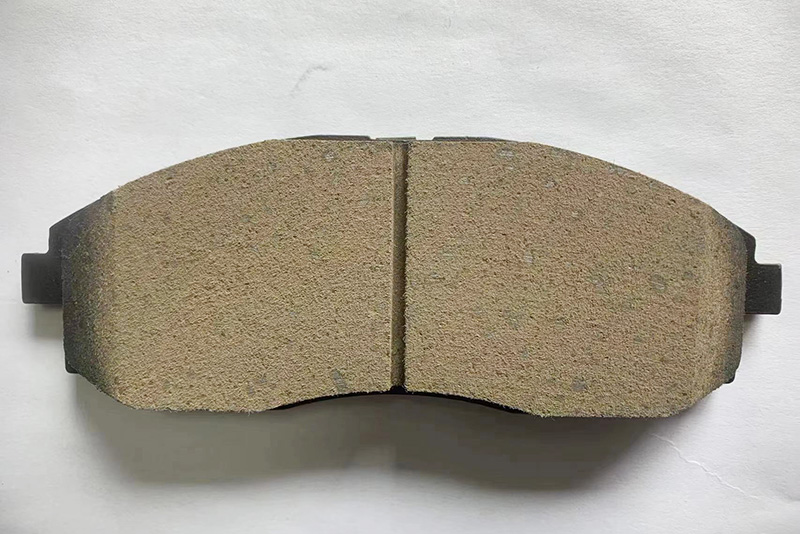
Ceramic brake pads are the “gold standard” for the modern passenger car aftermarket, especially in North America and Oceania.
- The Composition: Made from a stack of ceramic compounds and copper fibers (or 100% Copper-Free, exceeding the latest environmental mandates in California and Washington).
- Wholesaler Advantage: They offer the highest retail margins. Since they produce very little, light-colored dust, they keep the wheels clean—a major selling point for high-end car owners.
- The GDST Insight: Over the last 20 years, we’ve seen a massive shift in Southeast Asia toward ceramic pads as urban driving and noise reduction become top priorities for Toyota and Honda owners.
Industry Comparison: While Ceramic is king for comfort, many wholesalers wonder if it can handle high-heat environments as well as semi-metallic formulas. If you want a deeper dive into the technical friction coefficients and why Semi-metallic often outlasts Ceramic in heavy-duty towing or high-temperature conditions, read our detailed Ceramic vs. Semi-Metallic comparison here.
North American Market Insights: DOT Compliance & Urban Driving
In the US and Canada, your customers aren’t just looking for quiet operation—they need DOT-compliant brake pads that meet strict safety standards. Our ceramic pads are engineered to exceed FMVSS 135 requirements while delivering the dust-free performance that luxury car owners demand. For your Canadian distributors, we’ve seen particular success with winter-ready ceramic formulations that maintain consistent performance even in sub-zero temperatures.
Think of ceramic brake pads as the marathon runner of the brake world—they’re built for endurance and comfort. In typical urban driving conditions, you can expect them to last between 40,000 to 50,000 kilometers while keeping wheels virtually dust-free. This makes them perfect for your North American and Southeast Asian markets where daily commuters prioritize quiet operation and clean aesthetics.
Semi-Metallic Brake Pads: The Workhorse for Tough Conditions
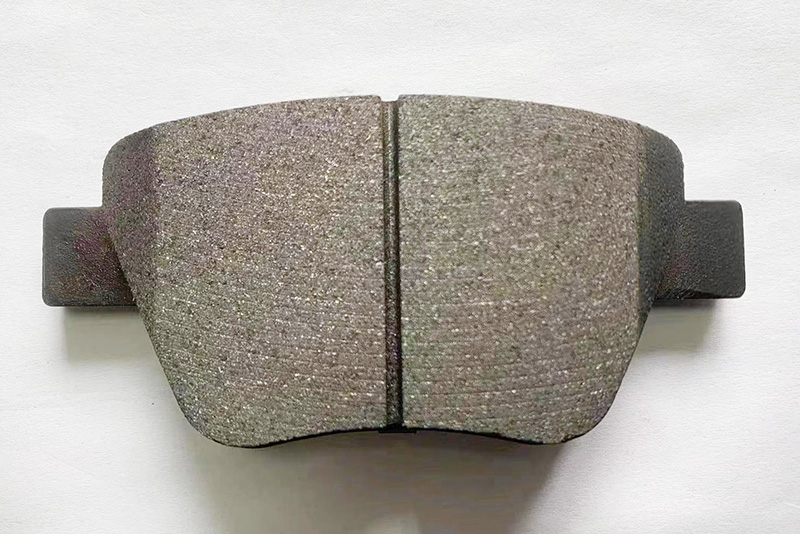
If your customers operate in mountainous regions or use their vehicles for commercial hauling (like the Toyota Hilux or Ford F-Series), semi-metallic is the way to go.
- The Composition: Contains 30% to 65% metal (steel, iron, or copper).
- The Strength: They have superior thermal conductivity. They don’t “fade” as easily as ceramic pads under heavy, repeated braking.
- Market Strategy: In markets like South America and Africa, where road conditions can be harsh, and towing is common, semi-metallic pads are often preferred for their reliability and lower cost-per-mile.
Performance Insight: The choice between Low-metallic and Semi-metallic often comes down to the specific vehicle origin—European versus American/Asian engineering. To understand the subtle differences in “cold bite” performance and rotor wear between these two metallic-based formulas, explore our expert analysis on Low-Metallic vs. Semi-Metallic brake pads.
South American & Middle Eastern Adaptations: Built for Extreme Conditions
From the Andes mountains to Saudi Arabian deserts, harsh conditions demand reliable braking. Our semi-metallic pads are specifically tested for high-altitude performance and extreme heat resistance—critical for markets where temperature swings from freezing mountain passes to scorching desert highways. Many of our South American partners have found success positioning these as ‘all-terrain’ solutions for mixed commercial/residential fleets.
Semi-metallic pads are your workhorses—the reliable choice when conditions get tough. While they may not match ceramics in longevity (typically around 30,000 kilometers), their superior heat dissipation makes them indispensable for mountainous regions, commercial hauling, or any market where ‘getting home safely’ trumps ‘keeping wheels clean.’
Low-Metallic (Low-Met) Brake Pads: The European Standard
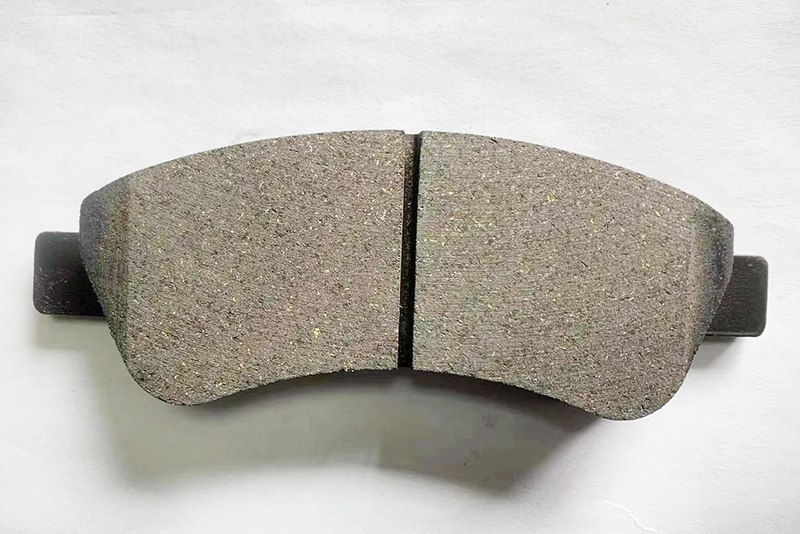
Low-met pads were designed specifically to meet the high-speed braking requirements of European highways (Autobahn).
- The Composition: An organic formula with 10% to 30% metal (usually copper or steel).
- The Performance: They offer exceptional “cold bite” and high-speed stopping power. This is why brands like BMW, Mercedes-Benz, and Audi often come with low-met pads from the factory.
- The Trade-off: They are noisier and dustier than ceramic. However, for a distributor focusing on the European car segment, offering a high-quality Low-Met option is essential for “original-feel” braking.
European Regulatory Compliance: ECE R90 & Beyond
European distributors face one of the most stringent regulatory environments globally. Our low-metallic pads come with full ECE R90 homologation certificates and are tested according to the latest EU safety directives. For German markets specifically, we offer Autobahn-tested formulations that maintain performance at sustained high speeds—essential for meeting local customer expectations.
For distributors serving European car enthusiasts, low-metallic pads are non-negotiable. They strike the perfect balance between performance and practicality, offering 30,000-40,000 kilometers of reliable service while delivering that immediate ‘bite’ European drivers expect. Plus, they meet ECE R90 standards right out of the box—essential for markets with strict regulatory requirements.
When Road Conditions Dictate Your Brake Choice
We still remember the call from Maria, our distributor in Bogotá. She was frustrated—her customers kept returning ceramic brake pads after just a few months. ‘The roads here are brutal,’ she explained, ‘mountain passes, potholes everywhere, and dust that gets into everything.’Instead of pushing our premium ceramics, we asked about her customer mix. Turns out, most were delivery drivers and small business owners using pickup trucks and SUVs for work—not luxury sedans. That changed everything.
We recommended switching to semi-metallic for their commercial fleet. Why? Because while ceramics excel in smooth city driving (lasting 40K-50K km), semi-metallic’s rugged construction handles harsh conditions better—even if it only lasts 30K km. The key insight? It’s not about which material is ‘better’ overall, but which solves your specific market’s problems.
Six months later, Maria called again—but this time to place a larger order. Her return rate dropped by 60%, and her customers appreciated that she understood their real-world needs.
Critical Factors for Wholesalers When Sourcing from China
Beyond the brake pad material type, the manufacturing process determines whether you’ll face expensive warranty claims. At GDST, we focus on:
- Positive Molding Technology: Unlike cheap flash-mold pads, our positive molding ensures uniform density, leading to consistent braking performance and less noise.
- Scorching Process: We pre-burn the surface of the pads to reduce the “break-in” period for the end-user, ensuring safety from the very first stop.
- OE-Spec Shims: We use multi-layer rubberized shims to dampen vibrations—the #1 cause of brake squeal.
Why Consistency Matters More Than Peak Performance
Here’s something many suppliers won’t tell you: the most dangerous brake pads aren’t the ones with low friction—they’re the ones with inconsistent friction. Imagine a pad that grabs well when cold but fades dramatically when hot. That’s why we engineer every GDST brake pad to deliver predictable, consistent stopping power across the entire temperature range.
Our quality control ensures that whether you’re selling to a luxury car dealer in Dubai or a fleet operator in São Paulo, your customers get the same reliable performance. That consistency translates directly to fewer warranty claims and happier end-users—which means repeat business for you.
Data-Driven Inventory Planning for 2026
Based on our analysis of global market trends and customer feedback from 50+ countries, here’s what the data tells us about 2026 demand patterns:
- Urban Growth Markets (Southeast Asia, Middle East): 65% preference for ceramic due to increasing luxury vehicle ownership
- Commercial Fleet Markets (South America, Africa): 78% demand for semi-metallic driven by economic factors and road conditions
- European Specialty Markets: 92% requirement for ECE R90 certified low-metallic pads
- North American SUV Boom: 40% increase in semi-metallic demand for light trucks and SUVs
Use this data to inform your purchasing decisions and avoid overstocking materials that don’t match your local market needs.
Final Recommendation: How to Balance Your Inventory?
- For the North American Market: Focus 70% of your stock on Ceramic for passenger cars and 30% Semi-Metallic for the booming SUV/Pickup segment.
- For the South American/African Market: Prioritize Semi-Metallic for durability and competitive pricing, while offering Ceramic as a “Premium Upgrade” option.
- For European Car Specialists: Ensure you have a robust range of Low-Metallic pads with ECE R90 certification to match local regulations.
Looking for a Reliable Brake System Partner?
After 20 years working with brake pad wholesalers worldwide, we’ve learned that there’s no one-size-fits-all solution. Your success depends on matching the right materials to your specific customer base and local conditions.
Whether you need OEM-quality brake pads for European vehicles, heavy-duty semi-metallic pads for commercial fleets, or premium ceramic options for luxury car markets, we’re here to help you build the optimal inventory mix.
Let’s discuss your market’s unique challenges. Contact us today for a personalized consultation, and we’ll help you create a brake pad strategy that maximizes both customer satisfaction and your profit margins.
With 20 years of manufacturing expertise, GDST Auto Parts provides customized packaging, IATF 16949 certified quality, and a comprehensive application list for Japanese, Korean, American, and European vehicles.